


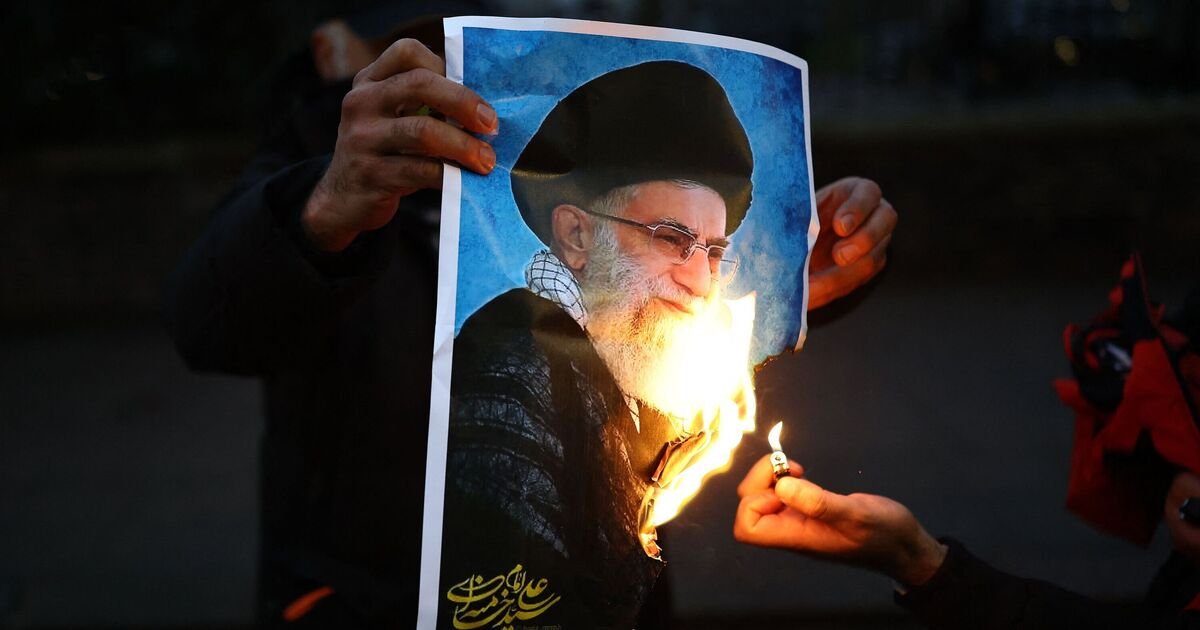
A brutal crackdown on mass protests to depose the Islamic dictatorship in Iran has left more than 3,000 dead, opposition sources have told Express.co.uk.
The group announced the horrific figure as the protest, which has encompassed more than 195 cities, entered its 16th day today. Under orders from Ayatollah Ali Khamenei the police and Iranian Revolutionary Guard have been using live rounds against their own people. They have been instructed to target the eyes and face of protesters to effect maximum horror and terror from their kills.
Sources within the People’s Mojahedin Organization of Iran (MEK), which is fighting to bring full democracy to Iran after 47 years of Islamic dictatorship, said the new figures were based on investigations drawing on local sources, hospitals, forensic medicine centers, and the families of those killed or disappeared across the 195 cities.
As revulsion over the killings was expressed across the world the Iranian regime was forced to display some of the bodies on state television, falsely attributing the killings to its opponents and to protesters, the MEK said.
Maryam Rajavi, President-elect of the National Council of Resistance of Iran (NCRI), and one of the key figures hoping to help replace Ayatollah Ali Khamenei was a fully democratic government extended her condolences to the people of Iran, particularly to the families, relatives, friends, and fellow activists of these proud martyrs. She stated that this major crime against humanity will not go unanswered by the Iranian people and the uprising youth.
Rajavi emphasised that those who ordered and carried out this brutal massacre will undoubtedly be brought to justice in a democratic Iran of tomorrow.
The latest wave of protests in Iran began in late December, when the country’s currency, the rial, suddenly crashed and inflation surged above 40 per cent. Shopkeepers in Tehran’s Grand Bazaar were among the first to strike, unable to buy or sell goods as prices spiralled out of control. What started as a reaction to economic hardship quickly spread across the capital, reflecting deeper frustrations with years of mismanagement, corruption, and the cumulative impact of sanctions triggered by the regime’s desperate attempts to achieve a nuclear bomb.
With the protests growing in scale and intensity, participants range from bazaar merchants to young men in provincial towns. The grievances broadened as well: while the initial spark was economic, the unrest soon took on political dimensions, with some demonstrators calling for death to the Ayatollah.
Iranian authorities responded with a combination of force and information control. Security forces used live ammunition and the government imposed a nationwide internet shutdown and restricted international phone calls, a tactic analysts say was intended both to limit coordination among protesters and to obscure the scale of the crackdown from the outside world.
As the unrest intensified, Iran’s leadership publicly blamed foreign interference. Supreme Leader Ayatollah Ali Khamenei accused protesters of acting to “please” US President Donald Trump and described them as “vandals” or “mercenaries for foreigners”. State media echoed these claims, framing the demonstrations as part of a US and Israeli-backed destabilisation effort. These accusations served both to delegitimise the protests and to justify harsher security measures.
President Trump has issued a series of statements declaring that the United States would intervene if Iranian authorities killed peaceful protesters. He said the US was “locked and loaded” and “ready to go,” signalling that military action was among the options being considered. His administration also confirmed that he had been briefed on potential strike plans. These comments drew sharp reactions from Tehran, which warned that US bases in the region could become targets if Washington escalated.