


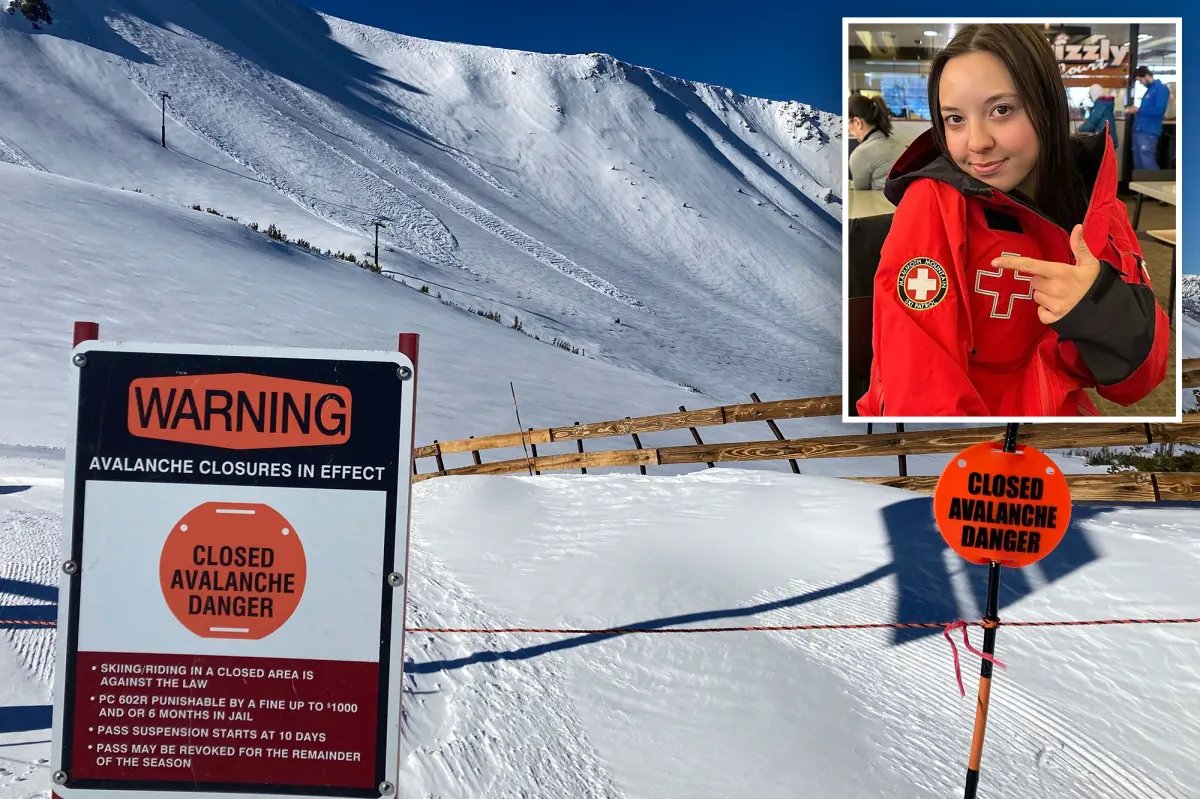

A second avalanche death on California’s notorious Mammoth Mountain has a grieving mom reliving the heartbreak of losing her daughter all over again — as horrifying details of the young woman’s final moments have been revealed.
Veteran ski patroller Cole Murphy, 30, died in a vicious snowslide at the dangerous mountain in December — less than a year after Claire Murphy, 25, was killed in the same fashion.
Claire Murphy — who is of no relation to Cole Murphy — was found pinned upright against a fir tree, looking straight at the blanket of snow about to crush her on Valentine’s Day last year, her sobbing mother Lisa Apa told the Los Angeles Times.
“It kills me to think of her trapped there,” Apa told the Times.
Claire Murphy and Cole Murphy were working as ski patrollers clearing trails along a steep section of the resort known as the Avalanche Chutes when they both died.
Murphy was a rookie patroller and had only been on the job a few months.
“You killed another ski patroller … you’ve learned nothing!” Apa said she texted a senior patrol manager after hearing about Cole Murphy’s death. She said she urged Mammoth officials to review training and avalanche-control procedures after her daughter’s death.
Cole Murphy was buried during avalanche mitigation work on Dec. 26, as The California Post previously reported. He was dug out transported to a hospital, but later died from his injuries.
Download The California Post App, follow us on social, and subscribe to our newsletters
California Post News: Facebook, Instagram, TikTok, X, YouTube, WhatsApp, LinkedIn
California Post Sports Facebook, Instagram, TikTok, YouTube, X
California Post Opinion
California Post Newsletters: Sign up here!
California Post App: Download here!
Home delivery: Sign up here!
Page Six Hollywood: Sign up here!
His fellow patroller survived with a serious leg injury.
According to the Los Angeles Times, colleagues took roughly 18 minutes to locate and dig Murphy out after the slide. Avalanche survival odds drop sharply after about 15 minutes of burial.
Around 93% of avalanche victims can be recovered alive if dug out within 15 minutes of burial, but then the numbers drop catastrophically, according to the Utah Avalanche Center — after 45 minutes, only 20 to 30 percent of victims are still alive.
The back-to-back deaths have raised painful questions for families about storm-day safety decisions at one of California’s most famous ski destinations. Meanwhile, last week, a skier died while attempting an expert run on Dropout 2, a trail that plunges about 1,200 vertical feet.
Mammoth Mountain President and Chief Operating Officer Eric Clark told the Times that after Claire Murphy’s death, ski patrol teams were given more authority to open terrain gradually following storms.
After Cole Murphy’s death, Clark said mangers implemented additional measures intended to “de-pressurize storm mornings,” giving patrollers more time to secure slopes and greater discretion to keep chairlifts closed.
Clark told the Times that pressure to reopen terrain is not from corporate leadership, but rather from downhillers eager to ski fresh powder.
State workplace safety regulators are investigating both deaths, and resort officials have declined to provide additional comment while those reviews are ongoing, the Times reported.
Avalanche-control work is a routine but inherently dangerous part of mountain operations. Patrollers often use hand-held explosives and a technique known as “ski cutting” to intentionally trigger smaller slides before allowing skiers onto steep terrain.
Claire Murphy had only recently achieved her dream of becoming a ski patroller. Cole Murphy had been working on the mountain for several years and was deeply rooted in the Mammoth Lakes community, his mother told the Times.
Apa said she worries young patrollers feel pressure — whether from expectations, crowds or career concerns — to take risks in dangerous post-storm conditions.
“Don’t get out of the snowcat if you’re scared,” she said she has told other young patrollers, urging them to speak up if something feels unsafe, according to the Times.