


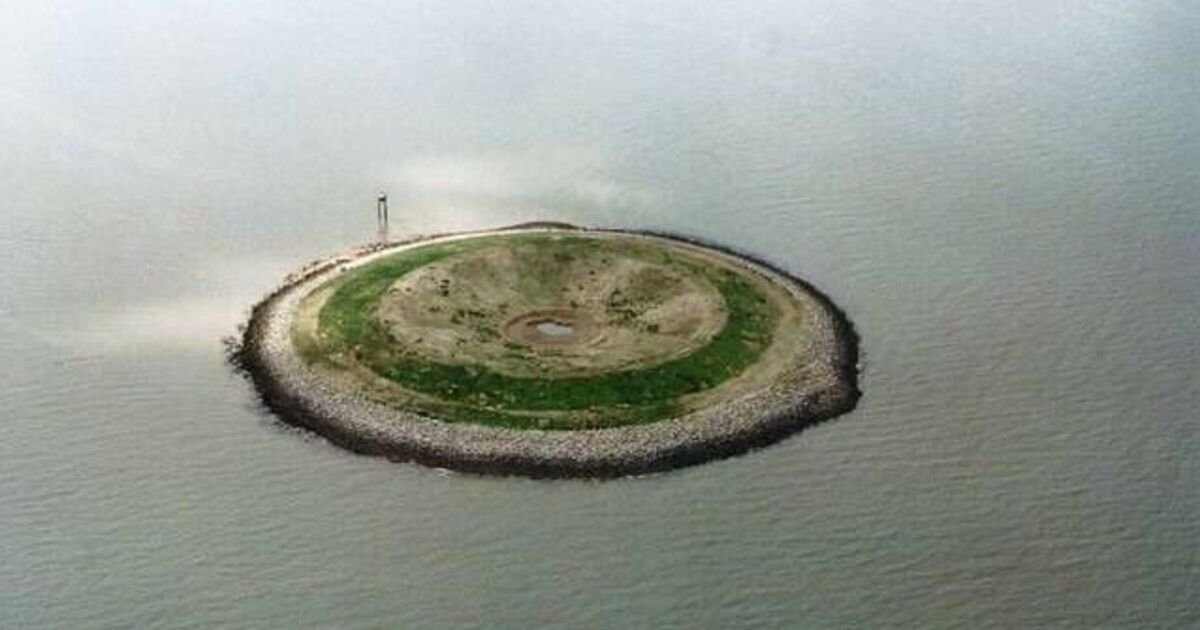
A man-made island off the UK shore is seeing a resurgence of interest nearly five decades after it fell into disuse. Located a mere two miles from Lincolnshire’s coastline, the Inner and Outer Trial Bank were colossal investments for the taxpayer, costing around £3 million in the 1970s – an expense that would equate to approximately £28 million today when adjusted for inflation.
Dubbed ‘the doughnut’ for its unique ring shape and hollow core, these man-made formations were the cornerstone of an audacious plan to harvest fresh water from the Rivers Witham, Welland, Nene, and the Great Ouse that stream into the Wash, intending to establish a reservoir. This ambitious vision was initially set in motion by the Conservative government back in 1972 and materialised two years later.
“The scheme was originally intended to see if a barrage would be feasible,” Natural England has indicated. “Instead, bunded reservoirs were created which is why the islands were doughnut-shaped as they were used as freshwater reservoirs.”
Nevertheless, the venturesome project faced significant setbacks as the effects of tidal movements and the use of saline saltmarsh materials rendered the water excessively salty. Judged to be inefficient and financially unsustainable, the initiative was ultimately scrapped, reports the Mirror.
Today, the Inner Trial Bank has largely blended into the surrounding saltmarsh, making its identification as an island increasingly difficult. The Outer Trial Bank, spanning approximately 830ft across, remains visible from the mainland. It has even sparked concerns among passers-by who mistake this doughnut-shaped island for a fallen meteor or an ‘alien’ landing site.
Today, it forms a crucial part of the Wash Natural Nature Reserve – England’s largest. It has evolved into a vital breeding ground for seabirds, hosting thousands, including Lesser Black-Backed Gulls. It is estimated that 3,000 pairs of seabirds have made this island their home, transforming it from a symbol of government failure into a thriving wildlife habitat.
Even if you’re not particularly fond of birds, the nature reserve still warrants a visit. The Wash is one of England’s prime breeding areas for common seals, and its mudflats provide an ideal habitat for shrimps and other small crustaceans. Located roughly 118 miles from central London, the nature reserve can be reached by car in just under three hours. Alternatively, you can take a direct train to King’s Lynn, which typically takes one hour and 48 minutes.
From King’s Lynn, a 23-minute taxi ride will get you to the reserve. While Norfolk Green and Cavalier Travel operate bus services along the A17 between King’s Lynn and Sutton Bridge, the stops are quite a distance from the Reserve. If your travel dates are flexible, you can secure single adult fares for as little as £18.