



Life is being breathed into the Long Island Sound.
The shared New York-Connecticut waterway has reached its lowest levels of toxic, inhospitable “dead zones” in nearly four decades — and could mark a surge in wildlife like dolphins and whales.
Pockets of hypoxia, or significant lack of oxygen, cover just 18 square miles of the sprawling 1,300-square-mile sound — a serious decrease from the roughly 430 miles it claimed back when scientists first began tracking the levels in 1987.
“There were massive fish die-offs. Lobsters were crawling out of the water trying to breathe. Animals were literally suffocating in the water because of low oxygen levels,” Peter Linderoth, the director of healthy waters and lands for Save the Sound, told The Post.
“To be where we are today, it’s just a remarkable success story, and one that we hope will continue for Long Island Sound.”
The major milestone was revealed last month as part of the Connecticut Department of Energy and Environmental Protection’s 2025 Long Island Sound Water Quality Monitoring Program report.
The main cause of hypoxia was unregulated sewage and stormwater runoff — an issue that has been slowly resolved in recent years thanks to advocacy work and state guidelines that require wastewater treatment plants to mitigate their nitrogen concentrations.
“The trajectory is good. It’s promising. But there are still challenges, no mistake about it,” said Linderoth.
The biggest cluster of “dead zones” in the open sound continues to live in its western portion — closer to New York City and the Nassau County border, he explained, including some areas that have zero levels of oxygen.
The study also doesn’t include the smaller waterways in the area, like the notoriously polluted Harlem River.
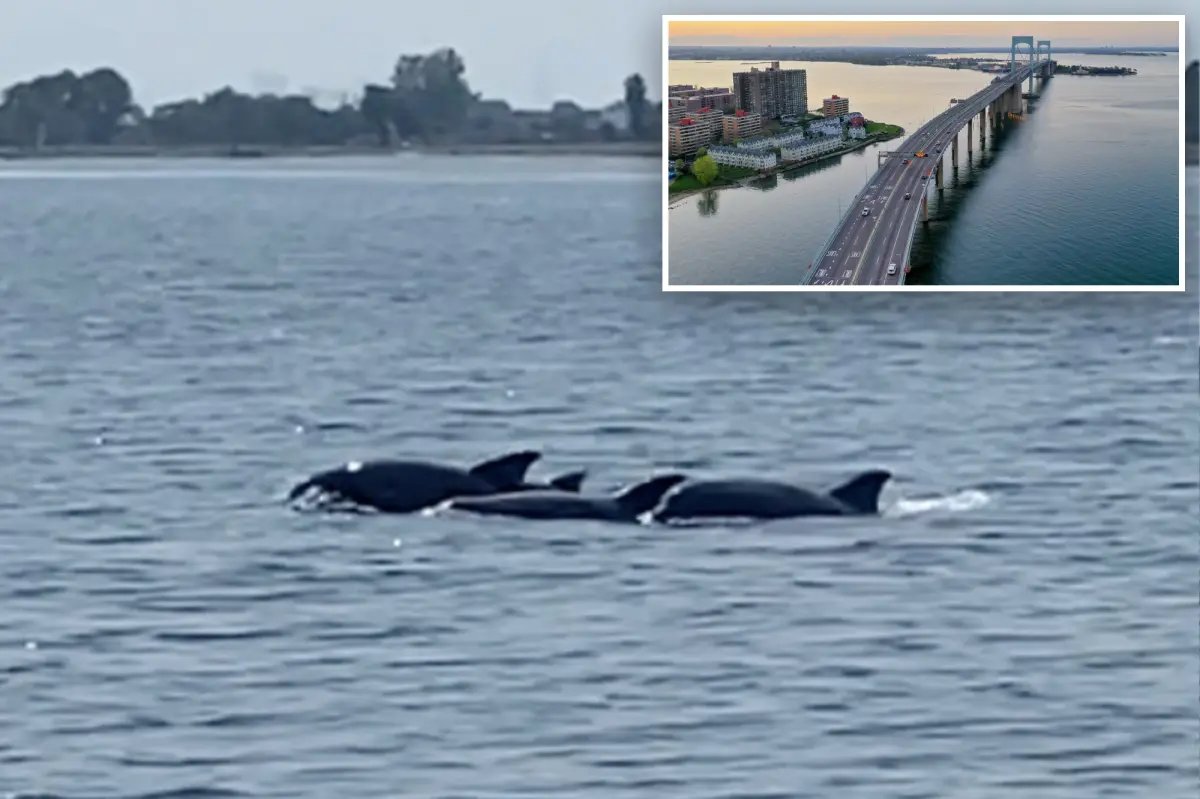
The drop in hypoxia has already had tremendous impacts — and may have ushered in a pod of nearly 70 dolphins that took over the Sound this summer.
“They were jumping all around us,” recalled Tricia Leicht, saying the massive pod surrounded her boat off the coast of New Rochelle in August.
Leicht, who works in development for Save the Sound, was on board with other environmentalists and scientists — several of whom started crying at the marvelous sight.
“It was amazing. It was a life experience beyond an inspirational moment as people who work in this field. It was an overall life experience for everybody on the boat will take with them forever.”
It marked the first time Leicht had ever seen a dolphin in the Long Island Sound, despite spending nearly six decades of her life on the water.
On numerous occasions, she watched hundreds of bunker fish beach themselves on the shores in a desperate attempt to escape the oxygen-deprived water.
It was also a popular pastime for teenagers in the 1980s to jump off their boats and into pockets of bubbles that were spaced throughout the sprawling waterway.
“People thought that was kind of fun. Now I know that was sewage overflow!” said Leicht.
“We just thought it was funny. The sound was kind of ick, but it was what it was. We didn’t know any different.”
Environmentalists warn that while the hypoxia trends are encouraging, they could experience a backslide as global warming ramps up.
Every Sound lover can help mitigate hypoxia by limiting nutrient runoff in the wastewater, the environmentalists said. This includes reducing fertilizer use, clearing up after pets and keeping storm drains clear.