


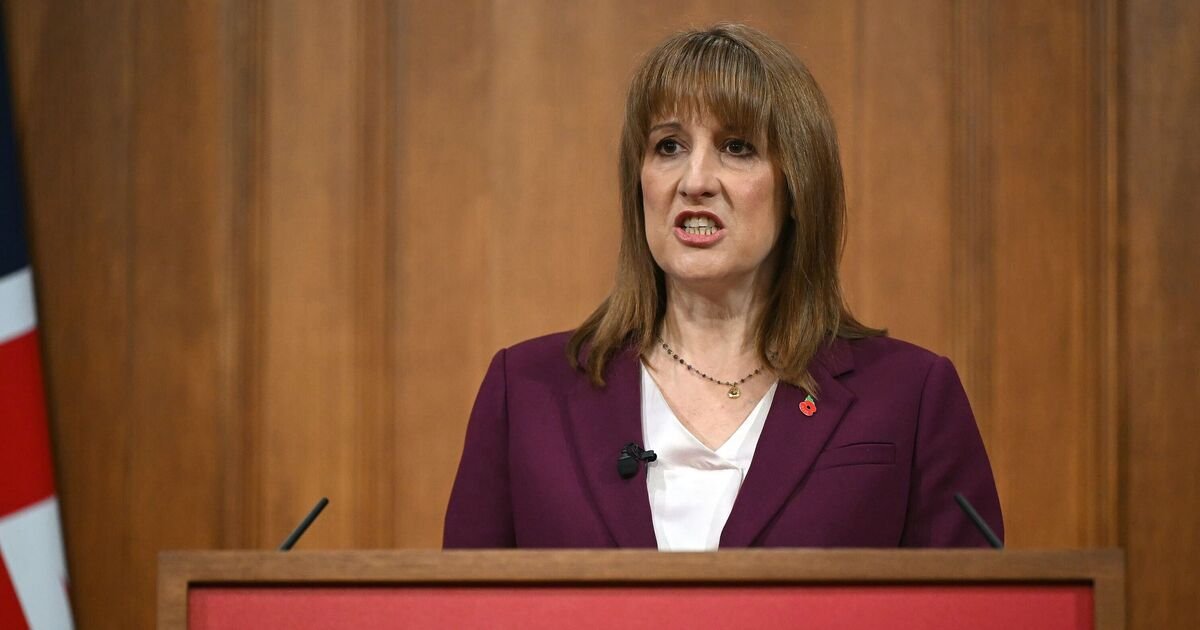
Labour’s battles over tax descended into open civil war after new deputy leader Lucy Powell insisted that the Government must keep its manifesto promises. Rachel Reeves and Sir Keir Starmer have dropped heavy hints that they are considering breaking pledges not to increase the rates of income tax, VAT or National Insurance, with the Prime Minister refusing to confirm that Labour remains committed to the promise – even though it was in his 2024 General Election manifesto.
But Ms Powell said the Chancellor must stick to the pledge in the Budget on November 26. Speaking to Matt Chorley on BBC Radio 5 Live, Ms Powell said: “We should be following through on our manifesto, of course. There’s no question about that.” She added: “Trust in politics is a key part of that because if we’re to take the country with us, then they’ve got to trust us and that’s really important too.”
And she went on to say that “the two-child benefit cap should be lifted and it should be lifted in full”, adding: “I think what we’ve all been talking about recently is the urgency of that now, because every year that passes with this policy in place, another 40,000 minimum, 40,000 children, are pushed into deep levels of poverty as a result of it and that’s why it is urgent that we do lift it and we lift it in full.”
Ms Powell, a former cabinet minister who was sacked by Sir Keir in a Cabinet reshuffle, stood for the party’s deputy leadership against Education Secretary Bridget Phillipson, who was seen as the preferred choice of the Prime Minister.
She also defended Justice Secretary David Lammy after he failed to answer questions in Parliament this week about prisoners mistakenly released from jail, but appeared to suggest he was still learning how to do his job.
She said: “Maybe just more, had anticipated that line of questioning, I would say. But look, it’s always a learning curve in these things. It’s the first time he’s done it.
“You know, not very many people are really, really good at it from day one. It does kind of take experience as well as sort of, you know, a lot of preparation and ability.
“And I’m sure that on his next outing, which I’m sure he will have fairly soon, you know, he will put all that learning into practice, I’m sure.”
Budget announcements could include a move towards a pay-per-mile road pricing scheme, as the use of electric cars threatens to reduce petrol taxes – a vital source of income for the Treasury. Fuel duty raised just under £25billion in the 2024-25 financial year.
A “fairer” tax system for drivers is needed, the Government said, amid speculation that an electric vehicle (EV) pay-per-mile scheme will be announced in the Budget.
Ms Reeves will unveil a policy to introduce a 3p-per-mile tax for EVs when she delivers her November 26 Budget, The Daily Telegraph reported.
The scheme is set to be implemented in 2028 following a consultation, and would cost EV drivers an average of £250 per year, according to the newspaper.
Motoring groups expressed concern that such a tax could put some people off switching to electric motoring.
Successive governments have found the prospect of introducing per-mile charges for driving – sometimes referred to as road pricing – too politically toxic.
The Daily Telegraph said Ms Reeves’s EV scheme will involve users estimating how far they will drive over the following 12 months, and making an extra payment on top of vehicle excise duty.
If they drive more, they will need to top up this amount, while some of the money would carry over to the next year if someone clocks up fewer miles.
Journey examples of a 3p per mile fee include £12 between London and Edinburgh, £5 between Cambridge and Bristol, and £2 between Liverpool and Leeds.
EVs’ exemption from VED was removed in April.
A government spokesperson said: “Fuel duty covers petrol and diesel, but there’s no equivalent for electric vehicles.
“We want a fairer system for all drivers whilst backing the transition to electric vehicles, which is why we have invested £4billion in support, including grants to cut upfront costs by up to £3,750 per eligible vehicle.
“Just as it is right to seek a tax system that fairly funds roads, infrastructure and public services, we will look at further support measures to make owning electric vehicles more convenient and more affordable.”
AA president Edmund King acknowledged that the Treasury faces losing fuel duty revenue, but urged the Government to “tread carefully” to avoid slowing the transition to EVs.
He said: “We need to see the detail of this proposal to ascertain whether these new taxes will be equitable or a poll tax on wheels.”