


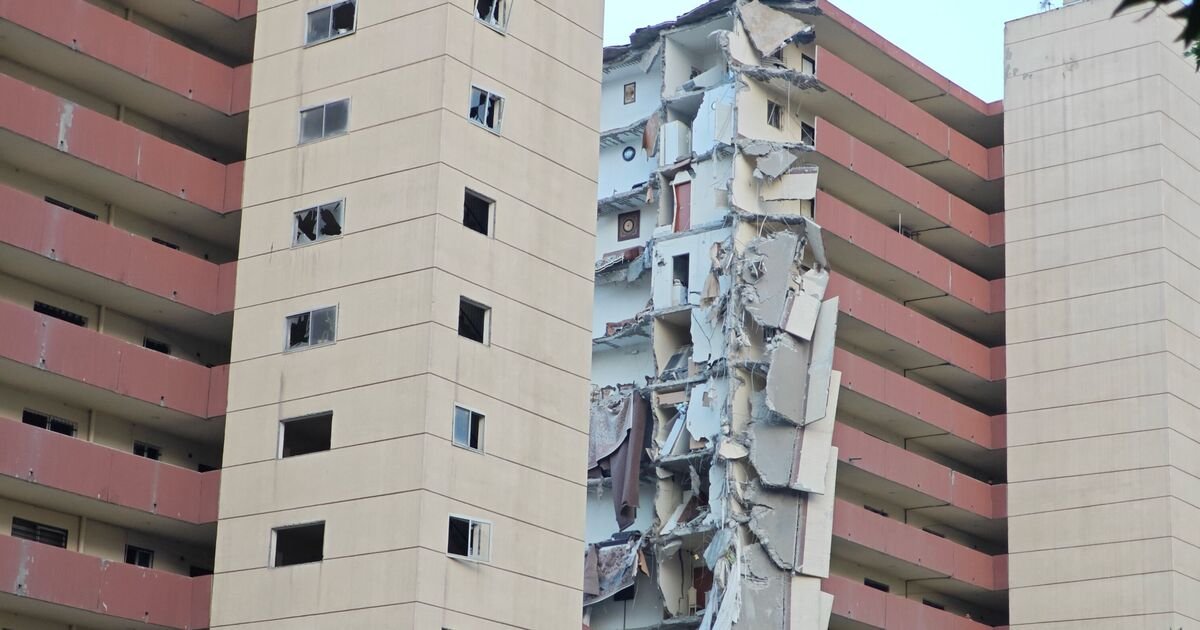
Israel’s wave of airstrikes on Iranian military and nuclear infrastructure could unintentionally deliver a boost to Ukraine’s defences. disrupting the production and supply of the deadly Shahed drones used by Russia, a former Ukrainian government official has claimed. The coordinated attack, launched early on Friday, hit multiple targets linked to Iran’s nuclear programme and military apparatus, reportedly killing several high-ranking officers and scientists.
Iran’s Supreme Leader Ayatollah Ali Khamenei vowed “severe punishment” in response, while air-raid sirens rang out across Israeli cities. The attack marks the most significant assault on Iran’s territory since the Iran–Iraq War in the 1980s, escalating fears of open conflict between the two regional arch-enemies. The Israeli strikes came just hours after the International Atomic Energy Agency formally censured Iran for obstructing nuclear inspections – a move that saw Tehran immediately ramp up enrichment plans and announce a third uranium site.
However, while the world’s attention has turned to the Middle East, the Ukrainian government is watching closely – and some believe the fallout could stretch all the way to the front lines in Kharkiv and Donetsk.
Mr Geraschenko, a former Interior Ministry adviser, pointed to a possible knock-on effect of the strikes: a disruption to the production and export of Shahed drones, the same loitering munitions Iran has been supplying to Russia for use in its war on Ukraine.
He said: “A great number of experts already started assessing and evaluating possible outcomes of Israel’s military operation against Iran: geopolitical, economic outcomes as well as its effect on the war in Ukraine.
“I have seen opinions that Iran might destroy the production of Shahed drones at some point, and that since Iran will launch Shahed drones on Israel now, they will not supply their engines to Russia – which will be good for Ukraine. This is a possible ‘side effect’.”
Russia has depended heavily on these Iranian-designed drones, particularly for attacks on Ukrainian energy infrastructure. While Moscow has made strides towards localising production, much of the engine technology and core components are still imported from abroad.
He said: “Russia puts together drones using Iranian engines in Alabuga, Tatarstan. It’s likely that this logistical chain will be disrupted. If that will indeed happen, we will soon notice that – all that Russia produces is launched at Ukraine straight away.”
The Alabuga plant has been at the centre of Russia’s Shahed-136 assembly programme. Earlier this year, a report by Washington-based research group C4ADS revealed Russia had already imported at least 600 engines from Iran and planned to build thousands of drones domestically by mid-2025.
However, Mr Geraschenko struck a note of caution – pointing out that Iran is no longer the only source of drone components.
He said: “The most recent Shaheds and their engines (the ones launched at Ukraine) have been produced in China, so I don’t think there will be a great deficit of drones for Russia. Consequently, my assessment is more reserved and pessimistic regarding benefits for Ukraine.”
He also poured cold water on speculation that Russia might offer direct military support to Tehran in retaliation for the Israeli strike.
He said: “The second issue I’ve seen discussed is whether Russia will help its military ally Iran, and if it does, to what scale will it help? (The strategic cooperation agreement that Russia and Iran signed recently does not bind Russia to provide military assistance in case Iran is attacked – and vice versa).”
He added: “I don’t think Russia’s military assistance to Iran is likely. Russia did not interfere with recent events in Syria – all of its resources are focused on Ukraine. They won’t be able to provide much.
“There will probably be symbolic statements and gestures – maybe some ballistic missiles and air defense systems, but nothing significant.”
A statement issued by the Russian Foreign Ministry said: “We express extreme concern about the dangerous escalation of tensions in the Middle East. We strongly condemn the military action of the State of Israel in violation of the Charter of the United Nations and international law on the night of June 13.