


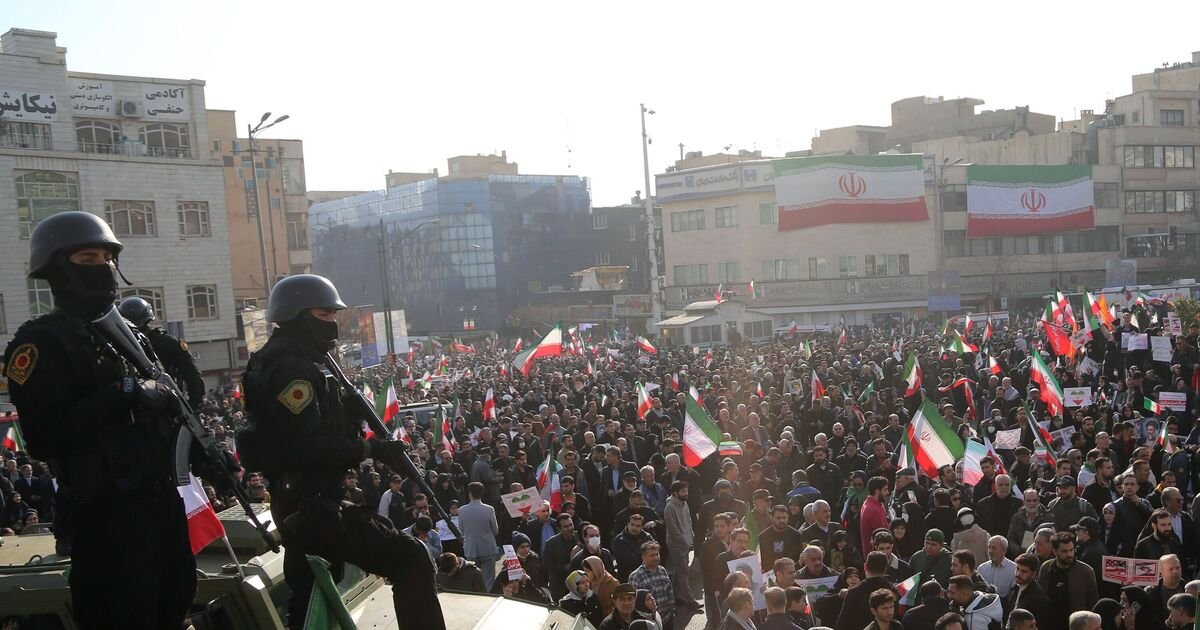
Iranian authorities have stepped up efforts to silence unrest across the country, with security forces reportedly going door to door in Tehran to seize satellite dishes and surveillance footage.
Local sources say officers have been confiscating satellite equipment and collecting CCTV recordings from private homes in a bid to identify protesters and choke off the flow of information both inside Iran and to the outside world.
Residents told Iran International that agents linked to the Islamic Revolutionary Guard Corps (IRGC) have been posing as water and electricity officials to gain entry to properties before seizing satellite devices.
The crackdown comes amid a sweeping nationwide telecommunications shutdown that began on January 8. Severe disruptions to mobile phone networks have left many Iranians reliant on satellite-based devices as their only means of communication.
Meanwhile, Iran’s internet blackout has now stretched beyond 100 hours, further isolating the population as authorities move to suppress reports of unrest spreading across the country.
Internet observation initiative NetBlocks said the digital blackout had reached 100 hours as per Monday evening, local time. The national comms blackout has led to an increase in fear and public anxiety, for Iranians both inside and outside the Middle Eastern nation.
The nationwide blackout has drawn criticism from Human Rights Watch Executive Director Philippe Bolopion, who accused Iran of imposing the blackout to conceal “very concerning reports of large-scale killings by security forces of protesters.”
“We are also extremely worried for people detained in the last week, who are being accused by the authorities of being enemies of God, which in Iran carries the death penalty,” Bolopion posted on X.
“We think it’s really an emergency situation, and we call on the UN Security Council and the Human Rights Council to urgently discuss the situation and send a very strong message to the leadership in Iran that they will be held accountable,” he added.
UK Foreign Secretary Yvette Cooper has condemned the ongoing violence in Iran, adding that she had discussed the matter with her Iranian counterpart.
“The killing and brutal repression of peaceful protesters in Iran is horrific,” she told Iran’s Foreign Minister. “I have spoken to Foreign Minister Araghchi and told him directly: the Iranian government must immediately end the violence, uphold fundamental rights and freedoms, and ensure British nationals are safe,” she added.
The US Virtual Embassy Iran has since advised any US citizens to leave the country immediately on Monday as violent protests continue to escalate.
“US citizens are strongly advised to leave the country immediately using their own arrangements, without relying on US government assistance,” the online post said.
“Land borders remain open to Armenia at Agarak/Norduz and to Turkey at Gürbulak/Bazargan, Kapıköy/Razi and Esendere/Serow. Turkmenistan’s borders are open but require prior special authorisation. Entry to Azerbaijan is restricted, and travel to Afghanistan, Iraq or the Pakistan-Iran border should be avoided entirely,” the post added.
US president Donald Trump, meanwhile, has been briefed by senior officials on the matter, with possible action understood to include military strikes, cyber operations, and psychological measures to support protesters.
“The officials said cyber and psychological operations can occur simultaneously with traditional military force, in what military planners call integrated operations. They could also be deployed as stand-alone options,” CBS reports. “The two American officials said that no final decision had been made and that diplomatic channels remain open.”