


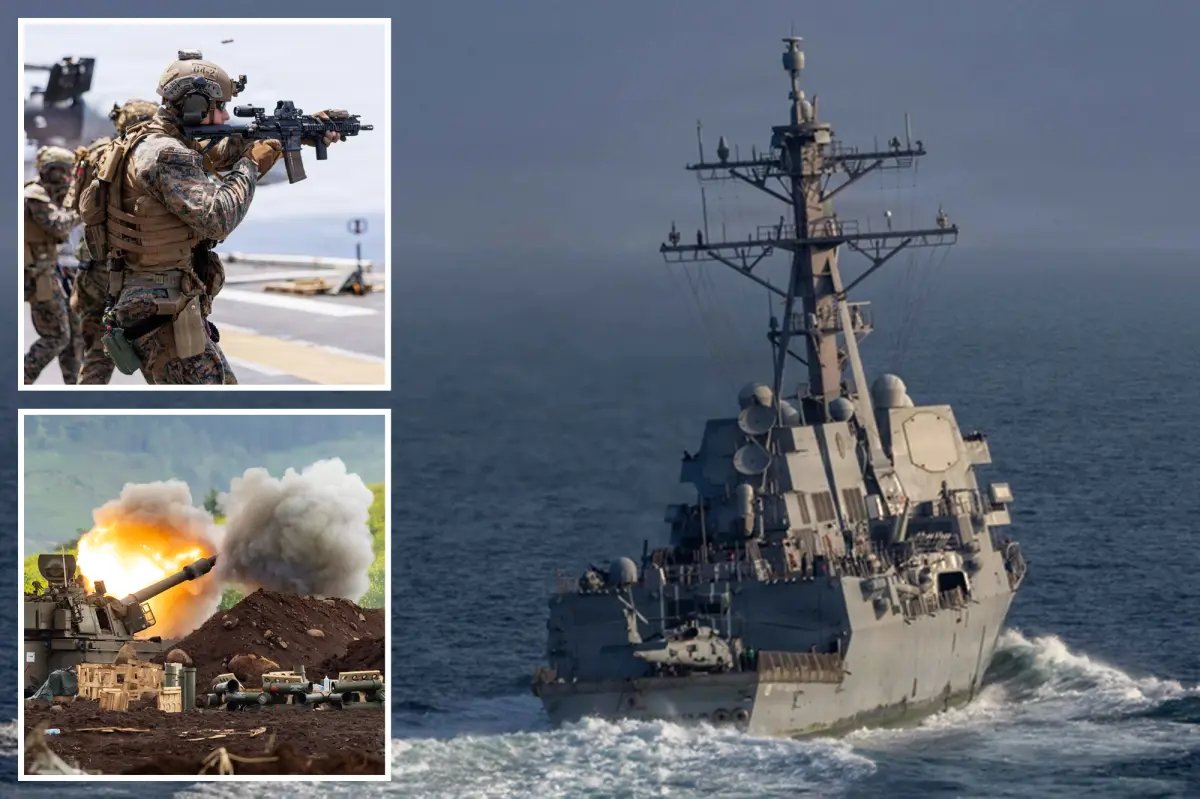

ISLAMABAD — President Trump’s naval blockade of Iranian ports is targeting one of the Islamic Republic’s most sensitive points — and it may be enough to inspire Tehran to respond to the US’ peace overtures, a former senior Pakistani official told The Post on Monday after weekend talks here ended without a deal.
“This may prove totally wrong, but it’s my assumption that whatever option has been given to them as ‘Take it or leave it,’ they will come back on it — either saying ‘We accept it,’ or they will say, ‘We totally reject it,’” explained retired Lt. Gen. Muhammad Saeed. “Or they will say, ‘These are adjustments we seek in your option.’”
Saeed added that Iran will be eager to resume negotiations with Washington because “they know what economic hardships their people are facing.”
Iran’s economy was struggling long before the war began on Feb. 28, with international sanctions triggering financial woes, including a major currency devaluation that sent protesters into the streets for nationwide — and deadly — demonstrations in late December and early January.
“Irrespective of their perception of victory,” Saeed said, “they know what economic hardships their people are facing. They know the level of inflation. They know how terribly their own currency is.”
Follow live updates on the US and Israel’s war with Iran
Perhaps most crucially, he added, the regime likely is aware of its military’s limits.
“While they would keep firing drones and missiles for a few more days, they don’t have compatible military means” to counter the US and Israel, “and they don’t have cost-effective military options to fall back on.”
While the blockade will likely spur an Iranian response, former State Department official Mark Kimmitt said it was more likely Tehran would want to continue negotiations, rather than accept what Vice President JD Vance called a “best and final offer” Sunday.
“The blockade of the Strait should bring the Iranians back to the negotiation table, but not immediately,” said Kimmitt, who served as assistant secretary of state for political-military affairs under former President George W. Bush.
“While the Iranians might express a willingness to discuss uranium enrichment, it is highly unlikely the current Iranian leadership would ever seriously consider terminating the program.”