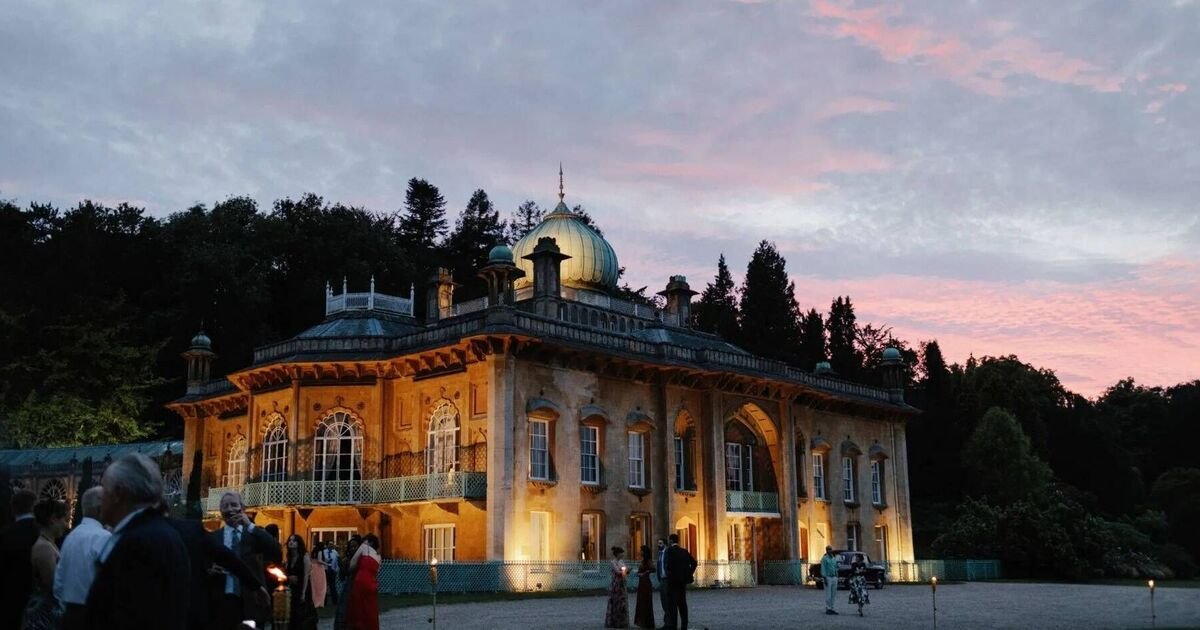

What if we told you that a 200-year-old Indian-style palace, reminiscent of the Taj Mahal, is tucked away in the heart of Gloucestershire?
Even though the Cotswolds are typically associated with images of charming cottages, chocolate-box homes, and golden-hued mansions seemingly frozen in time, nestled in the idyllic Cotswolds countryside is Sezincote House.
Sitting at the centre of the Sezincote settlement and civil parish, this palace-like building and its estate offers visitors a taste of India — just outside Moreton-in-Marsh.
This traditional family-run estate spans approximately 3,500 acres of undulating countryside, boasting waterfalls, canals, grottoes, and temples. The house and garden welcome visitors during specific times of the year, and the unique location hosts six weddings in its breathtaking grounds each summer.
Perched roughly 600 feet above sea level in the North Cotswolds, Sezincote House remains privately owned and operates a thriving agricultural estate. This advantage not only sustains the intricate rural tapestry of life in the region but also contributes to the maintenance of the house, reports Gloucestershire Live.
A brother-sister team manages the home and the estate, with support from the older generation and keen interest from the younger. Operating in line with traditional English practices, the estate boasts a mixed farming enterprise. This includes proper fencing and permanent grassland, supplemented by woodlands that provide an ideal habitat for local wildlife and a source of timber.
However, Sezincote House is far from ‘traditionally English’. The historic building, designed by Samuel Pepys Cockerell and built in 1805, stands as a prime example of Neo-Mughal architecture. In fact, it’s a 19th-century reinterpretation of Mughal design from the 16th and 17th centuries.
John Cockerell originally purchased the expansive country estate as a display of his wealth. However, it was his brother Charles Cockerell who truly transformed the property after inheriting it three years later upon John’s death.
Charles enlisted the help of his architect brother Samuel and artist Thomas Daniell, renowned for his sketches of Indian properties. Together, they designed a house inspired by a fusion of Hindu and Muslim architecture — something Charles had seen plenty of during his travels.
Samuel had previously experimented with subtle Indian features at Daylesford House in the Cotswolds, but he fully embraced the style at Sezincote, incorporating peacock-tail windows, jali-work railings, and pavilions. George IV, while still Prince Regent, visited Sezincote and is said to have been so impressed with the design that he instructed his architects to incorporate similar elements into the Brighton Pavilion that was being constructed for him.
The grand building has the red sandstone look that’s typical of Mughal architecture and instead of the famed white marble (as seen in the likes of popular structures like the Taj Mahal), this building features a large copper-covered, onion-shaped dome instead.
The fenestration of the home features a series of oversized windows crowned with arch-shaped tops. However, these arches depart from conventional forms, taking the shape of shell-like fans that reveal a distinctly Mughal influence. In contrast, the interior design adheres more closely to European stylistic traditions.
The estate’s landscape, designed by Humphry Repton, reflects a Renaissance-style garden interwoven with elements of Hindu architecture — most notably expressed through the crescent bridge supported by intricate columns. Minarets and a temple dedicated to Surya, the Hindu Sun God, also lend to its Indian heritage and influence. A Persian Garden of Paradise adds to its breathtaking charm.
While Sezincote Garden continues to welcome visitors on Wednesdays, Thursdays, and Fridays between October and November, both the Sezincote House and the Orangery Tearoom have now shut for the season, with plans to reopen in 2026.
Entry to Sezincote Garden is priced at £9 for adults and £3 for children aged 16 and under. For those wishing to explore Sezincote House, which includes a house tour and garden entry, tickets are available at £15 for adults and £9 for children aged 16 and under.
