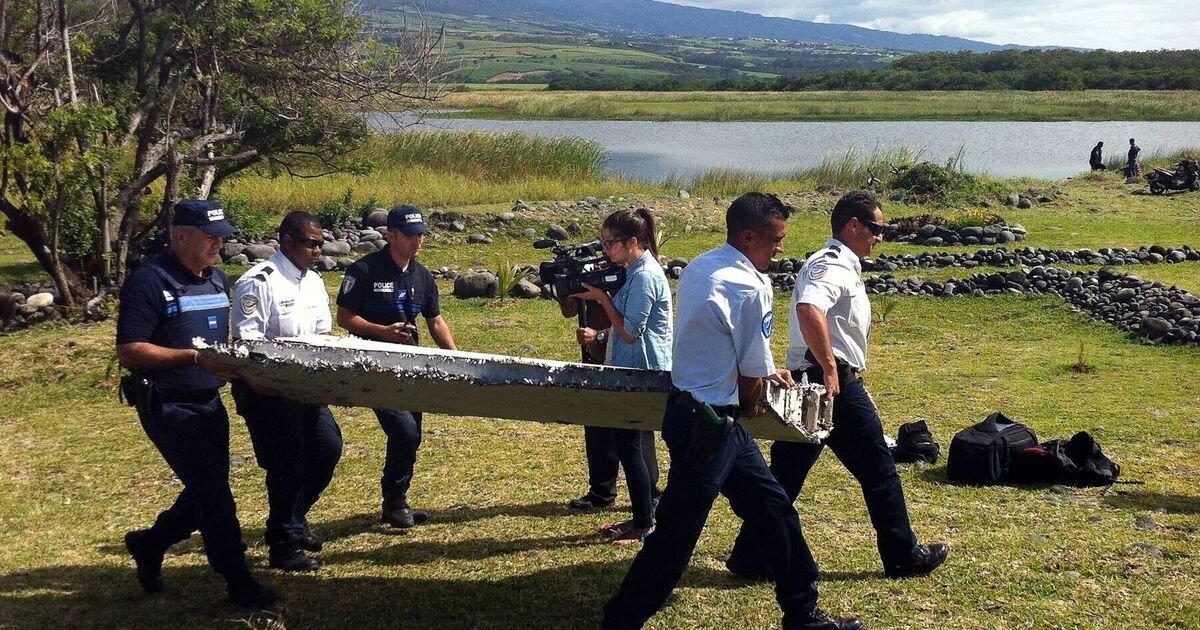

The doomed Boeing 777, carrying 227 passengers and 12 crew members, disappeared on March 8, 2014, while travelling from Kuala Lumpur to Beijing.
The plane remains at the centre of aviation’s greatest unsolved mystery and marks the deadliest single occurrence involving a missing aircraft.
Ongoing efforts by marine robotics company Ocean Infinity are operating on a “no find, no fee” basis, with desperate, grief-stricken families anxiously awaiting answers. The initial search was launched off the coast of Perth in 2018, with further searches conducted in 2025 and earlier this year.
Following the suspension of the search in January and its restart in March, Ismail Hamad, Chief Engineer at Egyptair, told The Daily Star: “Because had the aircraft flown toward the southern Indian Ocean using the autopilot system reliant on Inertial Reference Systems (IRS) of navigation, it would have been located during the initial search off the coast of Perth, Australia.”, reports the Daily Star.
“This conclusion is based on a simple integration of satellite data and fuel consumption rate calculations for the aircraft without even accounting for the other factors such as the weather conditions and the crosswinds. The effects of these are precisely corrected by the autopilot system and its laser gyroscope aids which are highly sensitive in determining direction and maintaining the aircraft’s orientation without being affected by any external factors.”
Hamad said the hijacker “relied on the aircraft’s standby magnetic compass” which would leave the “pilot himself uncertain of his exact landing location as a result of the impact of weather conditions and operational factors on the aircraft, not to mention the compass’ inherent deviation from the Earth’s magnetic north.”
Hamad said the search party should “at least do the right positive thing by taking into account the deviation of the plane’s standby magnetic compass to estimate the intended search area first.”
The engineer said that using “logical analysis and the circumstantial evidence” before the search requires efforts to “study how the plane moved to its final resting place in order to save time and money for everyone.”
Hamad ultimately concluded the aircraft would be found “close to the western Australian coast” in comparatively “shallow waters” and far from the extraordinarily deep waters of the Broken Ridge plateau.
Despite many conspiracy theories, Hamad remains convinced a “hijacker” was behind the incident, with the critical question still being exactly where the aircraft came down when their scheme collapsed.
He explained: “If the hijacker was looking for the perfect crime that would remain a mystery for a hundred years, he would have to land on one of the abandoned airstrips or lakes in the maze of the Philippine archipelago, which consists of 7,641 islands.
“Such airstrips are spread out and end in the sea, lakes or swamps, and not fly in a straight line to fall into the waters off the city of Perth, in an area that can be predicted by calculating the rate of the fuel consumption.”
