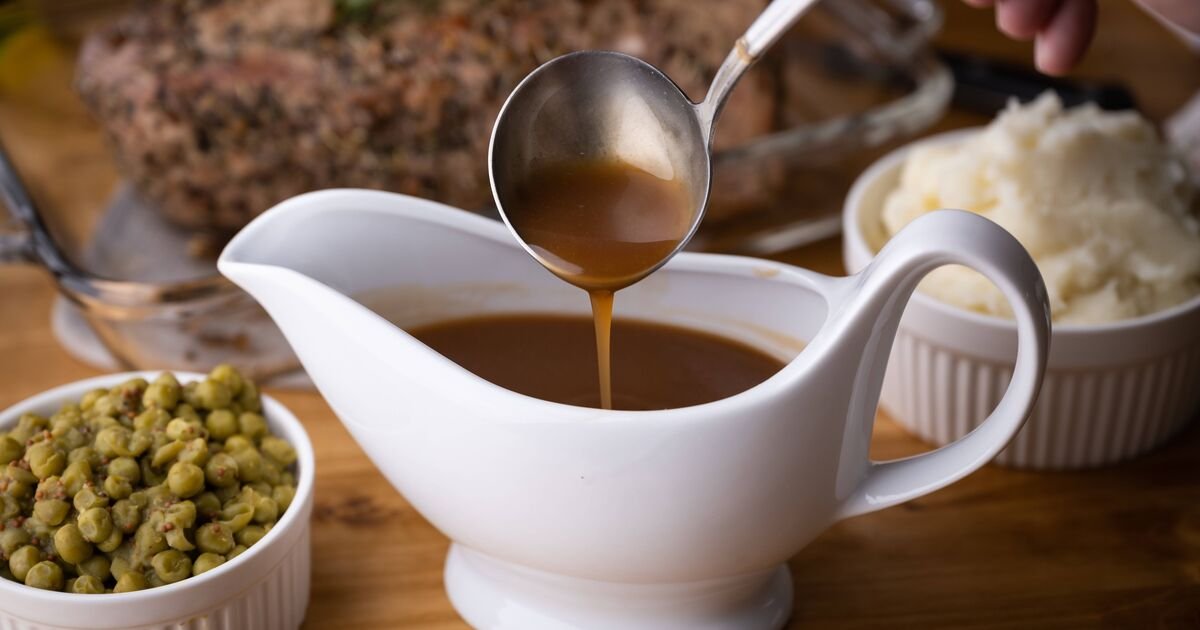

Gravy is the ultimate unifier of the British roast dinner, acting as the velvety connection between crispy potatoes, succulent meat, and a mound of vegetables. When executed properly, every element on the plate becomes more delicious. When it turns out too thin, lumpy, or bland, a Sunday feast can seem incomplete. The encouraging news is that restaurant-grade equipment isn’t necessary to achieve perfection.
A few clever, straightforward ingredients and a dependable technique are all that’s needed to transform a pan of drippings into something you’ll want to drizzle over everything. I consulted chefs nationwide, and they all offered the same guidance: steer clear of shop-bought granules and start with genuine ingredients. Michelin-starred chef Mark Poynton describes pan and roasting juices as an essential foundation, observing that “good stock and roasting juices always make gravy delicious”.
Sean Blood, head chef at ROAM, remains equally insistent about patience: “You can’t cheat flavour. Gravy needs to be slowly reduced,” allowing time and collagen to develop “depth, richness, and complexity” along with that naturally lustrous texture.
Begin with a heated roasting tin, scraping every caramelised morsel and allowing the base to thicken before reaching for the treasured ingredient that genuinely enhances the flavour.
Multiple chefs concur that this element is umami, which can be obtained from numerous sources.
Chef Jack Stein suggests a contemporary storecupboard combination: “a dash of soy sauce and Marmite, cider vinegar and mirin” to provide a profound, well-balanced character in traditional gravy.
Jack revealed it’s a flexible flavour pairing that enhances any Sunday roast and is “perfect on sausages and mash.”
Alternative methods can achieve the same umami outcomes.
Mark Hearthstone, chef proprietor of La Fosse at Cranborne, opts for “dried fungi,” delivering immediate woodland richness to game, beef, and mushroom gravies.
Umami represents a distinctly savoury taste created by glutamates such as monosodium glutamate (MSG).
These occur naturally in mushrooms, but if you’re short of the dried variety, your kitchen cupboard might hold the solution.
Matt Fletcher of Great Central Pub declares Worcestershire sauce “is a must… it really opens the flavours and adds a full-bodied punch of flavour,” with just a small splash sufficient to provide zest and richness.
Nevertheless, it’s classified as an ultra-processed food since it contains components like high-fructose corn syrup, which you might prefer to avoid in gravy, especially if your emphasis is on using whole foods.
After your gravy achieves that delightful umami taste, you might want to introduce some acidity to the blend.
Certain chefs recommend a splash of balsamic vinegar, apple cider, or white wine, though all must be applied cautiously to prevent the sauce from overpowering.
The final touch also counts, notes Dean Harper of Harper Fine Dining.
The chef’s most straightforward enhancement is “a knob of butter” whisked in at the very end for “a silky smooth texture and delicious buttery taste.”
This technique renders the gravy creamy without diminishing the savoury foundation, as butter’s milk solids provide lustre whilst its fat transports flavour. However, while butter can enhance the creaminess, an excess of it leads to too much fat, which can render a sauce oily.
A modest dollop of butter is sufficient for a subtle sheen.
