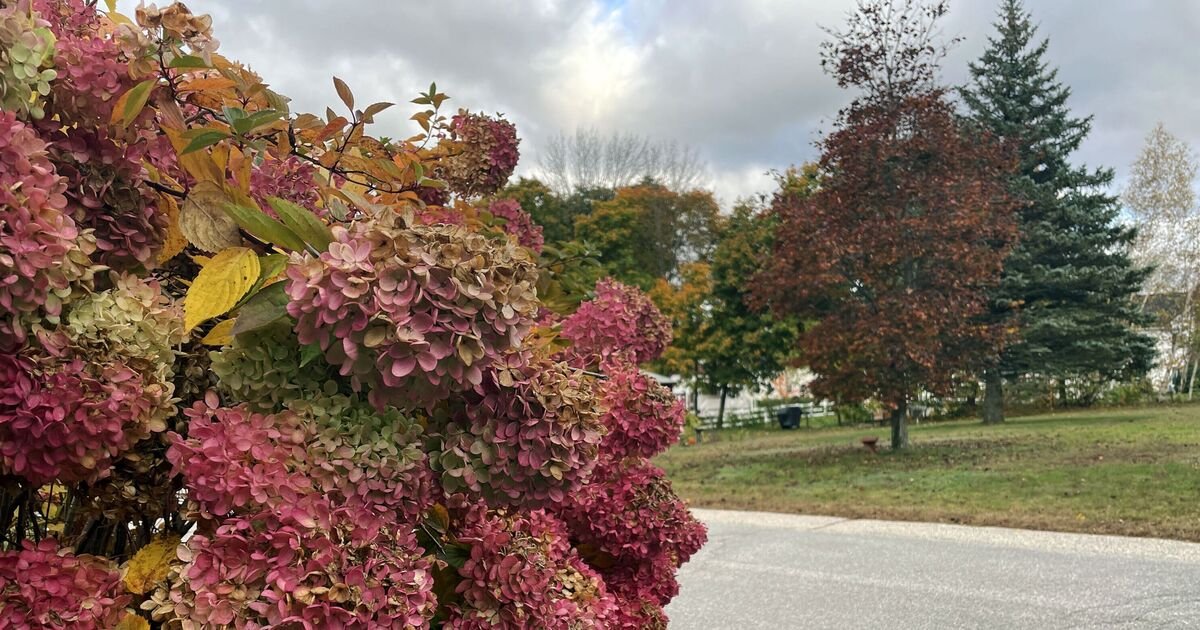

Hydrangeas’ big beautiful summer blooms have sadly faded with the onset of autumn. But before the colder months really set in, it’s important that gardeners carry out a straightforward task to help the plant survive the winter.
Their flowering period typically begins to come to an end in late August. At this point in September, hydrangeas will be displaying signs of deterioration and look less vibrant than in their summer heydey. Nevertheless, Mill Creek Gardens has shared how it’s remarkably simple to maintain hydrangeas’ health by deadheading them.
Deadheading is the straightforward gardening technique of cutting away flowers that have withered so plants can channel their energy into other tasks, like growing roots.
They pros said: “When you deadhead hydrangeas, you aren’t harming the plants at all. Removing the spent blooms triggers flowering shrubs to stop producing seeds and instead put their energy toward root and foliage development. This makes plants stronger and healthier, so by deadheading, you’ll be doing your hydrangeas a favour.”
Reasons to deadhead hydrangeas in autumn
Deadheading helps any surviving flowers on a hydrangea remain robust and looking nice. The primary reason to snip off faded blooms now is to encourage hydrangeas to focus on gorwing larger leaves and stronger roots before winter.
This helps hydrangeas withdstand icy conditions and look all the better for it come spring — a well-prepared plant is more likely to yield larger blooms next year.
Damp, old flowers can trap a significant amount of moisture, which can foster mould and other fungal diseases. Therefore, taking a few moments to deadhead now can reduce the likelihood of hydrangeas becoming infected in autumn.
How to deadhead hydrangeas
Deadheading is incredibly straightforward and will only take you a few seconds, or at most, a few minutes. Simply look for any spent flowers that appear brown or wilted on the plant and follow the stem to the first set of leaves.
Use a pair of clean shears to cut the stem just above the healthy leaves. Ensure you are only cutting into the green soft stem and not the thicker woodier parts of the plant.
At this time of year, it’s also beneficial to have a cloth soaked in alcohol to clean the shear blades. Fungal disease and mould are very common in late summer, and cleaning the shears helps to prevent any infection from spreading.
Simply check your hydrangea plant once a week to see if it needs deadheading, and the plant will be stronger and much better prepared as we head into autumn in September.
