
When it comes to home cooking, you’d be mistaken for believing there’s just oil and butter to choose from. Although there are plenty of oils to experiment with (coconut, avocado and olive, to name a few oils) and butters crafted across the world, there is one ingredient that may be flying under the radar in some home kitchens: ghee.
Ghee is a clarified butter, which means its milk fats and water have been removed. The benefit of clarified butter is that you can cook at high temperatures without burning and doesn’t require refrigeration. What’s more, as one foodie shared, it has a strong buttery flavour that tastes incredibly delicious.
Ali Domrongchai, an Associate Editor at The Kitchn, shared her love of ghee which she found makes everything from roast chicken, potatoes, vegetables, popcorn, and more “taste incredible”.
Oils with higher smoke points, like vegetable or sunflower oil, are better suited for pan frying, deep frying, or tasks like searing steaks. Whilst butter imparts a rich, savoury taste, it burns at 150C, while ghee burns around 250C.
The journalist specifically recommended a ghee made from the dairy of grass-fed cows from the American brand 4th and Heart.
She noted its fantastic flavour: “Contrary to a neutral oil like canola or avocado oil, 4th and Heart Himalayan Pink Salt Ghee is full of buttery flavour. Its salt content is comparable to a salted butter, so good but not overwhelming in the slightest.”
Whilst this US-brand ghee is tricker to find in the UK, you’ll find ghee commonly located in the cooking oil or Asian cooking section of supermarkets.
How to make ghee
You can also make your own ghee. Food blogger RecipeTinEats shared her recipe that’s “extremely easy” and tastes of “intense buttery richness”.
Ingredients
250g unsalted butter, cut into about 2.5cm/1″ cubes
Method
Use a small or medium saucepan or small skillet with a silver base so it’s easier to see when milk solids are golden.
Put butter in, then let it melt over medium-low heat.
Leave to simmer for 10 minutes – it will start to foam at about five minutes, then at seven minutes most of the foam will be gone, and by the end the foam should be almost all gone.
The ghee is ready when the milk solids that settle on the base of the pan turn golden.
Strain through a mesh colander lined with a single sheet of paper towel.
Then pour into a jar for storage. Keep in the pantry three months (firms to peanut butter consistency), or fridge 1 year (hardens like butter).
The food journalist shared she uses ghee as a one-to-one replacement for oil or butter when searing and frying food.
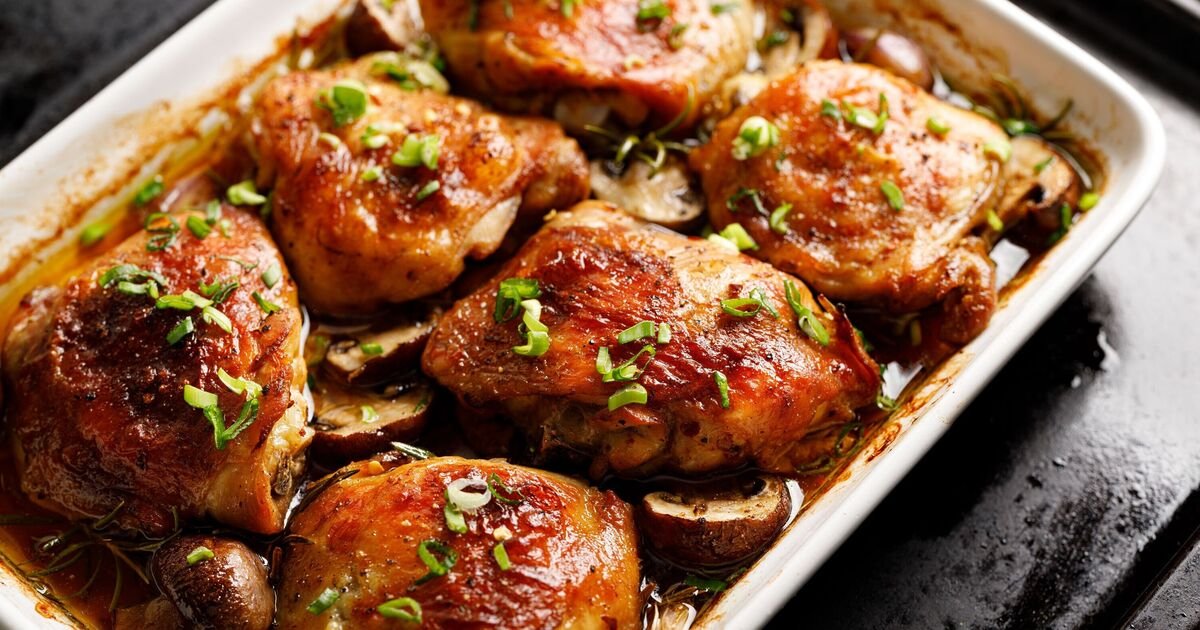
Ali described how to throw together a roast chicken that has become her ‘go-to’ dinner.
Ingredients
- One whole chicken
- Black pepper
- Garlic
- Soy sauce
Ali sears a whole chicken in ghee for a few minutes to give it some colour, then roasts it in the oven with black pepper, garlic and soy sauce at 220°C (450°F), fully taking advantage of ghee’s high smoke point.
The result? “It is the most flavourful and tender chicken in the entire world. The same goes for vegetables and potatoes! I’ll rub some on potato wedges or vegetables (carrots, parsnips, and broccoli) and roast until golden. They’re just divine.”
