


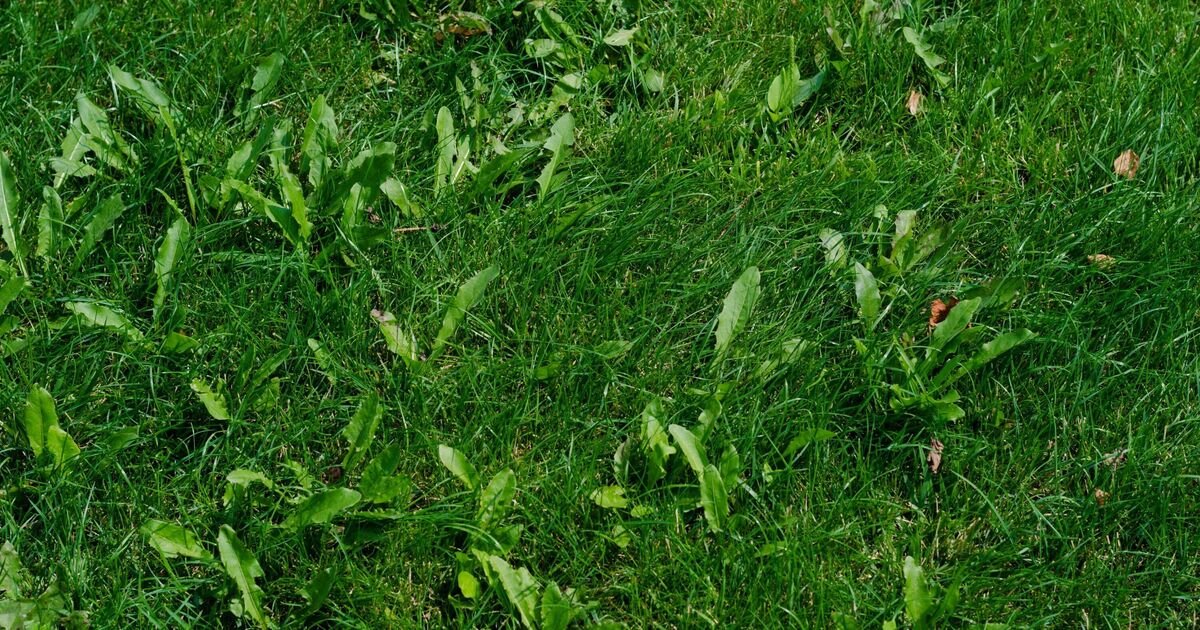
As the season edges closer to autumn, gardeners are bracing for a rise in weeds on their lawns, which are notorious for growing during this time. These unwelcome plants come in various life cycles—annual, biennial, or perennial—and can be a nightmare to manage once they invade your grass.
While chemical solutions exist to tackle these invaders, Peter Chaloner, gardening expert and managing director of Cobra, advocates for a natural and “effective way” to eradicate them. Weeds, often seen as unwanted flora, can sprout up anywhere and aren’t always unsightly; some may even resemble common wildflowers. However, for those striving for a pristine lawn, prompt weed removal is key.
Peter advised: “Removing weeds is the first step in achieving the perfect lawn. Avoid using chemicals, boiling water and white vinegar that are rumoured to work as you run the risk of killing the surrounding grass and doing more harm than good.”
He recommends a hands-on approach: “The more effective way is to dig simply. Take a hand trowel, or even a specialised weeding trowel, and dig around the weed, but be sure to get deep under the root to make sure it is entirely removed.”
This digging method proves particularly effective against stubborn weeds like dandelions, broad-leaved docks, and plantain, which have extensive taproots. Merely plucking the leaves won’t suffice; gardeners must excavate the entire root to prevent regrowth.
Some weeds are notoriously invasive, capable of sprouting from the smallest root fragments and quickly establishing a network of rhizomes. Once you’ve tackled the weeds, it’s vital to prevent their return with a robust lawn care routine.
Peter recommends starting with scarification to clear away debris and dead grass that stifles air flow to the roots, followed by aeration to improve circulation.
Regular scarifying not only suppresses annual weeds but can also diminish perennial ones. Thatch and moss can starve your grass of essential nutrients and moisture, but a scarifier can effectively remove this layer and prune the grass.
For lawns plagued by thistle or common ragwort, frequent mowing can aid in their management.
Peter suggested: “Mow throughout spring and summer little and often, and don’t take too much off with the first cut so as not to shock the grass.”
Before mowing, ensure your lawnmower is fitted with a clippings bag or box to halt the spread of weed seeds, which could exacerbate weed issues.
By diligently removing seeds and trimming the plants, the weeds will gradually weaken, and their ability to seed will be impaired. Over time, this consistent approach will lead to a weed-free lawn.