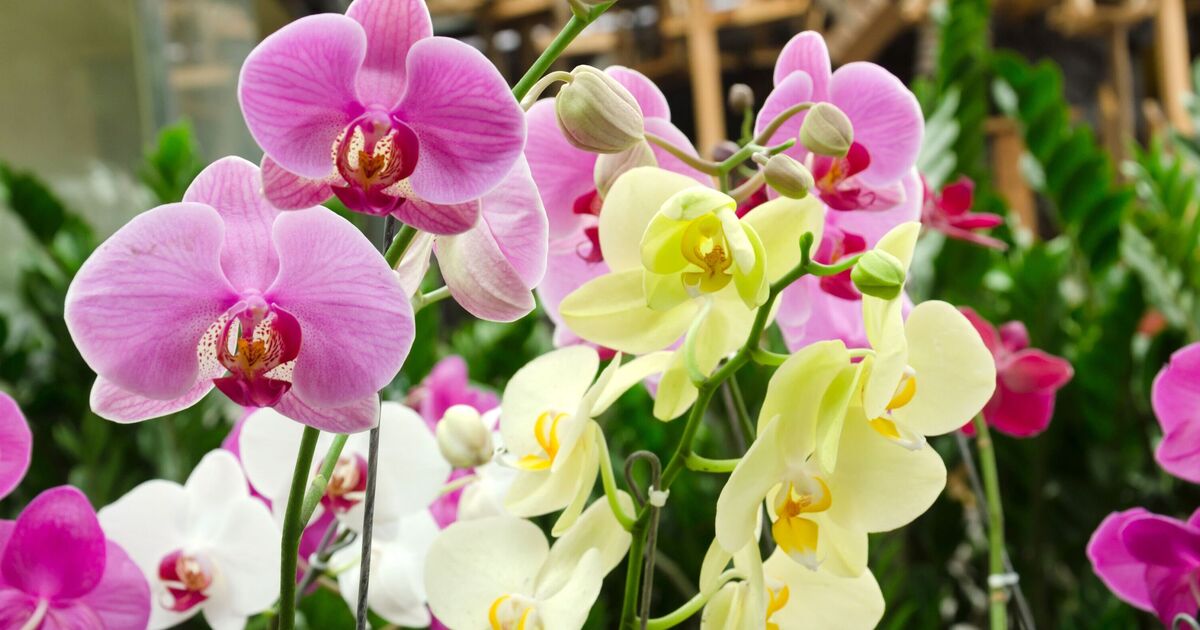

Orchids come in a range of colours and sizes. In fact, there are approximately 28,000 orchid species worldwide. However, one of the most popular species which can be found in many supermarkets and garden centres in the UK is the Phalaenopsis, also known as the moth orchid. Moth orchids bloom every three to six months, but encouraging them to re-flower repeatedly can be challenging.
Luckily, Harry Lloyd, a passionate gardener and head of marketing at waste removal company HIPPO, has shared his tips for encouraging orchids to rebloom. Mr Lloyd has spent many years perfecting the art of gardening and has plenty of firsthand experience when it comes to orchid care.
He recommended following a few simple tips and getting a feel for your plant.
“The secret to keeping them blooming repeatedly is in simple things like light, watering and giving them little encouragement,” he said.
1. Watering
Orchids are quite fussy when it comes to watering. They don’t like being overwatered or having wet feet.
Mr Lloyd explained: “The key to success is keeping roots dry enough to avoid rot. If they are green, just leave them as they are happy.
“When they become grey, give them some water and drain afterwards, this is closer to their natural environment.”
2. Feeding
Orchids need feeding when they’re actively growing but overfeeding can cause problems.
Overfeeding orchids can cause salt to build up which can cause the roots to burn and the leaves to turn yellow or brown. The plant can also have stunted growth and delay flowering.
During the summer growing season, a diluted orchid fertiliser will do the job.
In the autumn months, gardeners will need to switch to a phosphorus feed to encourage the plant to form spikes. Make sure to feed the plant lightly.
3. Positioning
The right position and environment is one of the “keys to success” when it comes to orchids.
Mr Lloyd explained: “Don’t put orchids in direct light, especially in summer. Light needs to be bright but indirect; an east-facing window works well.
“When it’s night, don’t forget to keep windows open as a slight drop in temperature encourages new bloom.”
4. Pruning
After the plant has finished flowering, it will need pruning. However, how you prune the plant will depend on the colour of the stem after flowering.
If the stem is turning brown, it should be cut at the base. If it’s still green, cut it above a node to encourage new flowers or a new spike.
After blooming, it is better to give the plant some rest and not water it for six to eight weeks. It helps the orchid start its next flowering cycle completely refreshed.
