
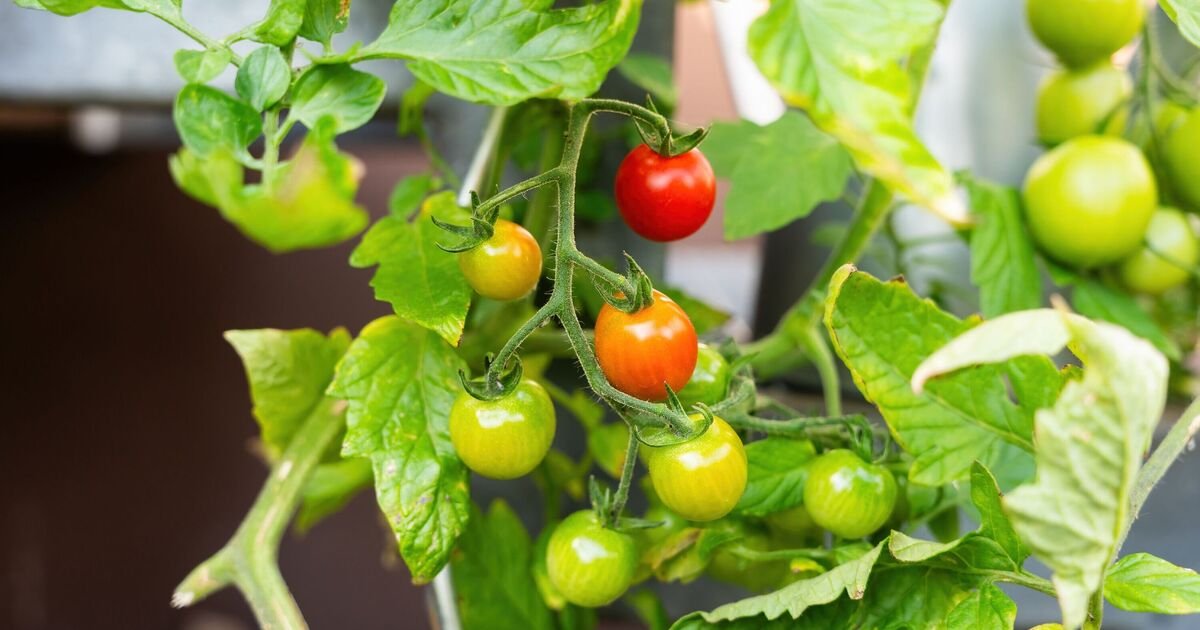

Keen gardeners will soon be gearing up for the end of tomato harvesting season. The peak time to pick your tomatoes generally ends in September, so there’s still a bit of time left to get picking.
But at this time of year, there are certain problems which can ruin your tomato plants. Fungal diseases can appear on your plant’s leaves and ruin the fruit if it’s not dealt with. However, according to gardening experts, sprinkling one natural item on the soil can help to prevent this.
The gardening experts at R&L Holt said that tomato care becomes even more important when we approach the changing of the seasons.
They said: “Tomatoes can be sensitive to temperature fluctuations and decreasing daylight hours, so proper attention is crucial to ensure a bountiful harvest and healthy plants.”
And if you want to help ward off diseases, adding a layer mulch to the soil where your tomato plants are growing could make a huge difference. This natural item, which is often made of leaves or bark, can help to stop excess soil from touching the plant’s leaves.
The pros explained: “Overly dense foliage can inhibit air circulation and trap moisture, creating a breeding ground for fungal diseases.”
To stop this from happening, you can sprinkle a layer of mulch around the bototm of your tomato plants. Mulch will help to regulate the temperature of the soil, keep the plant nice and moist, and cut down the amount of soil splashing onto the leaves, which can carry diseases.
Best mulch for tomato plants
According to the experts at Gardening Know How, organic mulch such as straw, grass clippings or shredded leaves are great for tomato plants.
They are great for growth, plus they can enhance the soil too. And as they break down, they deliver a slow release of necessary nutrients – you’ll still need to fertilise, but it’ll give your plants a nice boost.
The only downside to these kinds of mulches is that they’ll need replacing often. If you don’t want to do this, inorganic mulch like black plastic sheets can be used instead.
While this won’t provide the soil with nutrients, it’ll keep it warm and sheltered – which could come in handy later on in the growing season.
