


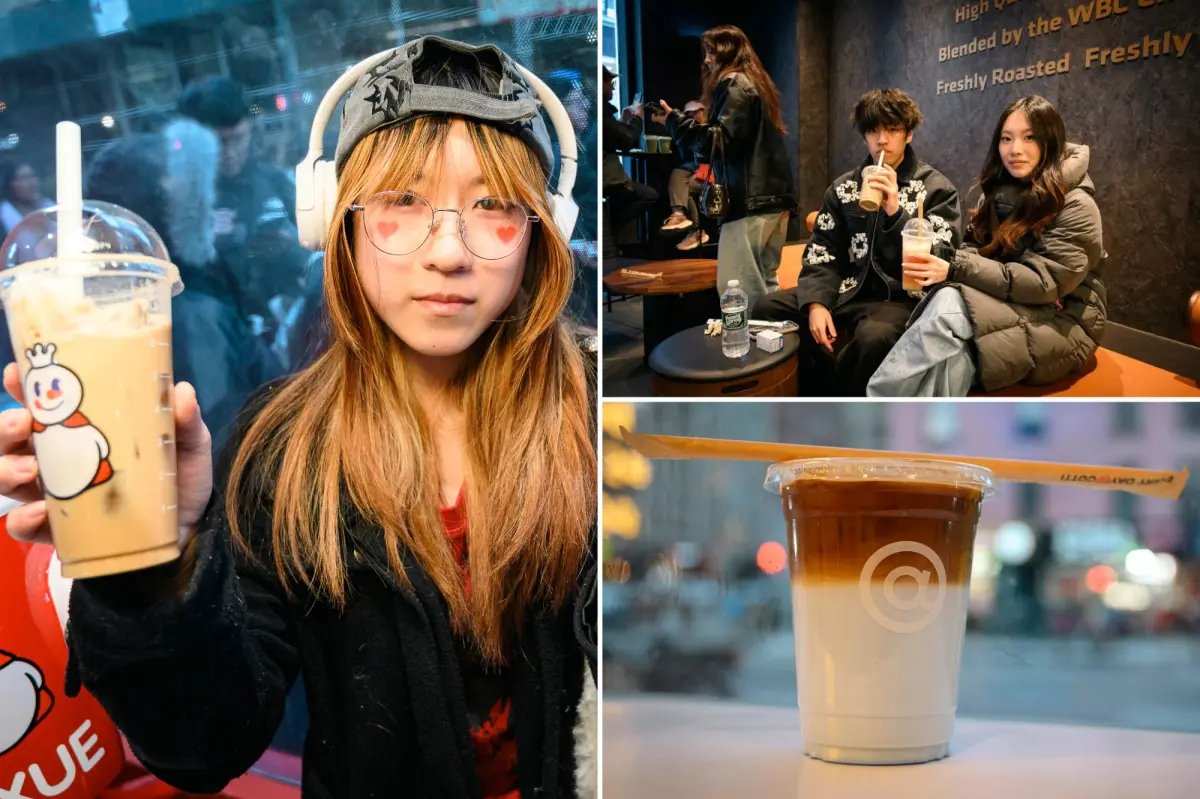

A coffee Cold War is brewing in the Big Apple.
Once poised to take over the New York caffeine scene, Starbucks’ star appears to be fading in the Northeast, with the Seattle-based coffee giant shuttering a whopping 42 of its locations across the Big Apple in recent months — as part of a purge that eliminated 400 branches nationwide amid flatlining sales.
Among other factors in their recession, including inflation-fueled price hikes and declining desk jockey patronage following the pandemic, it appears that Gotham brewdogs are forgoing the corporate fueling station — favoring instead newer, flashier spots that offer better bang for your cup.
There’s Gregory’s Coffee, founded locally in 2006 and now popping up all over the metropolitan area, as one relatively new favorite with the masses — and for something with even more style and polish, there’s California transplant and Nestlé-owned Blue Bottle, boasting 18 shops in NYC alone and charging just 30 cents more for a much better cappuccino than Starbucks could provide.
But all that’s just a warmup for the real new guard, it seems — currently gunning for the siren’s starry crown are a group of quick-serve Java juggernauts from China, known for their quick rollouts, near total-automation, and cups of Asian-inflected people diesel costing as little as $1 or $2, ordered typically via easy-to-use apps.
Luckin Coffee, Cotti Coffee and Mixue — the latter known as the largest fast-food brand in the world, but mostly still unknown to Americans for the moment — are hanging out shingles all over the city that never sleeps, and many local java junkies are welcoming their new Joe-verlords, or at least grasping the appeal of the new arrivals.
“Embracing automation and quick service is a way to keep prices low in a competitive market like New York,” coffee expert Peter Giuliano told The Post, comparing the Chinese chains to the legendary automats — coin-operated, self-service food kiosks that were popular in the ’60s and ’70s but are now back in fashion with nostalgists, and possibly even coming back in the future.
The Post sipped and surveyed the scene at three of the Far East offerings leading the new caffeine charge — here’s how they stacked up.
Luckin Coffee
After opening two New York stores in June 2025, Luckin has now already increased that number to 10 — some of which have overtaken former Starbucks strongholds, like a phoenix rising from the burnt grounds.
The sudden jolt reflects the company’s meteoric rise in China, where it first opened in 2017, nearly 20 years after Starbucks, but has since leapfrogged the aging Macchiato missionaries in popularity.
Bean fiends notably waited up to three hours during Luckin’s initial launch, Forbes reported — and the lines in many cases haven’t slowed.
The company’s success is a credit to the minimalist format. No-seating and app-only ordering eliminate the overhead of cash-handling and other costs, allowing for higher volume, faster openings, and, of course, bargain bin prices. A $4.95 cold brew or $6.75 coconut latte can dip to $1.99 for first-timers and during other deals — a 70% discount in some instances.
On the menu, standard beverages bump elbows with Frankenfusion mashups like an Ice Caramel Popcorn Latte, of which they purport to have sold “1.7 billion internationally.”
While Post taste-testers found the coffee to be brawny and agreeable, the “Tiramisu” latte — a Valentine’s special — seemed to skew more liquid birthday cake than espresso, making us feel bloated after a few pulls. It’s no surprise that these gut bombs clock in at 460 calories, although still not as calorific as some Starbucks offerings.
Manhattan resident Alexa Speciale is a fan of the drinks, telling The Post that her Coconut Latte was “good” with a bold “espresso flavor.” The content creator said it helped that she “only paid $2,” quipping, “Everything always tastes a little bit better when it’s cheaper.”
Speciale, however, found the company’s “mobile-only” ordering format somewhat soulless, lamenting how “everyone’s just on their phones standing there.”
To buy a drink, you have to download the app — which, on the plus side, appears to unlock significant savings, at least for first-time users, dropping the list prices by half in some cases. But through this rigamarole — complete with verification codes and profile customizations — just to get a cup of black coffee seemed gratuitous when the barista was standing right there. (We were reminded of the automated ordering stations at Newark Liberty International Airport bars.)
But, at those prices, it’s hard to complain.
Cotti Coffee
Founded in 2022 by Luckin executives following a fraud scandal, Cotti Coffee made its US debut in early 2024 in Hawaii, before expanding to California, finally arriving in New York last year.
Like Luckin, they offer unconventional drinks for a charity drive, notably offering charging just 99 cents for app-users’ inaugural beverages. Although they differ in that customers can use the kiosks to order as well, a human preps the order (at least until robo-baristas inevitably render them obsolete).
Creations include a Brown Sugar Oolong Oat Latte and Americanos infused with different fruit syrups such as lemon and grapefruit.
As part of a collaboration with pastry shop Na Tart, the Chinatown location serves Portuguese egg tarts spanning wacky flavors from Mozzarella to Durian, the noxious Southeast Asian fruit. These confections were refreshingly flaky and custardy, providing a respite from the sawdust croissants and petrified scones sold at many java joints.
But as with any addictive substance purveyor, you don’t go for the pastries, and the caffeine is a mixed bag at Cotti. We found the cappuccino aggressively milky — more babycino than adult beverage — while the Pampas Blue Coco Latte was sweet and energized the system like a downed power line.
Expert Giuliano credited their success to keeping up with “overall culinary and coffee trends” like fruit lattes that might jar New Yorkers but resonate with the Chinese palate. (Read: the light-speed Westward expansion of HEYTEA, home of the Grape Cheese Boo.)
With nearly 700,000 ethnic Chinese people in NYC — the most of any US city — there is definitely a market. Cotti is slated to open a spot at Penn Station on Feb. 23.
Mixue
There’s a third, even more formidable member of the Joe Dynasty: Mixue, the digital-only sweets and drinks titan that, with over 53,000 locations worldwide, is the largest chain on Earth.
Denoted by its smiling, Stay Puft-like mascot, Mixue already has three outposts in NYC. Customers exclusively use digital kiosks to order their fare, which definitely moves the line along — either that or customers want to escape the mind-numbing “It’s a Small World”-esque jingle playing on a loop.
Also, it was confusing inputting a name for the order and then having them call out a number instead, but we digress.
The highlight is that all of Mixue’s options cost under $5, including the coffees, of which there are four options: Jasmine Latte ($3.49), Latte ($2.99), an Americano — either iced or hot — for $2.49, and an Affogato Latte (essentially a latte adorned with ice cream for $3.49). Total price for this haul: pennies shy of $12.50 — about the cost of just two Capuccinos at a Manhattan Starbucks.
Unfortunately, you get what you pay for.
Our iced black coffee was tannic and wimpy, like a cup of hot ashtray juice. It tasted like something you’d be served on a deep-space salvage ship in the far future — definitely not the grounds-breaking offering that’s going to allow them to compete with Starbucks on the coffee front.
In this case, it’s worth ordering the other three milkshake-esque offerings to mask the taste, and dialing up the sugar levels — which range from zero to “200%” — to the max.
We eased our disappointment with their $1 vanilla ice cream cones. It was basically your typical McDonald’s soft-serve curlicue, but for a third of the price at a Manhattan Golden Arches.
The verdict
Do Chinese coffee shops have a shot at taking over the caffeine scene?
While they offer only serviceable java, the imported chains could conceivably provide a haven for inflation-weary Starbucks refugees. After all, throw-away paper cups filled with bargain brews are still hawked in bodegas and delis from Bushwick to The Bronx and beyond — with zero expectation for anything better than, say, watered-down Chock Full o’Nuts.
Plus, novelty items like fruit coffee will no doubt pique decaf die-hards’ interest and become the growing Far East customer’s new cup of “tea.”
However, Speciale said that while she sees the appeal of quick-serve, affordable coffee for hurried Big Apple residents, the new arrivals don’t have a chance of replacing New York’s storied café spirit.
“There is a coffee shop culture in the city that I don’t think will ever die,” she told The Post. “I also think there’s a whole group of people that are afraid of the mobile order-only thing. But I do think that they’re here to stay.”