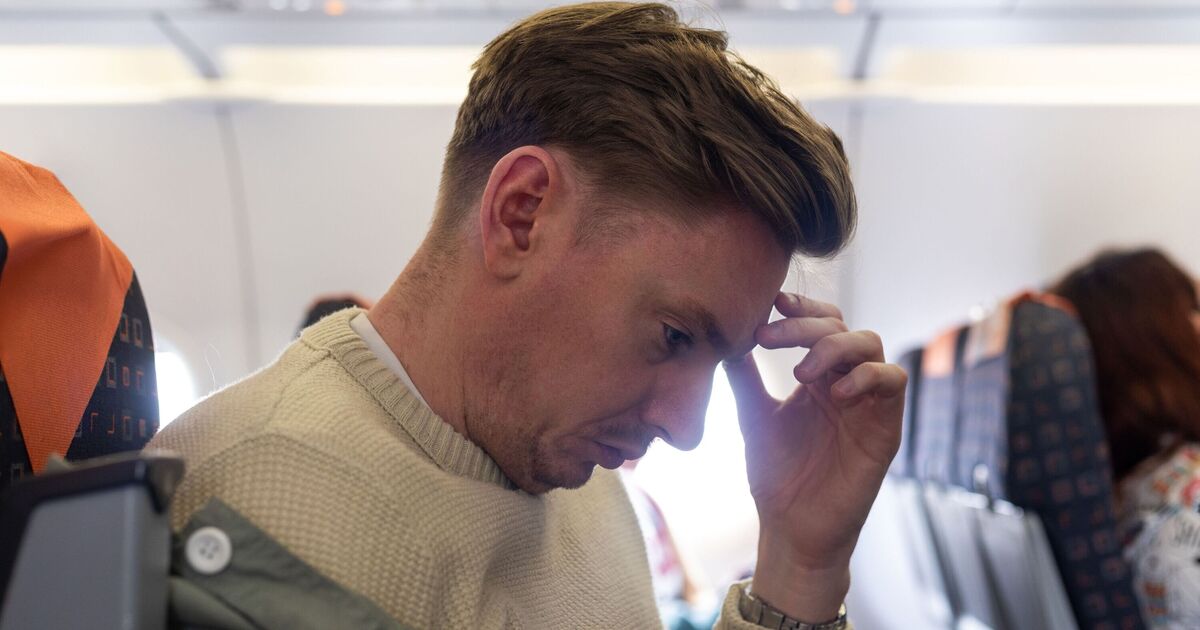

Holidaymakers embarking on lengthy journeys this summer could be at an increased risk of developing a serious condition that causes significant swelling in the legs.
Deep vein thrombosis (DVT) is a potentially life-threatening condition that can often be difficult to identify. It typically occurs when a blood clot forms in a vein, usually in the leg.
Despite the seriousness of DVT, it can be treated to prevent severe complications, some of which can be fatal. For instance, if the blood clot dislodges, it can travel through the bloodstream and become lodged in the lungs, leading to a condition known as venous thromboembolism.
Symptoms of DVT
Sometimes DVT can result in zero obvious symptoms, making it difficult to diagnose. However, NHS guidance notes that there are some common symptoms, such as:
- red or darkened skin around the painful area – this may be harder to see on brown or black skin
- throbbing pain in 1 leg (rarely both legs), usually in the calf or thigh, when walking or standing up
- warm skin around the painful area
- swelling in one leg (rarely both legs)
- swollen veins that are hard or sore when you touch them
While DVT usually affects one or both legs, these symptoms can also be present in your tummy or your arm if that’s where the blood clot is. NHS guidance also notes that if you have symptoms of DVT alongside breathlessness or chest pain, you should immediately call 999 or go to A&E.
Avoiding DVT while travelling
A variety of factors can increase your risk of suffering from DVT, such as being over 60, overweight, or a smoker. However, you are also at a higher risk of getting DVT if you go on a long journey for three or more hours by plane, car, or train.
This is because long periods of not moving the body can significantly increase the risk of a blood clot forming, especially in your legs. As a result, it generally advised to do a few of things while travelling for long periods, such as:
- Moving around every hour or so
- Avoid smoking
- Avoid drinking large amounts of alcohol
- Try not to cross your legs while sat down
- Staying hydrated
Full NHS guidance on DVT can be found on the NHS website here.
