


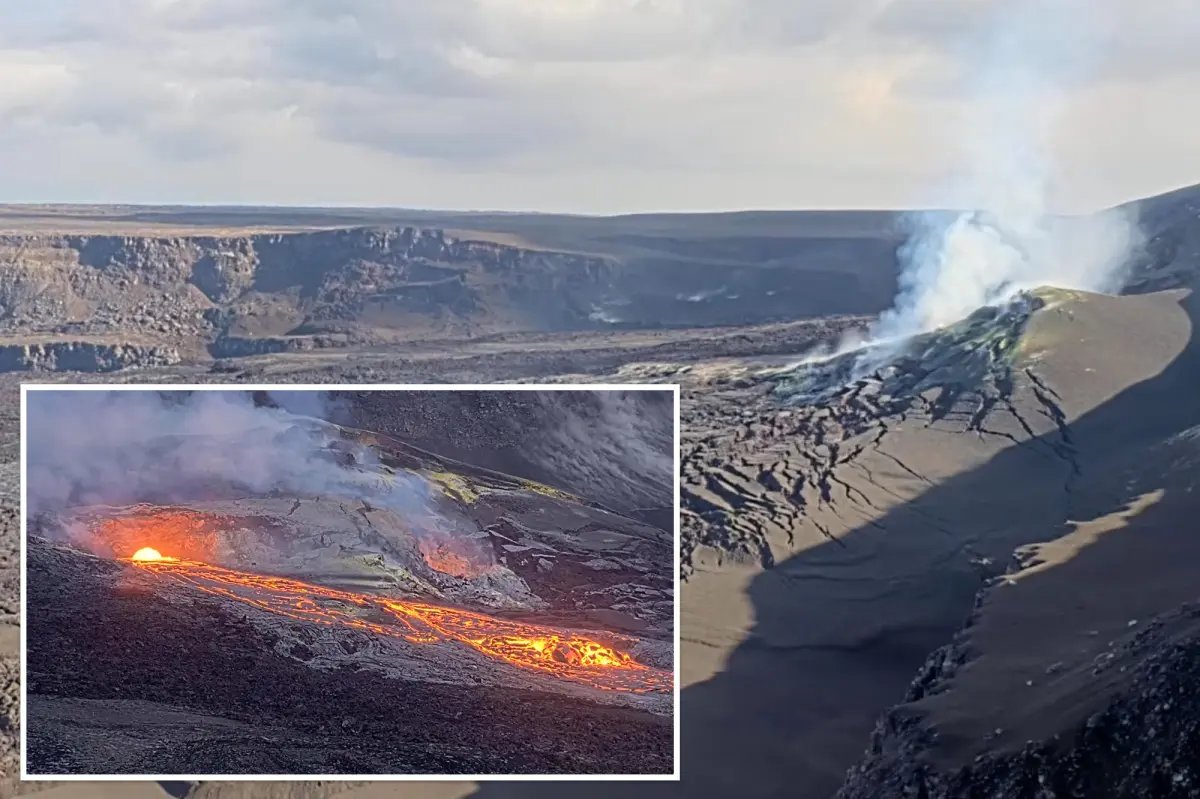
Hawaii’s most active and popular volcano, Kilauea, is preparing to put on a show as geologists forecast the volcano’s 44th eruption in the coming days.
The United States Geological Survey said that precursory eruption activity is occurring as the active volcano prepares to erupt – one of Earth’s most captivating natural spectacles.
According to the USGS, the forecast for the start of episode 44 is between April 6 to April 14.
On Saturday morning, the south vent overflowed at 6:11 a.m. HST, with lava flowing from the south vent at least 10 times through small dome fountains.
One of the most active volcanoes in the world, Kilauea has been erupting episodically within its summit caldera since December 23, 2024 – and is preparing to do so for the 44th time in the coming days.
Eruption episodes at Kilauea typically last from a few hours to one day, with some lasting up to 8 ½ days of lava flow.
When the volcano comes alive, it is a sight to behold.

Fountains of red to yellow lava shoot more than 1,000 feet in the air out of boiling lakes of lava – a scene that annually attracts crowds of tourists to Hawaiʻi Volcanoes National Park to witness the phenomenon.
For those fortunate enough to witness a Kilauea eruption, the natural spectacle is as dangerous as it is mesmerizing.
According to the USGS, the volcano lets off threatening hazardous gases, especially to those with heart or respiratory issues, infants, children and pregnant women.

When the volcano is erupting, unsafe ash is abrasive and can irritate eyes, skin and the respiratory system.
Can’t make the trip to Hawaii to witness the 44th episode? Don’t worry.
The USGS operates several live webcams at Kilauea, streaming continuously on their website—stay tuned for any signs of eruption. You won’t want to miss it.