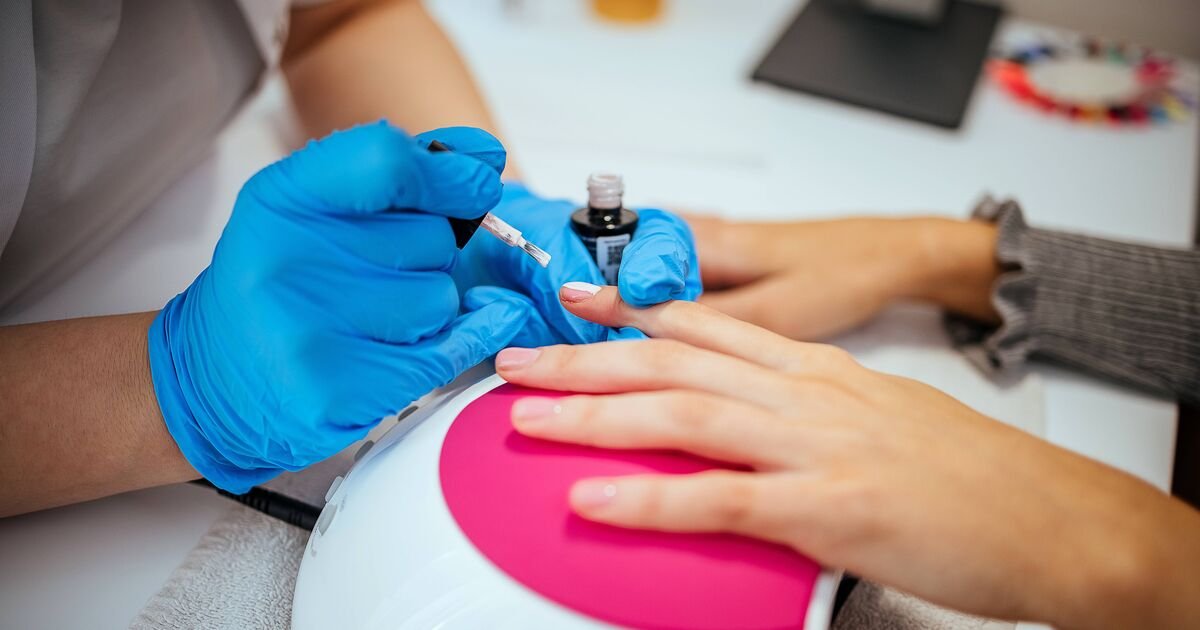

Health officials have outlawed a crucial ingredient found in numerous gel nail polish brands across Europe due to concerns over its potential toxicity to humans, with the ban potentially reaching the UK by 2026.
The European Union has banned the use of trimethylbenzoyl diphenylphosphine oxide, also known as TPO, in all cosmetic products from 1 September following studies that linked it to long-term fertility problems. Although the prohibition does not currently apply to the UK or US, industry insiders predict a similar ban will be implemented towards the end of 2026.
TPO is commonly used in the beauty industry as a photoinitiator, which accelerates the drying time and aids the hardening of the nail polish when exposed to ultraviolet light. It’s believed this ingredient can be found on the shelves of many high-street nail salons, with millions of people choosing gel polishes for their longer-lasting colour.
Nail salons throughout the EU’s 27 member states, as well as other countries that follow its regulations such as Norway, have been instructed to cease offering TPO-based nail gels and to safely dispose of their existing stock.
Manufacturers will now also need to reformulate their products to be TPO-free. The US has not yet followed suit, but experts suggest the ban could impact the American beauty industry if salons source their products from Europe, reports the Mirror.
Francesca Rapolla, senior affairs manager at the Cosmetic, Toiletry and Perfumery Association, explained that certain industries can challenge regulations by demonstrating how product risks might be reduced.
“In the case of TPO, the industry did not and could not defend the continued use of this ingredient in nail products mainly because it could not demonstrate that there are no alternative ingredients to this one,” she revealed to Scratch magazine.
However, other specialists have argued that the precautionary prohibition lacks solid scientific backing and may create needless financial strain.
Doug Schoon, a scientific consultant at Schoon Scientific, cautioned in an open letter challenging the prohibition: “If left uncorrected, this decision will once again impose unnecessary economic burdens, waste safe products, and undermine confidence in EU regulatory proportionality.”
Since Britain has departed the EU, it falls to ministers to examine the ingredient’s long-term impacts and determine whether a prohibition is warranted.
The move will probably impact most high-street nail salons, with thousands needing to discard existing stock and refill their shelves with fresh brands manufactured without the component.
This development follows experts blaming cosmetic products used by millions of women for a spike in debilitating gynaecological conditions known to trigger fertility problems. Toxic chemicals known as endocrine disruptors, linked to a range of health problems including diabetes, obesity and certain cancers, could be the cause of the rise in incurable reproductive disorders, according to experts.
The number of endometriosis cases has skyrocketed from 3.4 million worldwide in 1990 to a staggering 190 million today.
Chemicals such as phthalates, commonly found in cosmetic products, increase the risk of breast cancer and have been directly associated with developmental delays in babies exposed to them in utero.
These harmful substances can be found in everyday items like nail polish, perfume and hair products. Even though they are not ingested, these products can permeate the skin and disrupt the body’s natural processes.
However, there are several gel polish brands that do not contain TPO, including ProNails, Manucurist, Halo, Opi and Apres.
