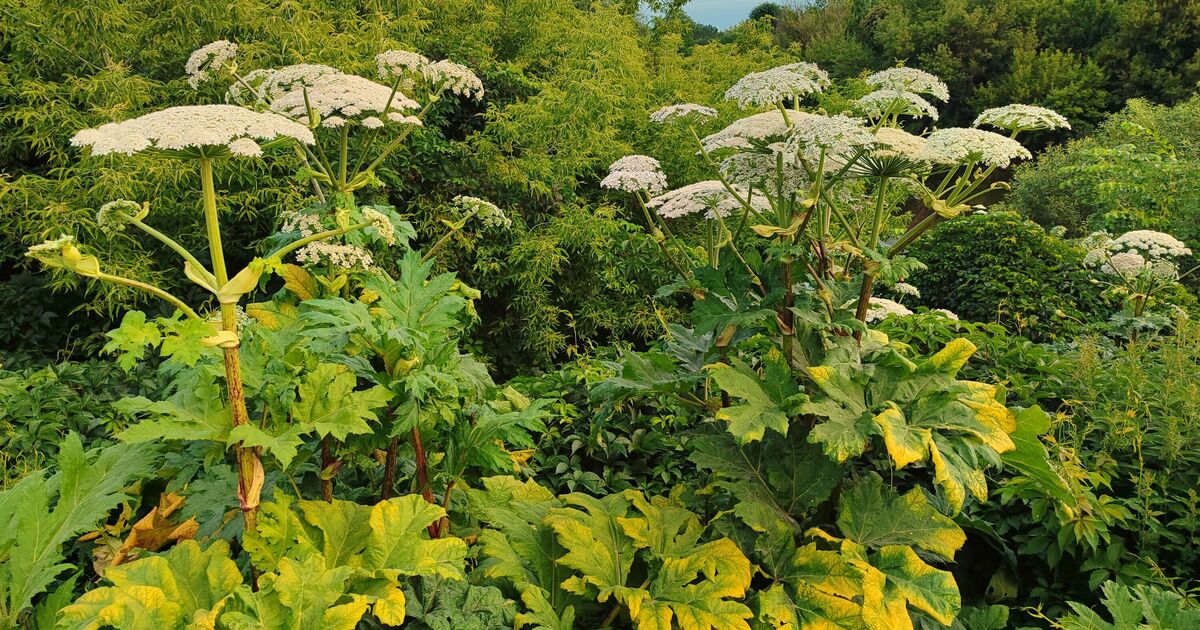

Gardeners are being urged to be on the lookout for certain plants that could end up being harmful thanks to toxic sap that can burn skin and damage gardens. Many toxic plant saps – which are found in harmless-looking plants – contain chemicals, which react with light from the sun.
If you get sap on your skin and end up exposed to sunlight, the reaction can trigger a condition called phytophotodermatitis. This can lead to redness, painful blistering, and sometimes long-lasting stains on the skin. To help people protect themselves and their outdoor spaces, garden maintenance and outdoor cleaning expert Alex Essex – from Patio Black Spot Removal – has identified five of the main plants that everyone should be wary of.
He said: “Toxic plant sap can cause serious burns if it’s left on the skin and then exposed to sunlight; it is vital to learn how to recognise hazardous plants, wear gloves and long sleeves, and wash any sap off straight away.”
Giant hogweed
The sap of this invasive plant contains furanocoumarins, which reacts with sunlight causing phytophotodermatitis, a severe skin reaction resulting in painful blisters, burns, and long-lasting scars. The affected skin can stay sensitive to sunlight for years.
Originally introduced as an ornamental plant, it now grows wild along riversides, roadsides, and sometimes large gardens. It looks like an oversized cow parsley, growing up to five metres tall, with umbrella-shaped white flower heads and purple-spotted stems.
Euphorbia
All euphorbias produce a milky latex sap that is highly irritating to skin and eyes. It can cause redness, blistering, and even temporary blindness if it gets into the eyes.
They look like big evergreen clumps with lime-green or yellow-green flowers and narrow leaves.
Fig tree
The sap of fig trees also contains furanocoumarins, which can trigger blistering in sunlight. Handling the leaves and branches, especially when pruning, is the biggest risk.
Monkshood
One of the most poisonous plants in Europe, Monkshood contains aconitine, which can be absorbed through the skin. It causes numbness, tingling, nausea, and in severe cases, can affect the heart and nervous system.
Grown as an ornamental perennial for its tall spikes of purple-blue flowers, it has deeply divided dark green leaves and hood-shaped flowers that appear in late summer.
Rue
This herb contains photosensitising compounds that cause burns and rashes when sap-covered skin is exposed to sunlight, similar to giant hogweed, but usually milder.
It has small, grey and green feathery leaves with a strong smell, and clusters of yellow flowers in summer.
