


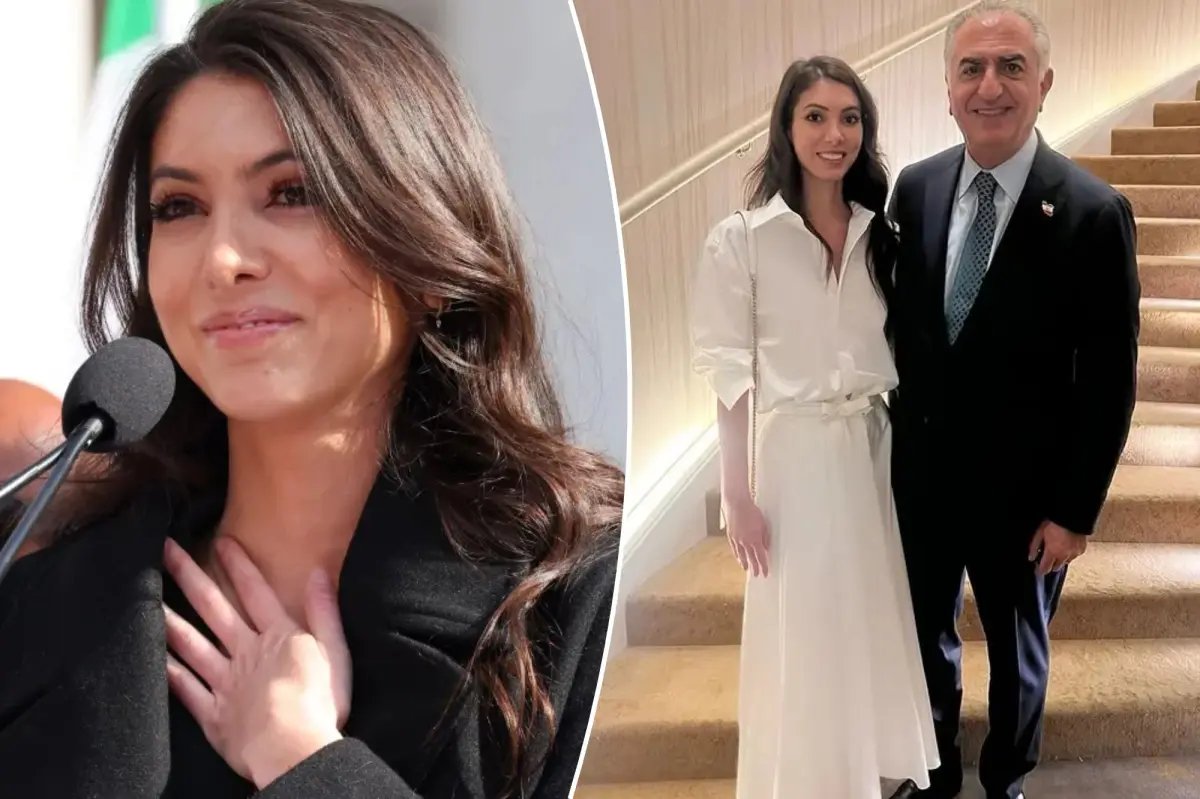

Noor Pahlavi’s heart breaks as she watches her people suffer in Iran – a land in which she never stepped foot, yet remains forever in her blood.
The exiled princess recounted in a wide-ranging interview with The California Post the horrors inflicted on protesters, parents and even children during a crackdown by the same brutal regime that deposed her grandfather, the Shah of Iran, 47 years ago.
Kids have been shot in the street, doctors persecuted for treating anti-regime protesters and scores of Iranians abducted for secretive interrogations, often never to return, Pahlavi said.
“Imagine if this were happening to you and your country,” she said. “It’s happening at the hands of the government, the government that’s meant to protect them.
“It’s literally a government waging war on its own citizens. It’s just incredibly painful to watch, to hear about. And it’s hard for people here to see and hear about. But it’s our responsibility not to look away.”
Pahlavi’s passionate plea for regime change comes as the protests against the regime persist, on the streets of Iran and worldwide – including a massive rally in her newfound home of Los Angeles.
The protests run parallel with President Trump’s renewed saber rattling against Iran. He has sent two aircraft carriers to the Middle East as he weighs a military strike, giving Tehran a 10-day ultimatum.
The confluence of pressures from inside and outside Iran shows the regime has never been so ripe for change, Pahlavi said.
“It’s never been this close, and the regime has never been this weak,” she said.
”The need for regime change can’t be stressed enough. A reformist won’t do it. And, you know, they’re [the Iranian people] being extremely clear.
They’re dying for something specific. And we need to listen to them.
”The people really listened when the president told them that help was on the way and that they should continue taking to the streets. They’ve named streets after him. They’re holding up signs with his face on them. They’re begging him to come in and help them because they’re fighting this government empty handed.
Download The California Post App, follow us on social, and subscribe to our newsletters
California Post News: Facebook, Instagram, TikTok, X, YouTube, WhatsApp, LinkedIn
California Post Sports Facebook, Instagram, TikTok, YouTube, X
California Post Opinion
California Post Newsletters: Sign up here!
California Post App: Download here!
Home delivery: Sign up here!
Page Six Hollywood: Sign up here!
”It gives me hope to see the amount of US military that has been deployed to the region. Iranians inside all have their heads up to the sky. They’re just waiting and praying and trying to survive until it help come.”
The rise of the Islamic Republic of Iran is inextricably linked with Pahlavi’s family – and they have spent decades preparing for a transition to democracy, knowing the regime will collapse.
Pahlavi’s grandfather Mohammad Reza Pahlavi fled the 1979 Iranian Revolution that swept Ayatollah Khomeini and a host of religious clerics into power.
The Shah’s son Crown Prince Reza Pahlavi, who is Noor Pahlavi’s father, has long been viewed as an opposition leader, consistently calling for Iran to transition to a secular democracy.
Reza Pahlavi this week called on Trump to “expedite the process” of regime change – but own his viability as a post-regime leader has been questioned, including by the president.
“My father has given his entire adult life for the possibility to help his country find its footing and then step aside once the Iranians have chosen their own path through free elections or participate in any way that they so choose,” Noor Pahlavi said.
Regardless of their chances of returning to some type of power, the royal family’s exile is part of wider Iranian diaspora, of which Los Angeles is major locus.
The “Tehrangeles” area centered around Westwood alone has tens of thousands of Iranian-Americans.
The freedom offered by California and Los Angeles, in particular, attracted Iranian doctors, engineers, entrepreneurs, artists and more who shared those values, Pahlavi said.
“The community is a testament to what happens when people have freedom and are given the chance to contribute. A free Iran will only produce more of that,” she said.
“I actually recently moved here. The amount of support and kindness I’ve received from my community here, I’ve never experienced in any other city in the US.”
But as rooted as Iranian people have become in LA, they still share a sometimes painful bond over their ancestral home, Pahlavi said.
Frustration with decades of oppression, a cratering economy and even a water crisis boiled over into intense, sustained protests in Iran.
The intense protests sparked a brutal crackdown, peaking on Jan. 8 and 9, when security forces violently attacked hundreds of thousands of demonstrators in more than 190 cities across Iran.
The two-day crackdown is likely the deadliest in Iran’s modern history, with more than 7,000 people killed, according to Iran International.
And Iranian expats and exiles such as Pahlavi haven’t been untouched by the horror.
She has heard from people whose family members have been snatched from hospitals, arrested, killed or disappeared without a trace.
“I don’t think there’s anyone in Iran or living here who hasn’t lost someone,” she said.
“I think every family has been touched by loss.”
But even amid the brutality, Pahlavi said the protesters show no signs of stopping. She recounted the story of one woman who got shot in the eye and only went to the hospital long enough to get stitched up, before returning to the demonstrations.
“When I see the courage of ordinary Iranians, people who face all of this knowing exactly what it could cost, it makes every risk worth it,” she said.
Pahlavi feels hope the day will come that her family can finally return to Iran, although she suspects the danger may never fully go away.
“The moment that the opportunity opens up, we would go back,” she said. “The moment Iran is free, my whole family can finally go home.”