


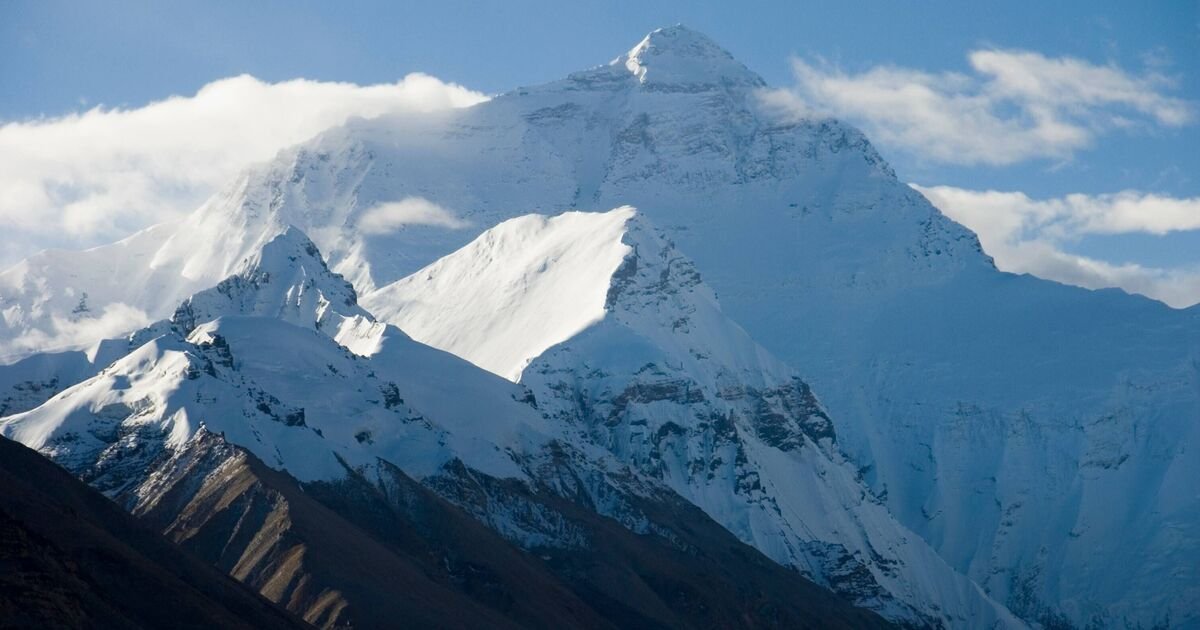
Marty Hoey arrived at Mount Everest in the spring of 1982, recognised as one of the most formidable climbers on the world’s highest peak.
She was also a highly respected member of the American expedition attempting to conquer the North Face. At the age of 31, she had already earned a formidable reputation among mountaineers through years of unassuming competence in some of the world’s most challenging terrains.
Hoey was a professional guide with Rainier Mountaineering Inc and had successfully reached the summit of Mount Rainier over 100 times. She had scaled Denali, Pik Lenin and Nanda Devi and was renowned among her fellow climbers for her calmness under pressure and sound judgement.
These qualities were crucial on the North Side of Everest, where the route through the Great Couloir left little room for mistakes. By mid-May, the expedition was advancing higher, transporting loads and preparing for a final push towards the summit.
On 15 May, Hoey was climbing with Jim Wickwire towards what would become Camp VI, at approximately 26,000 feet. The conditions were challenging but not out of the ordinary for that altitude.
The task was standard for Everest, moving cautiously on fixed lines, carrying equipment and gradually ascending towards a position that would allow a summit attempt within days. At one point, Hoey stepped aside to let Wickwire pass.
In a tragic turn of events, her safety line detached. Subsequent reports suggested that a buckle on her harness had not been correctly fastened.
Unattached to the fixed rope, she lost her footing and plummeted down the icy incline of the couloir. The fall was swift and devastating.
Wickwire heard a noise behind him and turned just in time to see Hoey vanish down the slope. There was nothing anyone could do.
She tumbled hundreds of feet into the mountain’s abyss, her body never to be found.
Had she reached the summit, she would have been the first American woman to conquer Mount Everest. Junko Tabei of Japan had claimed the title of the first female to ascend the mountain seven years prior, on 16 May 1975.
The team was left reeling from the loss. High-altitude climbing demands intense concentration, but it also hinges heavily on trust and unity.
Hoey was not merely another climber on the rope; she was integral to the expedition’s fortitude.
Lou Whittaker, the team leader, later expressed that her death was one of the factors leading to the abandonment of the summit attempt. He held the belief that if she had survived, the outcome might have been different.
At the time of her demise, Hoey was widely regarded as a strong contender to become the first American woman to reach the peak of Everest. This achievement would not be realised until 1988, six years after her death.
However, her place in Everest history was already cemented. Within the mountaineering fraternity, Hoey is celebrated not for her tragic end, but for her life and dedication to the art of climbing. She was known for her meticulousness, competence and deep commitment to the craft.
In a separate, heartbreaking incident, two climbers tragically lost their lives on Mount Everest just a few days later. Britons Peter Boardman, 31, and Joe Tasker, 33, met their untimely demise while attempting to conquer the North-East Ridge – a route that had remained unconquered until then.
While Boardman’s body was discovered a decade later, sadly, Tasker’s remains have yet to be found.