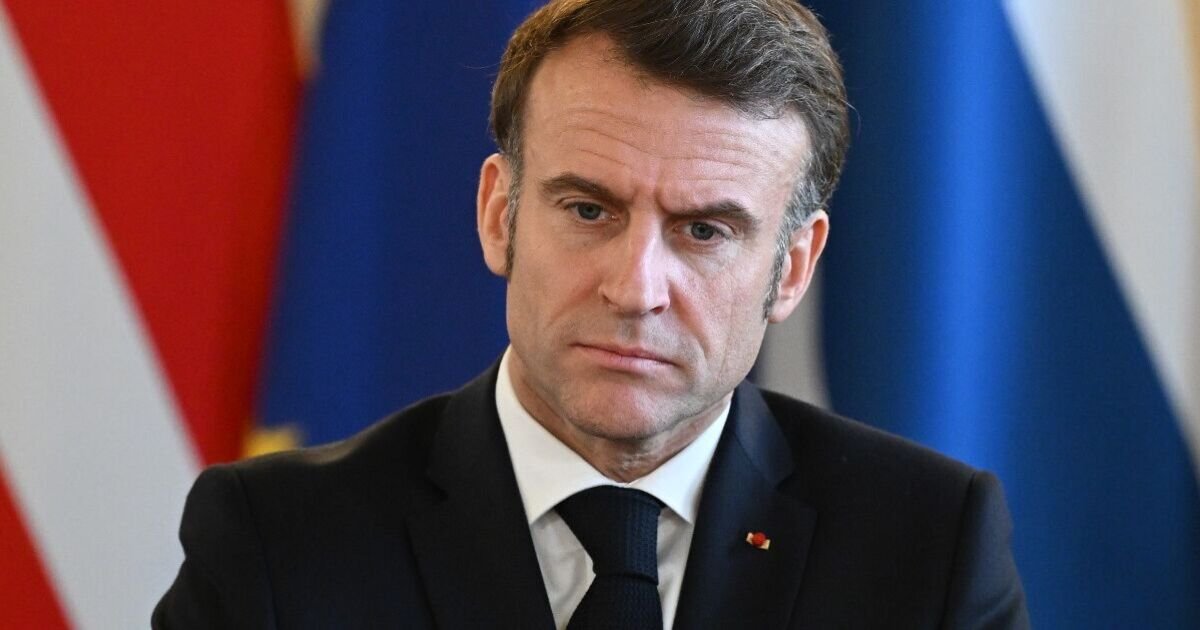

A month after president Emmanuel Macron’s government enforced a ban on one thing in French schools, the nation’s youth were out on the streets and rioting and threatening to tear the country apart. Britain’s closest continental European neighbours were rocked by obscene violence in October mostly fueled by schoolchildren and students.Architectural marvels were burnt to the ground, such as the historic Limoges city hall, and businesses were looted and civilians attacked in the street.
Protesters organisers claimed the orgy of violence was fuelled by a disaffected youth angry at the cost of living and under-funded education. But the breathtaking destruction perpetrated largely by France’s youth also took place just a few weeks after one object very precious to most teenagers was banned from the classroom.
President Macron had pledged to make a war on “les écrans” – screens – a legacy of his second term in office, and part of that legacy came into force in September with the banning of mobile devices during school time. A similar measure is being pushed forward by Labour in the UK.
Writing in the Guardian, Joseph de Weck, an associate fellow with the German Council on Foreign Relations, said there could be link between the lack of access to phones and the nightmare scenes that followed on the streets. He writes that the ban could have enabled a “shared political consciousness to form” and that pupils “pushed back into the analogue world” where their political action went from “beyond online posting and out into the streets”.
Mr de Weck added: “Two years ago, Macron declared that it was urgent to ‘retake control of our screens, that too often enclose us, where they should liberate us’. The irony is that, by unplugging teenagers from the matrix, he may have unleashed a storm that has sealed his decline and fall.”
Mr de Weck conceeded the protests themselves were not about the phone ban, but he argued: “Sociologists will have to study whether the enforced digital detox has really helped trigger this movement. After all, pupils have also organised their actions via social media, and the protests are extensively live-streamed on the same smartphones and platforms they have been detached from at school.
“This is a hybrid uprising.” Macron has been struggling in office since calling a snap election in 2024 that resulted in a boost for anti-migration right-wing parties and weakened his own government.
Later that same year Macron declared he would stay on “until the end” of his five-year term, until May 2027, after a no-confidence vote in parliament toppled the prime minister.
He was first elected in 2017 and reelected in 2022, but he cannot seek a third consecutive term in 2027 under the French constitution. He will be 49 when he leaves office next year, but if he chose to stand again he would be able to, and still be relatively young in political terms as he would be in his mid-50s.
See more of the stories you love from Daily Express and find us easily in Google by making us a Preferred Source. Free and easy-to-do, just click here to activate or add us as Preferred Source in your Google search settings.
