


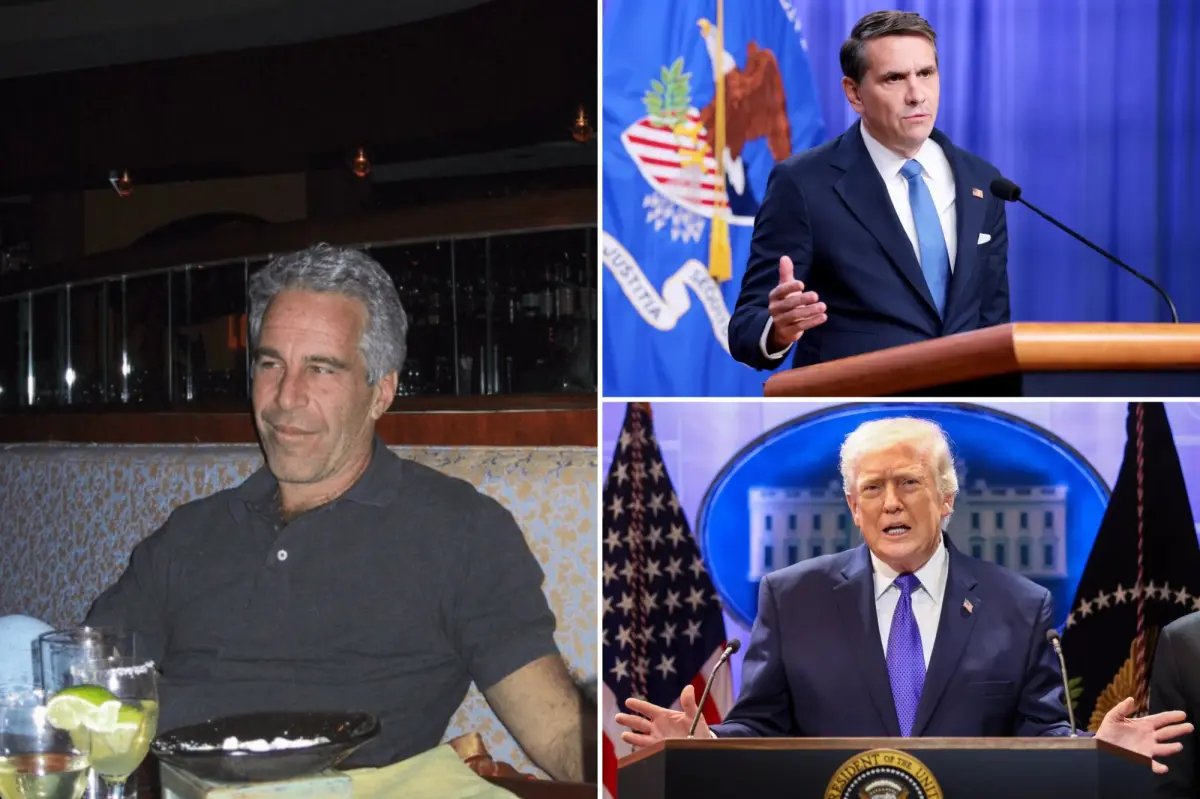

WASHINGTON — The Justice Department is investigating whether or not it erroneously withheld any Epstein files, including ones about President Trump.
The department released millions of documents related to the pedophile Jeffrey Epstein last month, which apparently excluded files detailing unproven accusations that the president sexually abused a minor.
Questions about whether all the material on Trump was disclosed to the public were raised after recent reviews of the vast trove by investigative reporter Roger Sollenberger and multiple outlets.
“Several individuals and news outlets have recently flagged files related to documents produced to Ghislaine Maxwell in discovery of her criminal case that they claim appear to be missing,” the DOJ Rapid Response team said Wednesday.
“As with all documents that have been flagged by the public, the Department is currently reviewing files within that category of the production.”
The DOJ promised to publish any documents found to “have been improperly tagged in the review process” and is required to be released under the Epstein Files Transparency Act.
Among the apparently missing files were memos the FBI wrote up of interviews the bureau did with a woman who claimed to have been sexually assaulted by Trump and Epstein as a minor in the 1980s, around the age of 13.
Trump has strenuously denied any wrongdoing regarding Epstein. The White House has contended that he has “been totally exonerated on anything relating to Epstein.”
Notably, the feds do not appear to have taken any actions against Trump after scrutinizing the accusations.
Those seemingly missing memos’ existence was discovered through a review of an index about that woman and the files that had been divulged. The index indicated that the FBI conducted four interviews over her accusations, but only one of them was published by the DOJ.
Additionally, interview notes from the FBI were not released, despite being mentioned in the index and similar notes being divulged in other instances throughout the Epstein files.
That woman had come forward after Epstein’s arrest in 2019 and told the feds she didn’t know his identity until a friend showed her a picture of him. She was also part of a 2019 lawsuit against Epstein’s estate, which she later dropped for reasons that are unclear.
She claimed that Epstein introduced her to Trump, whom she alleged “subsequently forced her head down to his exposed penis, which she subsequently bit. In response, Trump punched her in the head and kicked her out.”
A review by NPR that was broader than what Sollenberger initially found concluded that at least 50 pages worth of FBI interviews were not released. The outlet revealed that of the15 files in the Maxwell discovery pertaining to that accuser, seven have been disclosed in the Epstein files.
“Yesterday, I reviewed unredacted evidence logs at the Department of Justice,” House Oversight Committee Ranking Member Robert Garcia (D-Calif.) said in a statement.
“Oversight Democrats can confirm that the DOJ appears to have illegally withheld FBI interviews with this survivor who accused President Trump of heinous crimes.”
Additionally, there are concerns about files pertaining to a second woman who claimed to have been abused by Epstein and had been referenced as a witness in the Maxwell discovery files.
At least one of the files about her was taken offline before being put back up.
DOJ officials have claimed to have only withheld Epstein-related content that was duplicative or privileged.
Attorney General Pam Bondi and Deputy Attorney General Todd Blanche were adamant in a Feb. 14 letter to members of Congress that no document in the Epstein files was withheld due to “embarrassment, reputational harm, or political sensitivity” concerns.
The Epstein files are chock-full of unverified content, wild tips, and accusations that federal investigators deemed not credible. This includes the blizzard of tips that the feds received after Epstein’s death in 2019.
Regardless of credibility, they were required to be disclosed under the Epstein Files Transparency Act unless an exception was warranted, such as protecting victims’ identities.
The DOJ claimed some of the files of that second woman were taken down to receive additional redactions. The feds have made scores of adjustments to the redactions since the release of the Epstein files began.
Hundreds of DOJ lawyers had combed through some 6 million pages of Epstein-related material and released over 3.5 million pages of it, according to Blanche.