



MLB might not have a salary cap (at least not yet, anyway).
But the league’s current rules were designed, at the least, to make it harder for the biggest-spending teams to maintain highly ranked farm systems –– using draft pick penalties and international signing pool restrictions to, in theory, prevent clubs with the largest MLB payrolls from also being able to replenish their minor-league ranks.
Instgram/@e_quintero_46
Once again, however, the Dodgers have found a way to break the mold.
In the run-up to spring training next week, industry outlets have begun releasing their farm system rankings for 2026. And on almost every list, the Dodgers’ pipeline remains right near the top, earning a top-five nod from most publications (albeit with a couple exceptions, most notably a No. 13 ranking from Baseball America) and the No. 1 spot in a poll of fellow major league executives conducted by MLB.com last month.
Download The California Post App, follow us on social, and subscribe to our newsletters
California Post News: Facebook, Instagram, TikTok, X, YouTube, WhatsApp, LinkedIn
California Post Sports Facebook, Instagram, TikTok, YouTube, X
California Post Opinion
California Post Newsletters: Sign up here!
California Post App: Download here!
Home delivery: Sign up here!
Page Six Hollywood: Sign up here!
For Dodgers president of baseball operations Andrew Friedman, preserving such farm system strength has long been a primary organizational goal. And while it’s “much easier to say than to do,” he acknowledged in a recent interview with The California Post, it’s become a key component to the club’s recent run of dominance; helping the Dodgers to restock their big-league clubhouse with depth, plug roster holes through the trade market and even woo top free agents with the promise of long-term sustainability.
“It’s funny. I remember in our meeting with Shohei (Ohtani), before he made his decision (as a free agent two offseasons ago), we were walking through, however you define the success of our previous 10 years, we felt like we were well-positioned to have an even better run in the next 10 years, despite all the factors working against us, (because of) having a strong farm system,” Friedman said. “I remember going through that, and got to the end, and Shohei just looked at me and goes, ‘How? How are you guys able to do that?’”
Over the last few years, the answer has required some non-traditional methods.
Since 2022, the Dodgers have made only two draft picks higher than 40th overall and just seven in the top 90 (a trend unlikely to change this year, when they will lose four of their top six picks as penalties for signing Kyle Tucker and Edwin Diaz). They’ve seen their international bonus pool, which is used to sign prospects who don’t enter the domestic draft system, annually slashed because of luxury tax penalties (they also had to dedicate almost all of last year’s pool to sign one player, Roki Sasaki).
So, they’ve had to find other ways to preserve their pipeline, relying on diamond-in-the-rough discoveries, developmental success stories and shrewd trade maneuvers to maintain organizational depth.
“For us to be in the top 3-5 in different years, it speaks to organizational harmony,” Friedman said. “We have a high-achieving group that is creating a lot of organizational value.”
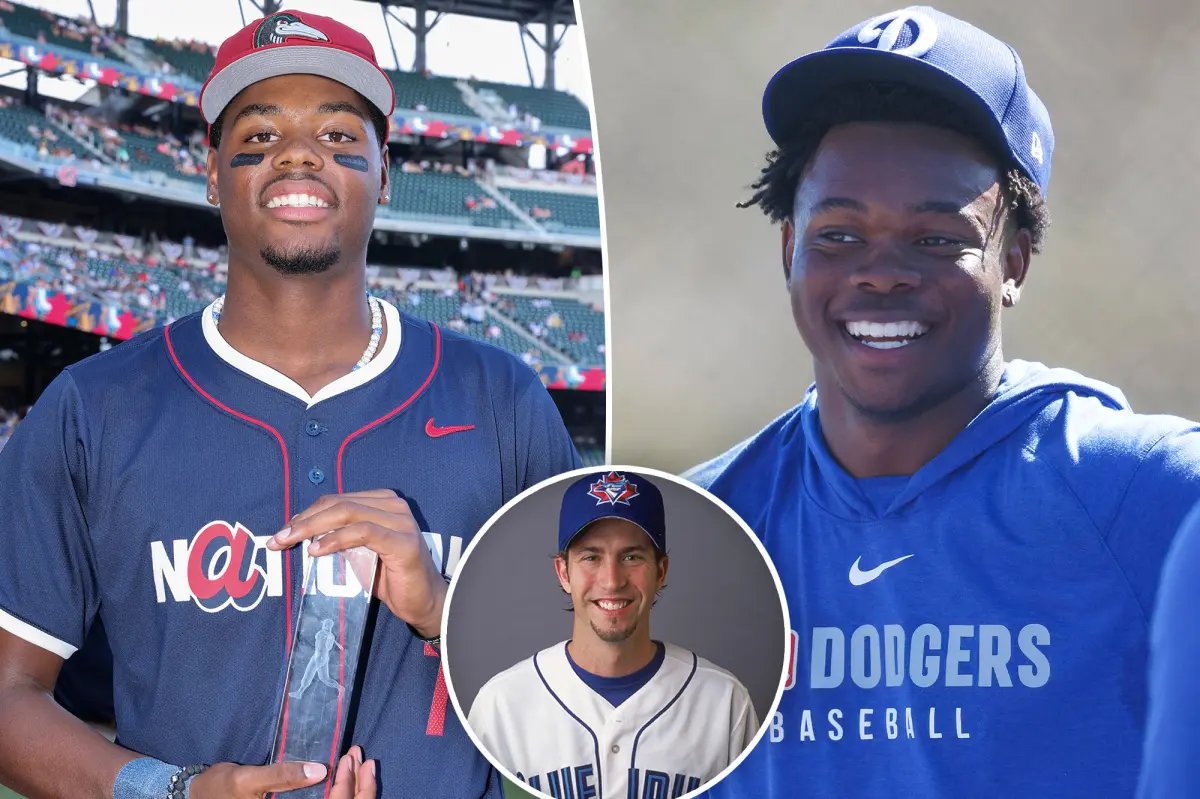
Start with the Dodgers’ consensus top two prospects: outfielders Josue De Paula and Eduardo Quintero. Both were relative bargains on the international market, signing for a combined total of less than $700,000. But both have blossomed since joining the organization, emerging as top-25 prospects in the entire sport according to Baseball America.
Then, there are the non-homegrown talents. Of the team’s top 10 prospects in ESPN’s recent rankings, only one was drafted by the team, while six were acquired via trade in recent years for players including Gavin Lux, Michael Busch, Dustin May and Matt Beaty.
Most contending clubs, of course, can’t afford to add young prospects by trading productive big-league players. But the Dodgers have stockpiled so much talent at the MLB level, they’ve been able to flip superfluous pieces on the trade market.
At last year’s deadline, for example, they added outfielders James Tibbs III and Zach Ehrhard for May (who was in the final year of his contract and being squeezed out of the Dodgers’ rotation). They also snagged an intriguing young pitcher, Adam Serwinoski, in a three-team deal that only cost them Triple-A catcher Hunter Feduccia (that deal also netted the club Ben Rortvedt, who played a key role early in last year’s postseason, and Paul Gervase, a depth reliever currently on the 40-man roster).
“That’s always the dream,” Friedman said of being able to add to the pipeline at the deadline. “The price gouging that happens in July on the buy-side is something that makes it easy for every buyer to feel like, ‘Oh, man, it’d be nice to be in a really good position in the standings to be able to reap the reward of this insane seller’s market.’”
This hasn’t been a foolproof plan. Despite their high annual pipeline rankings, the Dodgers have struggled to integrate much of their young talent into the big leagues. During their back-to-back World Series seasons the last two years, Will Smith and Andy Pages were the only farm system products to be mainstays in the lineup. Of this year’s projected starting rotation, only Emmet Sheehan is a homegrown player.
Still, there’s no easier way to sustain long-term success than having a farm system highly valued by the rest of the industry, stocked with players coveted by other clubs and projected for future big-league production.
MLB’s rules were supposed to stop teams like the Dodgers from maintaining such a strength.
Yet, here they remain, boasting the most star-studded roster in the majors, plus a pipeline that continues to be pegged as one of the best in the sport.
Dodgers top-10 prospects, per ESPN
1.) Josue De Paula — International signing
2.) Eduardo Quintero — International signing
3.) Zyhir Hope — Trade (for Michael Busch)
4.) Mike Sirota — Trade (for Gavin Lux)
5.) Emil Morales — International signing
6.) Alex Freeland — Draft (3rd Rd, 2022)
7.) Zach Ehrhard — Trade (for Dustin May)
8.) River Ryan — Trade (for Matt Beaty)
9.) Jackson Ferris — Trade (for Michael Busch)
10.) James Tibbs III — Trade (for Dustin May)