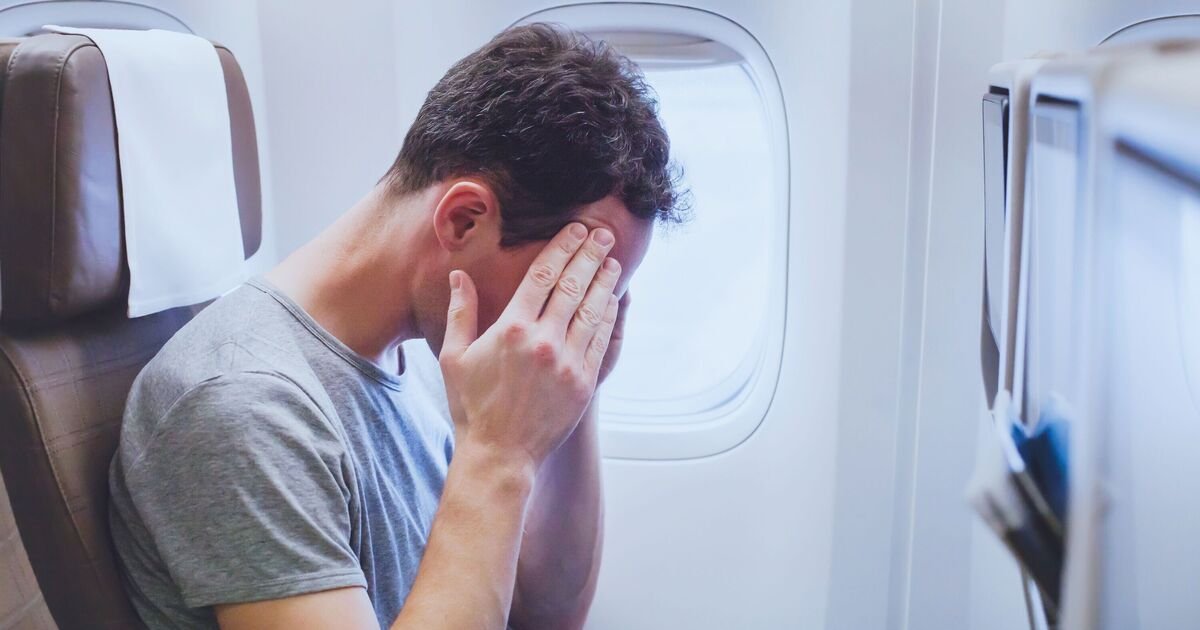

Passengers heading on long-haul flights this summer are being urged not to remain seated for hours without moving. Health experts warn that prolonged inactivity can increase the risk of developing a potentially dangerous blood clot. Deep vein thrombosis (DVT) is a blood clot that forms in a deep vein, most commonly in the leg. According to the NHS, the risk increases during journeys lasting four hours or more because sitting still for long periods can slow blood flow. In rare cases, part of the clot can break away and travel to the lungs, causing a pulmonary embolism – a medical emergency that requires urgent treatment.
Dr Syed Nadeem Abbas of Knee Pain Clinic UK said: “Most people who fly long haul will never run into a problem, and this isn’t a reason to be scared of flying. But every once in a while, get up, stretch your legs and move your ankles every so often, as it genuinely lowers your risk. If you are sitting for too long and have swelling in your legs or leg pain, or notice something unusual get it checked instead of brushing it off just to be on the safe side.”
While the overall risk remains low for healthy travellers, it is higher for people who have recently had surgery, are pregnant, are living with obesity, have a family history of blood clots or take oestrogen-based contraception.
Symptoms of DVT can include swelling, pain, warmth and redness in one leg, although some people experience no symptoms. Anyone who develops sudden shortness of breath, chest pain or coughs up blood should seek emergency medical attention, as these may be signs of a pulmonary embolism.
The NHS recommends walking around the cabin whenever possible, wearing loose-fitting clothing, drinking plenty of water and avoiding long periods without moving. Passengers are also advised to bend and straighten their legs, feet and toes regularly while seated.
Dr Abbas also recommends avoiding crossing your legs and carrying out simple ankle rotations and calf raises while seated to help keep blood circulating. He said compression stockings may be beneficial for some passengers on longer flights, particularly those at higher risk, although anyone with an underlying medical condition should seek advice from their GP before travelling.
The NHS also advises avoiding excessive alcohol before and during long journeys, as it can contribute to dehydration and make it less likely that passengers will move around regularly during the flight.
