


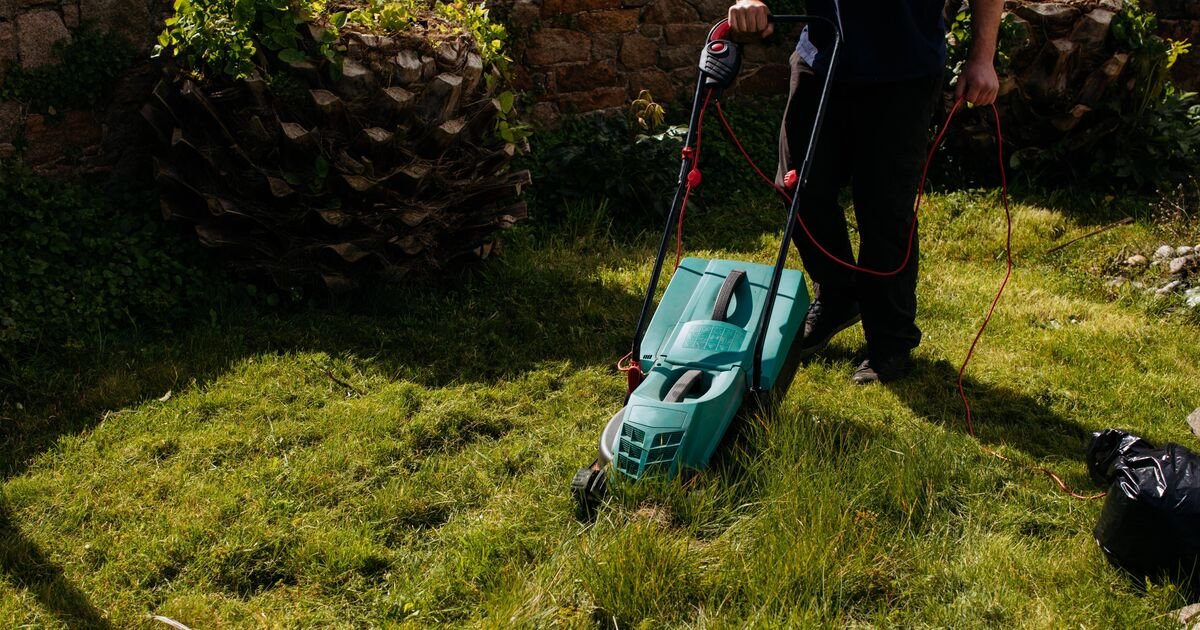
A grass expert has shared a simple tip for keeping lawns thriving in summer—bad news if you love stripes. At this time of year, many gardeners are mowing their lawns weekly to keep up with the pace of growth.
But there’s a common mistake that could be causing uneven cuts and impairing grass health. Thankfully, there’s a simple fix.
“Every time you get your lawn mower out, you should mow in a different direction from the last time you did it,” Chris McIlroy, lawn expert at The Grass People, said.
“A lot of keen gardeners change their mowing direction in order to create stripes, using the lean of their grass blades and how it catches the light.
“This repetitive mowing technique can exacerbate wear and tear on the lawn. I’d advise creating a new pattern every so often or at least try stripes in the opposite direction to maintain the grass’ health.”
Repeated mowing in one direction can cause grass to constantly lean that way, preventing upright growth, which spoils the appearance of the lawn.
“It’s not just how the grass looks visually, but leaning one way can stunt its growth, causing thinning across the lawn,” Chris added. “The blades don’t receive the same amount of sunlight, which can affect photosynthesis.
“The weakened grass is more vulnerable to stress and lawn diseases, too. Constantly mowing in one direction can also cause the soil to become compacted, limiting the nutrients and water that can reach the roots.”
Any areas that become bare, from grass that’s too short or compact soil stifling roots, leave room for weeds and moss to move in.
Get creative for better lawn health
While stripes are a popular pattern for lawns, there are alternatives which still give lawns a neat appearance.
“Get creative with your lawn patterns, not only can it be fun, but it can ensure your mower isn’t putting pressure on the same areas in the same way, time and time again,” Chris added.
“Start a circle from the outside moving in, to create a spiral effect. You could also try to make waves or zig zags, to diversify how the mower interacts with the grass.”
Summer can be tough on lawns, with temperature changes and drought to contend with. The Grass People suggest keeping blades longer during this time.
Chris said: “To thrive in the warmer months grass should be kept three to four inches tall to help retain moisture and prevent heat stress. Keeping a lawn slightly longer in summer helps shade the soil, reducing evaporation and protecting roots from extreme temperatures.
“This is why you want to vary your mowing pattern to ensure you don’t cut any areas too short.
“Avoid mowing when the grass is wet, as this can cause blades to tear in clumps, instead of getting a clean cut.”