


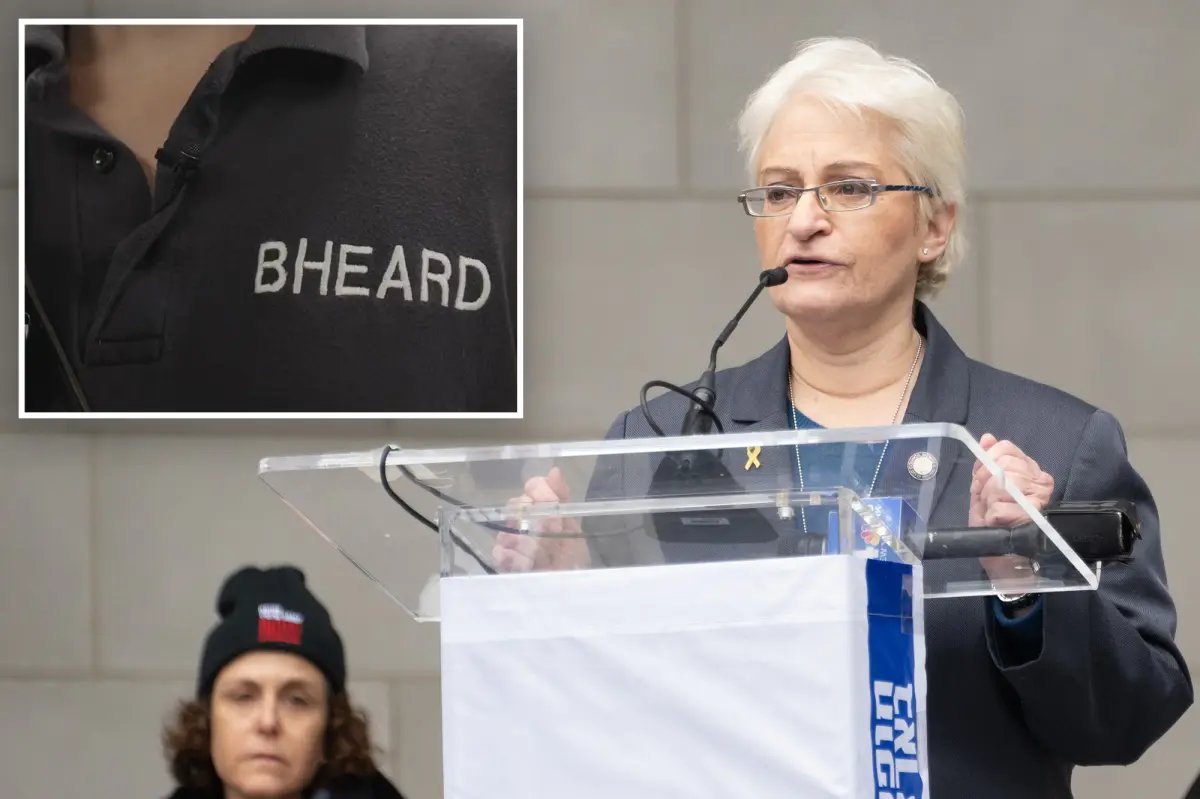

City Council members clashed with the Mamdani administration over the limited scope of information released on mental health emergencies on Wednesday — with lawmakers demanding more transparent reporting from City Hall.
Councilwoman Lynn Schulman (D-Queens) proposed legislation mandating Mayor Zohran Mamdani’s administration publish detailed quarterly data on every 911 call flagged as a mental health emergency rather than the top line report that is published annually.
The legislation aims to better understand the revolving door that has city dwellers cycling between hospitals, shelters, streets and jail — without receiving proper treatment.
“We cannot improve what we do not measure,” Schulman said at a Wednesday oversight hearing.
Schulman wants to drill down on responses from teams like the Behavioral Health Emergency Assistance Response Division (B‑HEARD) — a program launched by former Mayor Eric Adams in 2021 — which pairs EMTs with health care workers to handle certain 911 mental health calls.
Included in those responses would be info such as the time and date of the call, its geographic location, whether a B‑HEARD team was dispatched and how it responded, plus the ultimate outcome.
“If we are serious about building a public health-centered crisis response system, we need clear accessible information about where B-HEARD is working, where it is not and why,” Schulman said.
An audit by the New York City Comptroller’s Office last year determined Adams’ showcase program was underperforming. Even when B-HEARD teams were eligible to respond to a mental health crisis, they only responded 65% of the time, the report found.
The cause of the underperformance is difficult to discern given the current amount of B-HEARD data being tracked, the comptroller’s office noted.
“The reasons these calls did not receive services cannot be discerned because the Mayor’s Office of Community Mental Health (OCMH)—which administers the program—does not track this information,” the report said, further suggesting that the yearly data report needed “significant improvement.”
Laquisha Grant, the deputy executive director of the Mayor’s Office of Community Mental Health, promised B-HEARD reports would be published more frequently under Mamdani during Wednesday’s hearing.
But Grant deflected calls for more detailed reports, citing “significant operational and legal issues with the bill’s reporting requirements as written.”
“The required data points, including precise location, could easily be connected and traced to individuals, especially in residential buildings, exposing the identities of New Yorkers during their most private and sensitive moments,” she said, adding some of the data may be shielded by HIPAA laws.
“Under this administration we are deeply focused on interagency coordination and really figuring out how to be able to bring agencies together to work more cohesively and be able to share information better.”
Councilwoman Tiffany Cabán, char of the Committee on Mental Health and Substance Abuse, pushed back, saying other cities — while pointing to Denver’s START program — have managed to publish robust crisis response data without violating patient privacy.
“They’re collecting a lot more data and they’re not violating people’s HIPAA rights,” Cabán, a Queens socialist, said about the Mile High City initiative, “and the data that they’re collecting is allowing them to get better, more effective outcomes.”
“We are going to continue to underperform in terms of outcomes if we don’t start getting that data. It’s really, really critical.”