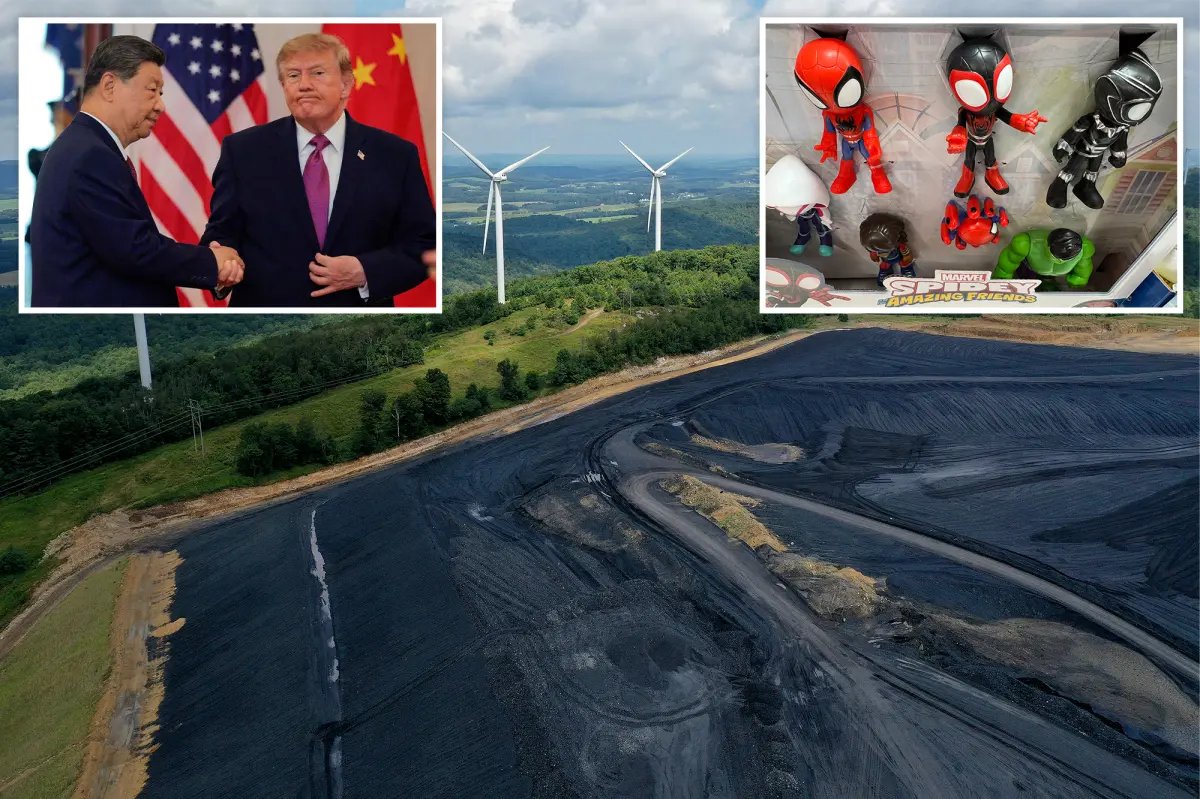


China got more than a lump of coal out of President Trump’s White House meeting with President Xi Jinping — as the communist nation agreed to buy at least 10 million metric tons of American coal each year in 2027 and 2028.
The coal deal — part of Trump’s push to revive the US coal industry — was among a series of commitments released by the White House after the high-gloss, three-day state visit, though the two leaders did not announce major breakthroughs on several of their biggest disputes.
The two countries also reached a deal through the US-China Board of Trade covering $30 billion worth of non-sensitive goods, according to the White House.
The agreement would provide more favorable treatment for products including US agricultural goods, medical devices, fish, wood and cosmetics, while US imports from China covered by the arrangement include small appliances, toys, holiday decorations and children’s car seats
“We’ve actually reached agreement with the Chinese on a number of these things,” US Trade Representative Jamieson Greer told CNBC Friday.
Trump is eager to boost exports and find ways to lower consumer costs, as inflation continues to register as a top concern heading into the midterm elections.
But getting China to follow through on its promises has been another matter.
China has fallen short of its pledge to buy US soybeans and of its commitment to buy $17 billion in US agriculture products overall, according to Agriculture Department data. US farmers are already getting hit by high diesel prices affected by the US war with Iran.
China’s economy is heavily reliant on coal, although it has followed up on a pledge at the UN five years ago to stop funding overseas coal plants.
The new trade commitments also come after Trump told Xi that China’s support for Iran was “totally unacceptable,” according to the US ambassador to China.
And in one of the stranger takeaways from the summit, Trump and Xi agreed to call artificial intelligence “super intelligence” — a terminology change Trump had been pushing publicly.
“The two leaders agreed to use the term ‘super intelligence’ rather than ‘artificial intelligence’ to describe the applicable emerging technologies,” the White House said.
