


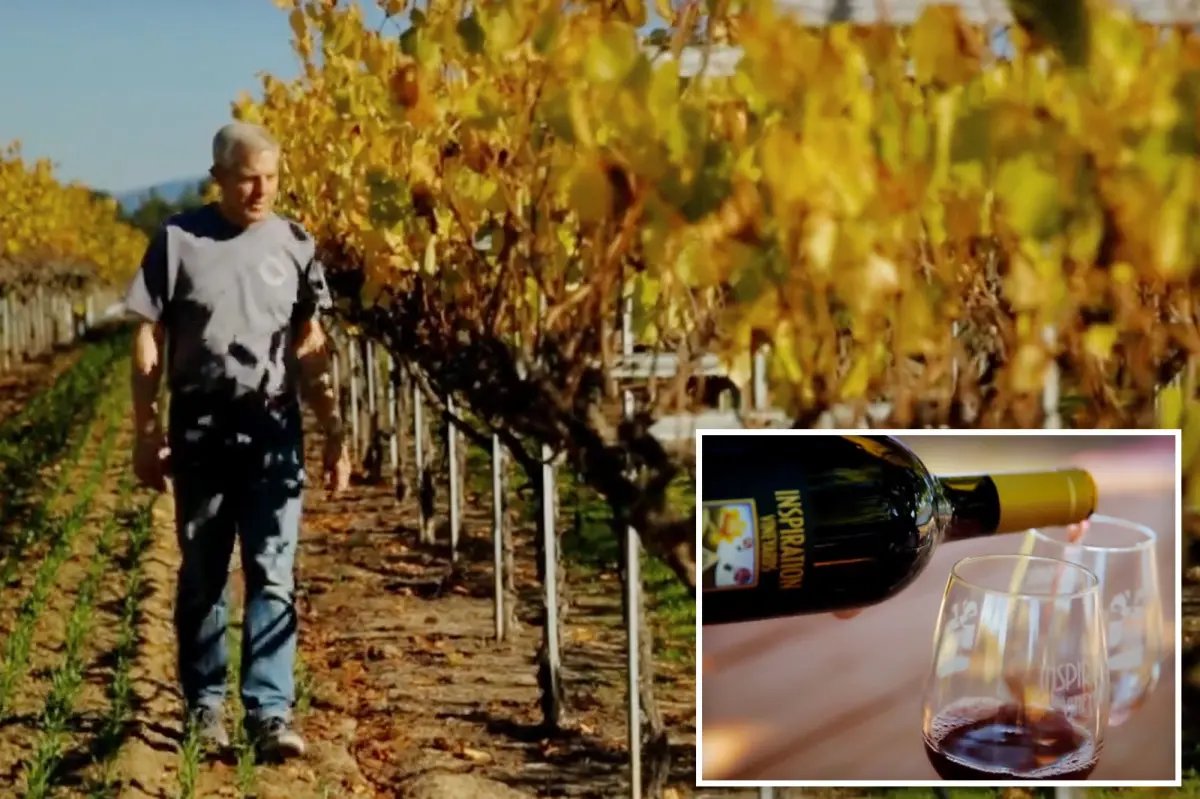

The owner of a Sonoma County winery owner believes the industry is dying because Boomers are, too.
Jon Phillips, the owner of Sonoma County winery Inspiration Vineyards and Winery, told The Post that the population decline of the industry’s top wine-consuming generation has led to a recent downturn in sales.
“A lot of people have a misconception that the Boomers are drinking less,” he said. “This cannot be emphasized enough: it’s not because the Boomers are drinking less, it’s because there are less Boomers.”
Phillips, a Boomer himself at 65 who has produced wine since 1999, says Gen X has been unable to fill the void left by their forebears.
“These were the people that were really responsible for joining wine clubs and Gen X that came after boomers just weren’t really into wine to the same level that the boomers were into wine,” he said.
At one point he struggled with his wine club subscription service, but not because of demand or inferior wine.
“It’s because my customers literally were dying,” he said.
He says in conjunction with the declining Baby Boomer demand is less interest from younger generations like Gen Z and Millennials who have slowly adopted wine. Other factors like tariffs and recent wildfires have hurt wine-growing and producing operations, he added. He also pins new negative messaging concerning alcohol on declining sales.
Gen Z in particular hasn’t matured enough to mesh perfectly with wine, Phillips said. “I think it’s just really just a timing and more [of] a maturity [thing],” he said.
“They’re not ready or they’re slowly coming into it. For me, the curious thing will be, see what happens in 5 years,” he said, saying 30-something Gen Zers will be more open to wine.
Jessie Vallery, the executive director at Alexander Valley Winegrowers, believes Gen Z does have a taste for wine, but they need to be coaxed into it. She says Gen Z is more apt to drink wine and hike or play games.
“It has to be fun, interesting, and wine is part of it, not the center point,” she said.
Several wine businesses across California have closed in recent months and years as they struggle with demand. U.S. wine revenue fell by more than a billion in 2025 and production dropped by about six million cases, according to industry data.
Operations like Ranch and Carneros Hill Winery ceased production this month.
Phillips says his small winemaking business has weathered the storm despite the recent challenges.
He attributes his savviness with numbers and catching trends with being able to stay open as some other small winemakers miscalculate.
Phillips believes the wine struggles are not unique to California or the United States either. He says that he’s done consulting in France and Europe is having similar issues.
“They’re seeing some of the climate change related issues that affect grape growing and affect, harvest and affect quality and affect quantity. They’re seeing the same thing in terms of market production, not only within France, but also all over Europe and the world. They’re having to pull out grapevines because they have oversupply and not enough demand,” he said.
“I think for some of the same reasons that I outlined, which is that we’re losing one of our largest generations that drank wine.”