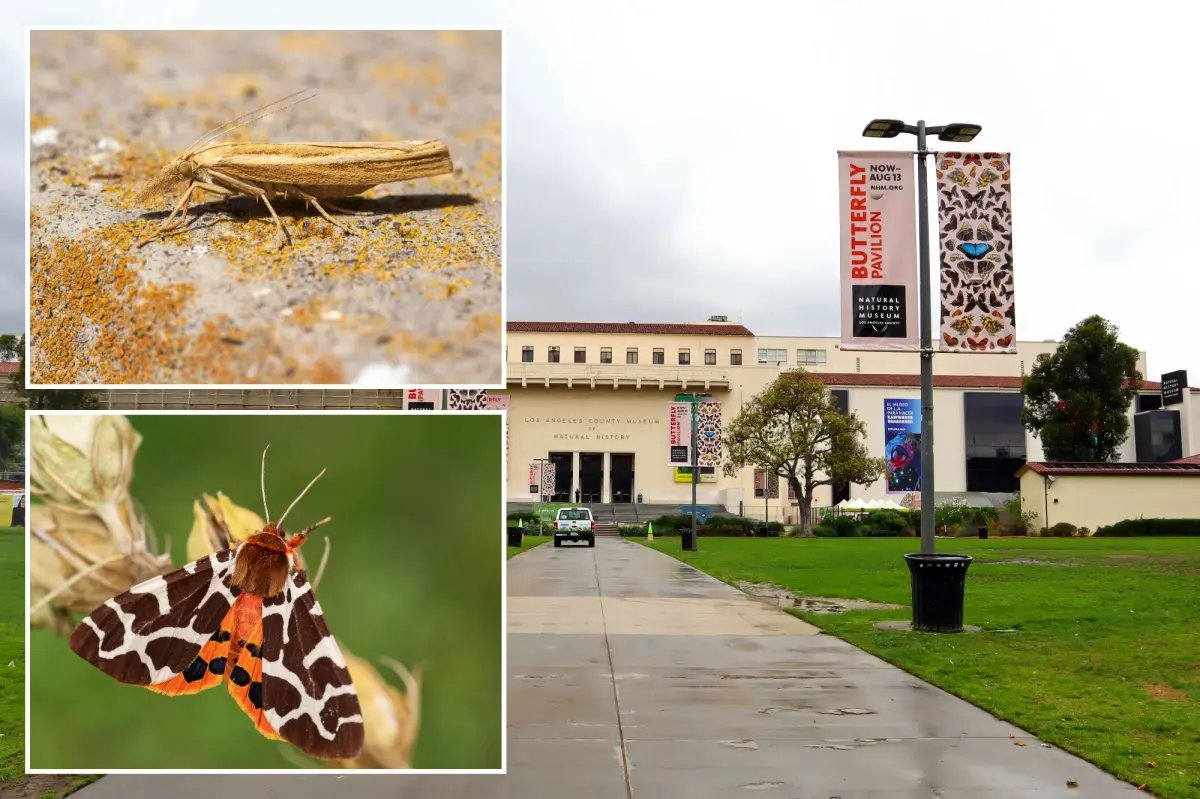


California is crawling with far more bugs than scientists ever imagined — and nearly 20,000 insect species could still be hiding in plain sight.
Researchers at the Natural History Museum of Los Angeles County analyzed the DNA of more than 1 million insects collected across the Golden State, uncovering more than 42,000 distinct genetic groups that could represent different species.
But that’s only scratching the surface.
Using statistical modeling, scientists estimated California is home to at least 61,000 insect species, meaning roughly a third of the state’s creepy-crawly population has yet to be identified.
The findings suggest scientists have documented only about two-thirds of the insects living in California, despite collecting more than a million specimens.
And the researchers believe their estimate could still be on the low side.
Download The California Post App, follow us on social, and subscribe to our newsletters
California Post News: Facebook, Instagram, TikTok, X, YouTube, WhatsApp, LinkedIn
California Post Sports Facebook, Instagram, TikTok, YouTube, X
California Post Opinion
California Post Newsletters: Sign up here!
California Post App: Download here!
Home delivery: Sign up here!
Page Six Hollywood: Sign up here!
The team used a technique called DNA barcoding, which examines a short section of an insect’s genetic code to distinguish different groups.
The catch? Those genetic groups don’t necessarily represent officially recognized species. So far, researchers were able to assign formal species names to only about a quarter of the individual insects they analyzed.
The bugs were collected at 72 sites across 13 of California’s 14 major ecological regions, with additional sampling at 454 locations using sweep nets, light traps and other methods.
Even volunteers got in on the action. In one case, two people maintained an insect trap in California’s high desert for more than three years.
Researchers also warned that their collection methods may have missed plenty of species, particularly insects that don’t fly. Many of the samples came from Malaise traps, which are designed primarily to catch flying insects.
The project is part of the California Insect Barcode Initiative, a $6 million effort to build a DNA library covering every insect species in the state.
And the findings could have implications beyond simply putting names to more bugs.
“The vast gulf between the earlier and new estimates of insect life deepens the urgency of conserving the wild places these insects call home,” a representative for the researchers said.
Scientists also found that California regions with similar climates and geography could have vastly different insect populations, highlighting just how much biodiversity remains poorly understood.
The California findings are part of a broader effort to get a handle on the planet’s insect population. A separate study published in June estimated Earth could have at least 14 million insect species, and potentially 20 million or more — far above the commonly cited estimate of roughly 6 million.
The California research was published in the journal Ecography.
