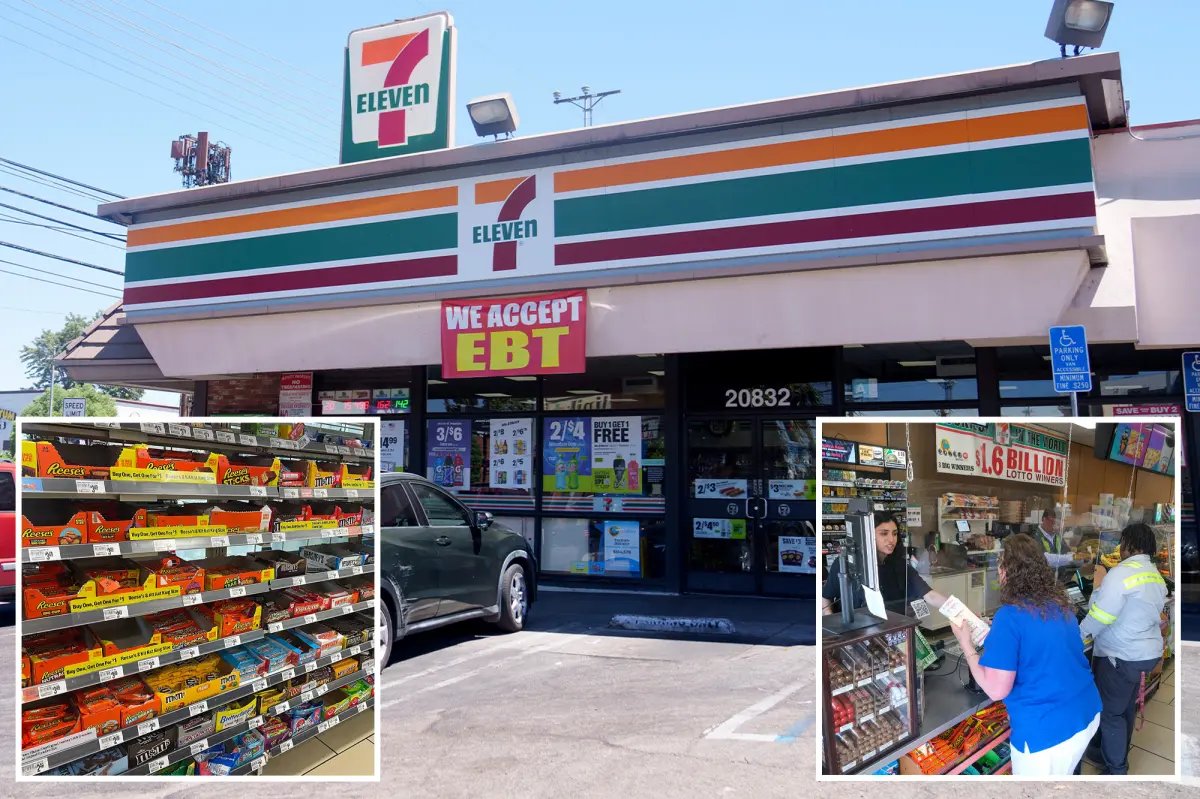


California shoppers may want to start checking those 7-Eleven receipts a little more closely.
A new investigation found that the convenience-store giant has repeatedly charged customers more at the register than the prices advertised on store shelves — and Los Angeles County has seen plenty of it.
Between 2023 and 2025, 7-Eleven stores in LA County failed 335 of 909 price-accuracy inspections, a 37% failure rate, according to a Guardian investigation.
Some individual stores posted even uglier numbers.
An inspector found a 67% overcharge rate at a 7-Eleven in Huntington Park in 2024. The following day, another inspection 19 miles away in North Hollywood found a 50% overcharge rate.
A Pomona location also repeatedly ran into trouble. During one 2025 inspection, five of 13 items rang up higher than their shelf prices.
Download The California Post App, follow us on social, and subscribe to our newsletters
California Post News: Facebook, Instagram, TikTok, X, YouTube, WhatsApp, LinkedIn
California Post Sports Facebook, Instagram, TikTok, YouTube, X
California Post Opinion
California Post Newsletters: Sign up here!
California Post App: Download here!
Home delivery: Sign up here!
Page Six Hollywood: Sign up here!
An energy drink advertised at $1 with a rewards card rang up at $3.49. A tropical fruit-flavored snack marked $1 came up at $2.89, while a $2.29 Hershey’s Mr. Goodbar rang up at $3.49.
And the problem wasn’t necessarily fixed after inspectors left.
In July, a Guardian reporter visited 10 LA County 7-Eleven stores that had previously failed price-accuracy inspections and bought 10 items at each.
Half of those shopping trips resulted in overcharges.
At the Pomona store, a two-for-$5 deal on Quest protein chips wasn’t honored. At the North Hollywood location, five items rang up for more than their advertised prices.
Employees at all five stores where overcharges occurred acknowledged that some shelf stickers were outdated.
One North Hollywood employee said workers have to juggle registers, cleaning, deliveries and stocking while keeping track of thousands of individual prices — and claimed it can sometimes take two weeks to update stickers after new prices are issued.
“It’s not about overcharging or something like that,” the employee said, asking not to be identified.
California accounts for an estimated 15% of all 7-Eleven stores in the US.
The investigation comes as Californians continue to grapple with sky-high costs for groceries, gas and everyday essentials.
And the problem isn’t unique to 7-Eleven. The Guardian found that convenience stores were the worst-performing retail category in a 2024 report from the National Council on Weights and Measures, failing 34% of price-accuracy inspections across 26 states.
7-Eleven said it takes pricing accuracy seriously.
“There are on average more than 3,000 products per store, and prices are adjusted as needed based on a number of external factors including manufacturer and distributor cost changes,” a statement to the Guardian read.
“When a discrepancy is identified, we have processes in place to correct it promptly, and we continue to invest in technology and operational improvements to help ensure accurate pricing in stores.”
