



ALBANY – Here’s something to chew on.
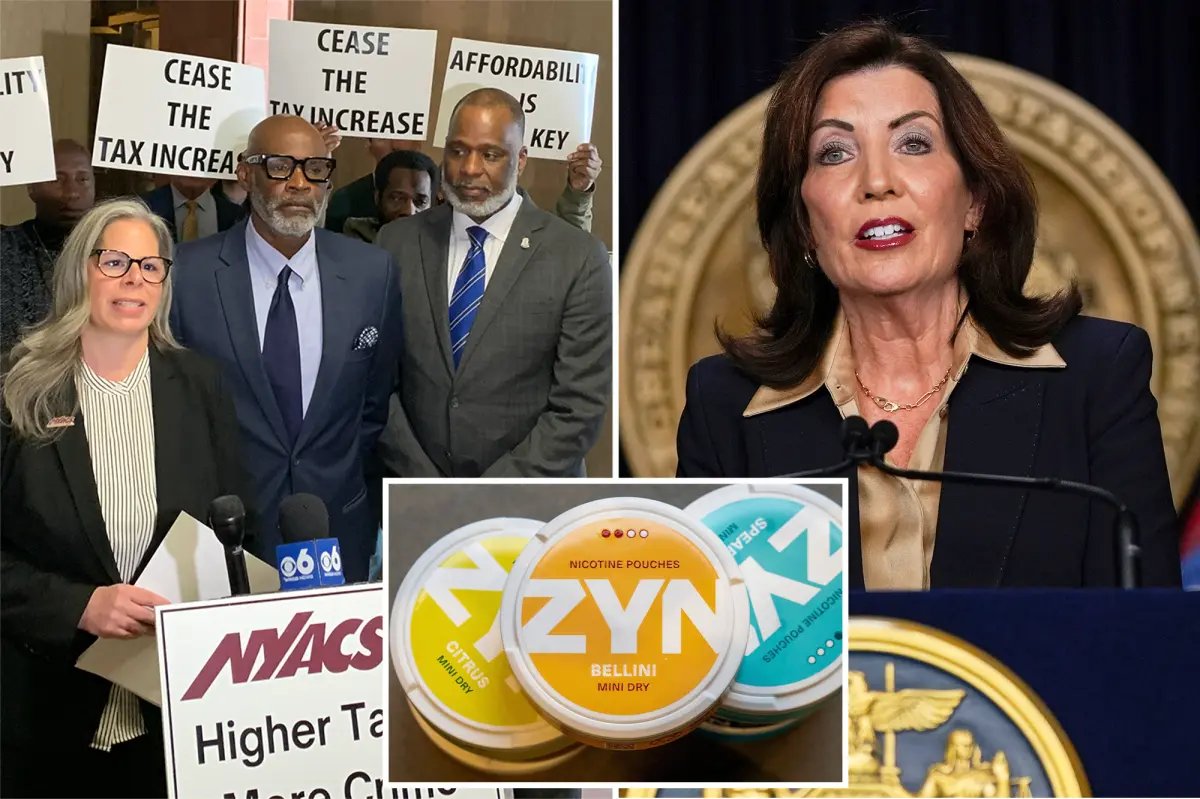
Convenience stores and business groups are urging Hochul to not be a buzz kill, and scrap a plan to heap heavy new taxes on nicotine pouches.
The so-called “Bro Tax” would put the “alternative” nicotine products under the same 75% tax as cigarettes — in hopes of raising some $50 million a year for New York coffers.
But a group of store owners is telling the governor “woah, chill” with the heavy new levy, which they say will hurt their sales as it leads to criminals starting a dangerous underground pouch black market.
“This coalition is united under one message. This tax will do more harm than good,” said Alison Ritchie, president of the New York Association of Convenience Stores.
“NYACS supports strong enforcement, we support preventing youth access. What we oppose is policy that punishes compliant small businesses while illegal actors thrive,” she said.
Former New York City Sheriff Edgar Domenech agreed that gangsters could take advantage of the tax by increasing sales of cheaper, untaxed pouches.
“Every time New York raises taxes on tobacco products, the black market grows and wins,” Domenech said. “It is not a victimless crime as it has been portrayed,” claiming illicit tobacco sales fuel organized crime.
The influential Business Council of New York State is also involved in the coalition.
“We’re just talking about taking away or making a product more difficult for people to obtain when our healthcare costs are going through the roof. And this is another example of how the best intentions can lead to affordability issues,” Business Council Executive Vice President Paul Zuber said.
The tax would apply to products like VELO, FRE and Zyns, which was the first nicotine pouch product approved by the FDA early last year.
Dr. Brian Erkkila of Phillip Morris International, the product’s manufacturer, wrote in testimony presented to the state Senate’s committee on taxes that pouches are a healthier alternative to smoking.
“Supporting the transition from combustible cigarettes to lower-risk smoke-free alternatives is a scientifically validated, public health strategy that can meaningfully improve health for New Yorkers who smoke,” the Phillip Morris International rep wrote.
Under Hochul’s proposal, the pouches would be brought under the umbrella of nicotine products facing a 75% tax. The addition of the alternative products is expected to bring in another $44 million to $57 million annually.
At the same time, the state would require a yearly deposit of $50 million into the Health Care Reform Act Resources Fund, which pumps cash into state initiatives like helping indigent New Yorkers pay for healthcare.
The American Cancer Society Cancer Action Network is asking the state to go a step further by taxing e-cigarettes and dedicating funding directly to the Tobacco Control Program as well.
“Currently, e-cigarettes, snuff, and other tobacco products are taxed at significantly lower rates
than cigarettes, and some products, such as e-cigarette devices and nicotine pouches, are
untaxed altogether. This price gap makes these products more accessible and appealing to
young people and cost-conscious users,” the group wrote in testimony to lawmakers earlier this month.
Hochul Spokesperson Kassandra White said Hochul is sticking by the proposal, framing it as a fight against big tobacco.
“The Governor’s proposal is a common-sense measure to improve public health at large, push back against manipulative tactics by big tobacco companies and increase necessary protections against life-threatening products,” the spokesperson said.