


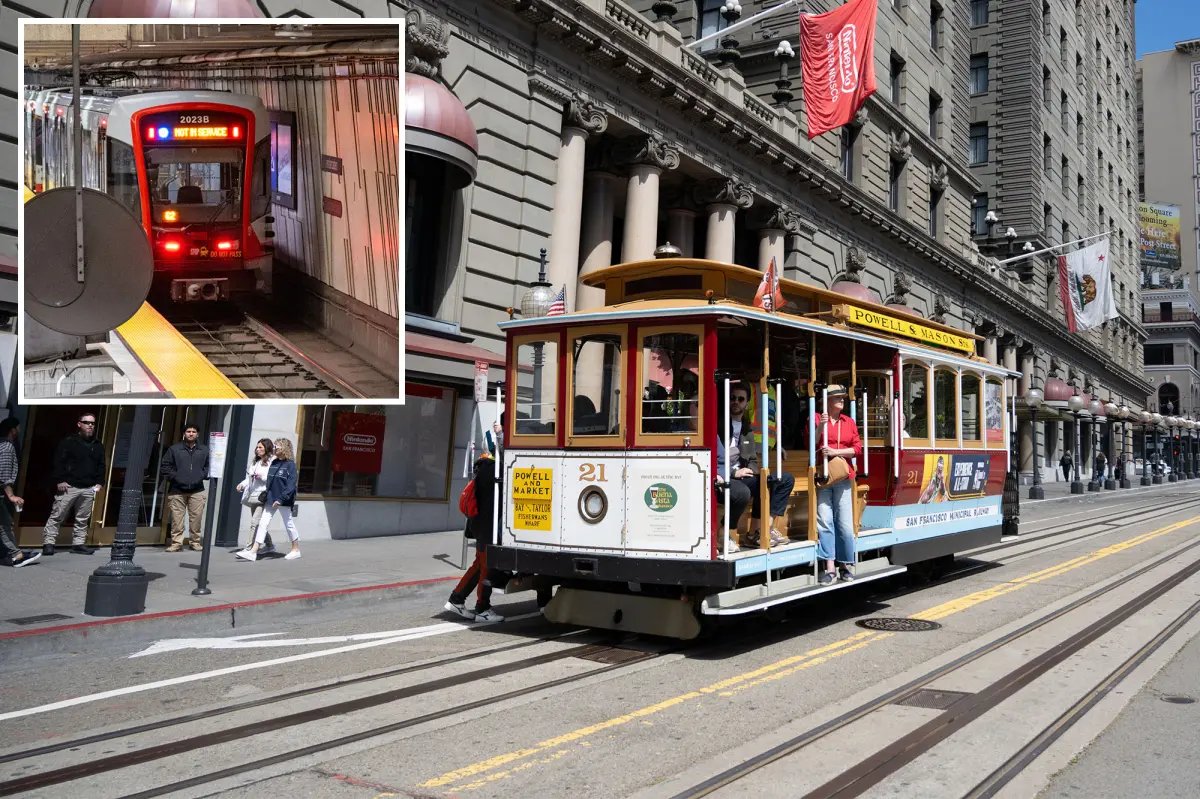
San Francisco’s iconic cable cars are turning into a budget-busting headache — as city officials are already begging voters to rescue the struggling transit system.
The historic cars cost an eye-popping $871 per hour to run — nearly three times the systemwide average, according to a new report from urban police group SPUR.
That revelation comes at a precarious moment for the San Francisco Municipal Transportation Agency, which faces a ballooning deficit that could reach $434 million by 2030.
Officials are pushing for new taxes this November to plug the gap and avoid deep service cuts.

According to the SPUR analysis, first reported by the San Francisco Chronicle, Muni’s fare revenue has fallen off a cliff. Inflation-adjusted income dropped from $283 million in 2015 to $97 million in 2024.
On a per-rider basis, that’s a jaw-dropping 53% decline.
However, some of that plunge is by design. Free rides for youth and steep discounts for seniors and unhoused riders have eaten into the bottom line.
But officials also admit fare evasion is rising, forcing the agency to step up inspections. Still, that has only recently nudged the revenue per rider by 6%.
Meanwhile, the city’s beloved cable cars, more tourist attraction than commuter workhorse, are silently draining resources.
Despite carrying a small share of riders, they account for roughly 7% of operating costs, the report found.
SPUR stopped short of calling for cuts but urged leaders to find ways to squeeze more revenue out of the historic system.

The report does paint Muni as one of the most productive transit systems in the United States, with strong pandemic ridership recovery, solid efficiency metrics and relatively moderate operating costs overall.
Still, cracks are showing.
Ridership patterns have shifted dramatically, with downtown routes lagging while crosstown services rebound, raising questions about whether the system is aligned with how San Franciscans actually travel today.
SPUR’s lead author likened the agency to an aging athlete: still performing impressively, but carrying underlying health risks.
The tension between strong performance and serious financial strain is exactly what voters will be asked to weigh as the city pushes for a bailout.
And looming over it all is a symbol of San Francisco itself: those charming, clanging cable cars, now revealed to be as costly as they are iconic.
Download The California Post App, follow us on social, and subscribe to our newsletters
California Post News: Facebook, Instagram, TikTok, X, YouTube, WhatsApp, LinkedIn
California Post Sports Facebook, Instagram, TikTok, YouTube, X
California Post Opinion
California Post Newsletters: Sign up here!
California Post App: Download here!
Home delivery: Sign up here!
Page Six Hollywood: Sign up here!