By using this site, you agree to the Privacy Policy and Terms of Use.
Accept

Amed Post

Breaking News,magazine, sport, life

Notification Show More
Font ResizerAa
Reading: Artemis II’s return to Earth may cause powerful ‘sonic boom’
Share
Font ResizerAa

Amed Post

Breaking News,magazine, sport, life

Search
Have an existing account? Sign In
Follow US

Artemis II’s return to Earth may cause powerful ‘sonic boom’

amedpost
Last updated: April 10, 2026 7:10 pm
amedpost
Published: April 10, 2026
Share
SHARE


Artemis II’s journey back to Earth will likely trigger a “sonic boom” so strong that it could end up rattling windows in parts of Southern California, according to officials.

The gumdrop-shaped Orion spacecraft is scheduled to splash down in the Pacific Ocean on Friday night — bringing a dramatic end to humanity’s first voyage to the moon in more than half a century.

When the spaceship carrying its crew of four bursts back through Earth’s atmosphere in a “fireball,” the re-entry boom could be so loud, it may shake windows in San Diego, according to the US Geological Survey.


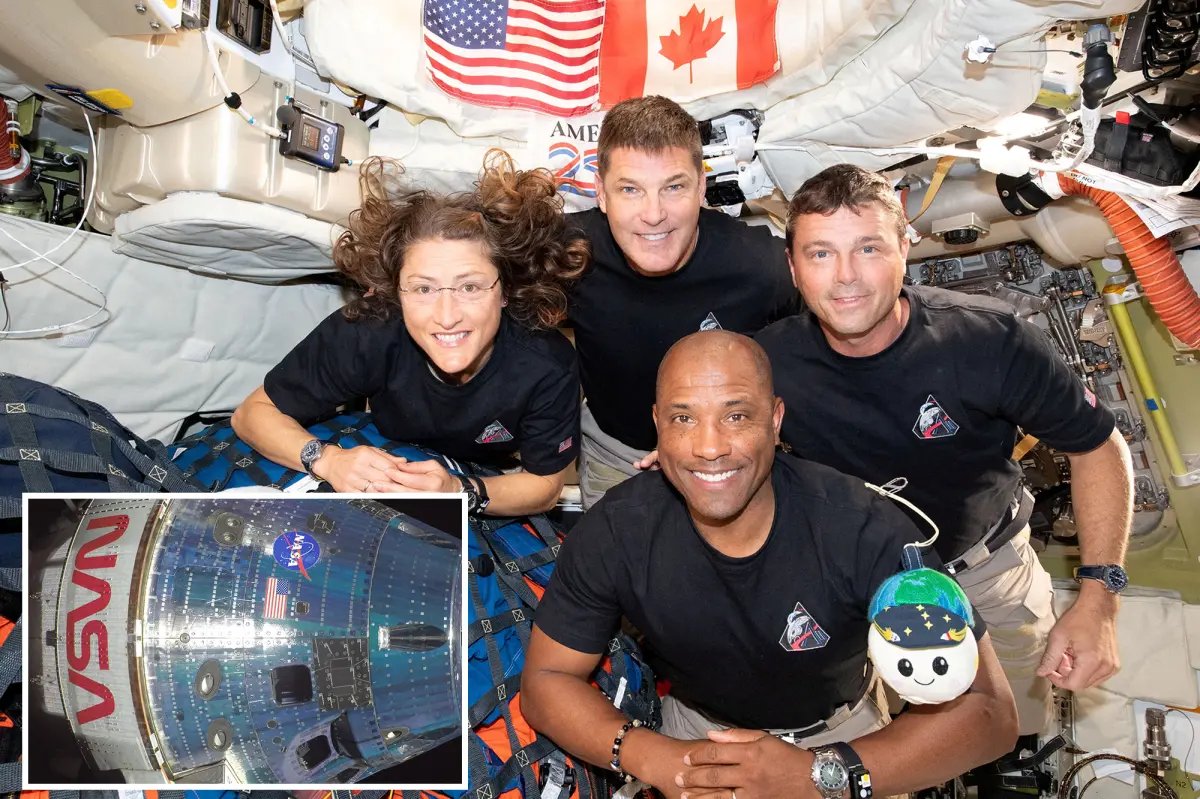
The NASA Artemis II crew of Christina Koch, Jeremy Hansen, Reid Wiseman, and Victor Glover pose inside the Orion spacecraft, with US and Canadian flags above them.
The Orion spacecraft carrying four crew is scheduled to splash down in the Pacific Ocean on Friday night. via REUTERS

“A sonic boom is expected as the spacecraft re-enters the atmosphere and could potentially be felt and heard throughout Southern California between 5 p.m. and 5:15 pm. local time,” the USGS posted on X.

“If you hear or feel sonic booms (or not), please fill out this ‘Did You Feel It’ survey.”

The crew is scheduled to hit the water around 8:07 p.m. ET roughly 80 miles off the coast of San Diego after reaching the moon earlier this week.

The Artemis II crew is expected to reach speeds of up to 23,839 mph when it enters Earth’s atmosphere.


NASA's Orion spacecraft with a blue solar array and American flag.
The gumdrop-shaped Orion spacecraft is set to reach speeds of up to 23,839 mph when it re-enters Earth’s atmosphere. Nasa/UPI/Shutterstock

“I’ve actually been thinking about entry since April 3, 2023, when we got assigned to this mission,” mission pilot Victor Glover said when asked Wednesday about re-entry during a press conference from space.

“There’s so many more pictures, so many more stories, and gosh, I haven’t even begun to process what we’ve been through. We’ve still got two more days, and riding a fireball through the atmosphere is profound as well.”

The splashdown will conclude the historic 685,000-mile flight that began 10 days ago on the Florida coast.

Meghan and Harry’s royal snub confirmed as Xmas ‘golden ticket’ missed | Royal | News
The small city in Spain where tourists feel ‘like they’re stepping back in time’ | World | News
Lady Louise Windsor celebrates 21st birthday today and here’s 11 of he | Royal | News
Air India plane forced into emergency landing at Birmingham Airport | UK | News
EU panic as bloc urgently needs £60bn investment just to move troops to Eastern front | World | News

Subscribe

Subscribe to our newsletter to get our newest articles instantly!

[mc4wp_form]

Share This Article
Facebook Email Print
Leave a Comment

Leave a Reply Cancel reply

Your email address will not be published. Required fields are marked *

© AMED POST Design Company. All Rights Reserved.
Welcome Back!

Sign in to your account

Username or Email Address
Password

Lost your password?