By using this site, you agree to the Privacy Policy and Terms of Use.
Accept

Amed Post

Breaking News,magazine, sport, life

Notification Show More
Font ResizerAa
Reading: Army’s Iowa lead explosion did not contribute rise in contamination: EPA
Share
Font ResizerAa

Amed Post

Breaking News,magazine, sport, life

Search
Have an existing account? Sign In
Follow US
News

Army’s Iowa lead explosion did not contribute rise in contamination: EPA

amedpost
Last updated: November 28, 2026 4:14 pm
amedpost
Published: November 28, 2026
Share
SHARE


Initial laboratory results indicate the controlled detonation of five tons of dangerous lead azide in southeastern Iowa has not caused a rise in the heavy metal in the bodies of water that supply drinking water to the area, the US environmental agency said Saturday.

Test results from sampling done following the US Army’s detonation of an aging stockpile of lead azide in Iowa were released by the Environmental Protection Agency.

The EPA said about 300 people spent Thursday in the field sampling schools, playgrounds, churches and homes across the region.

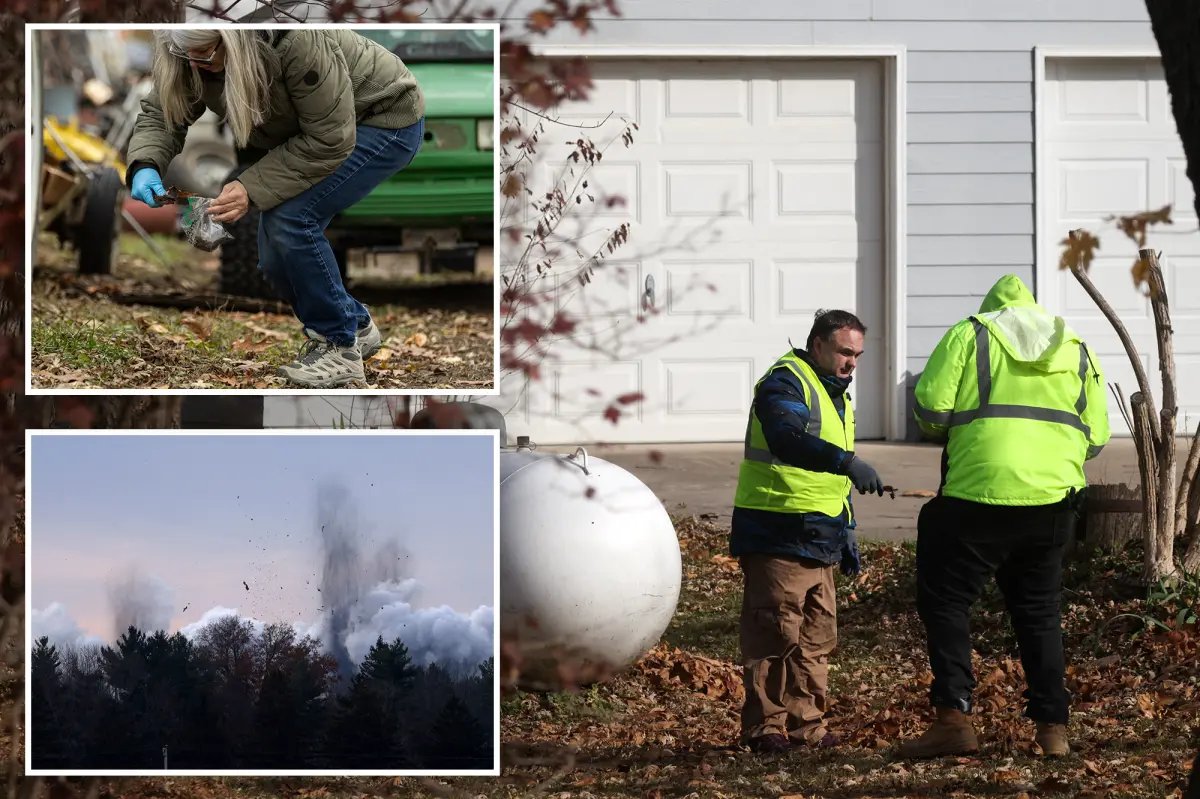
US Environmental Protection Agency technicians take soil samples in Augusta, Iowa, on Tuesday, Nov. 24, 2026, ahead of a lead stockpile detonation. REUTERS
EPA Supervisor Susan Fisher collects soil samples in Augusta, Iowa, on Wednesday, Nov. 25, 2026. AP Photo/Austin Johnson
The US Army detonates a degraded stockpile of lead azide at the Iowa Army Ammunition Plant in Middletown, Iowa, on Saturday, Nov. 28, 2026. REUTERS

More than 1,500 samples were taken of air, water, soil and dust before the detonation and hundreds of samples, including from homes, parks and drinking water, afterward.

“The EPA monitored for the presence of airborne lead for 30 consecutive hours after the controlled detonation using the Xact air monitoring systems. We will continue to provide updates in the coming days as new lab results for over 3,200 air, soil, dust and water samples … return and get validated,” the EPA said in a post on X.

Lead is a heavy metal that’s especially dangerous to children and pregnant women.

The Army has said the safest option was to detonate the stockpile right away because it was degrading and might explode uncontrollably at any time as the weather got colder.

Military personnel prepare to detonate explosive material near Middletown, Iowa, in this video grab released on Wednesday, Nov. 25, 2026. US ARMY/AFP via Getty Images
Soil samples collected by the EPA sit on the hood of a car in Augusta, Iowa, on Wednesday, Nov. 25, 2026. AP Photo/Austin Johnson

But the detonation has spurred widespread concerns about potential environmental contamination as well as questions about how and when the federal government communicated its plans.

Residents and some elected officials have criticized the Army for not being more transparent and providing more notice when it first determined the stockpile was unstable.

Residents in the tiny town of Middletown, where the Army stockpile was held, knew of the plans, but few others did — and the warnings largely failed to register with elected officials and the broader public until days before the planned detonation.

NYC politicians pushing for permanent Oct. 7 memorial, pending Mamdani’s OK
Massive El Niño-powered wave in Morro Bay wipes out group on shore
Kalshi probes shady bets on new White House press secretary Katie Zacharia: report
SoCal threatened by Hurricane Polo as Category 5 storm nears
Kings minority owner to pay widow $16M after CHP officer killed in crash

Subscribe

Subscribe to our newsletter to get our newest articles instantly!

[mc4wp_form]

Share This Article
Facebook Email Print
Leave a Comment

Leave a Reply Cancel reply

Your email address will not be published. Required fields are marked *

© AMED POST Design Company. All Rights Reserved.
Welcome Back!

Sign in to your account

Username or Email Address
Password

Lost your password?