
Archaeologists have made an incredible discovery while excavating a motorway in a popular European country. During the expansion of E45 motorway in Denmark, the experts were left stunned after they found a massive, exceptionally well-preserved weapon sacrifice consisting of more than one hundred lances and spears, eight swords, and, most notably, a very rare chainmail.
Buried approximately 2,000 years ago, hundreds of bladed weapons from the late Iron Age alongside the iron armaments indicate that the site was once inhabited by a prominent leader.
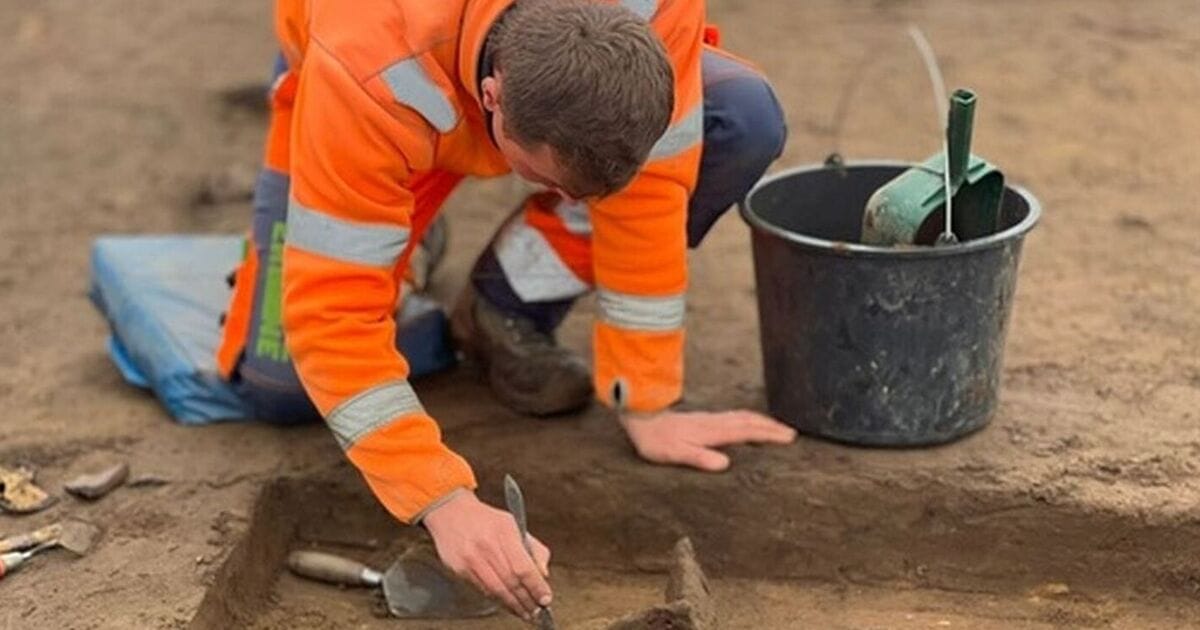
The remarkable discovery was made during archaeological excavations at Løsning Søndermark, Hedensted, where the Danish Road Directorate is currently expanding the motorway to three lanes.
Elias Witte Thomasen, archaeologist and excavation leader from The Vejle Museums, said: “From the very first surveys, we knew this was going to be extraordinary, but the excavation has exceeded all our expectations.
“The sheer number of weapons is astonishing, but what fascinates me most is the glimpse they provide into the societal structure and daily life of the Iron Age. We suddenly feel very close to the people who lived here 1,500 years ago.”
The haul consists of 119 lance and spearheads, eight swords, five knives, three arrowheads, an axe head, and a chainmail cuirass—a highly valuable item at the time, requiring months of skilled labor to produce.
Among the finds were also two ‘oath rings,’ a bugle-like instrument, a horse bridle, several unidentified iron objects, and hundreds of fragments of flint and pottery.
The rings, designed to be worn around the neck, feature depictions of a ‘ring bearer,’ an artistic motif influenced by Roman culture, symbolizing power and loyalty.
In this case, the figure appears to be wearing chainmail similar to the type recovered from the site.
Archaeologists discovered the weapons within two separate houses, each displaying distinct characteristics in the nature of the deposits.
In one house, the deposits were made during its dismantling. The large roof-supporting posts were removed, and the weapons were buried in the resulting postholes. In the second house, the offerings were made during its construction, with weapons and other items carefully packed around the roof-bearing posts before the holes were backfilled.
The nature of these deposits indicates they were part of ceremonies or sacrificial rituals associated with a chieftain’s residence, rather than evidence of a weapons workshop, barracks, or similar activities, the Museum said in a press release.
