


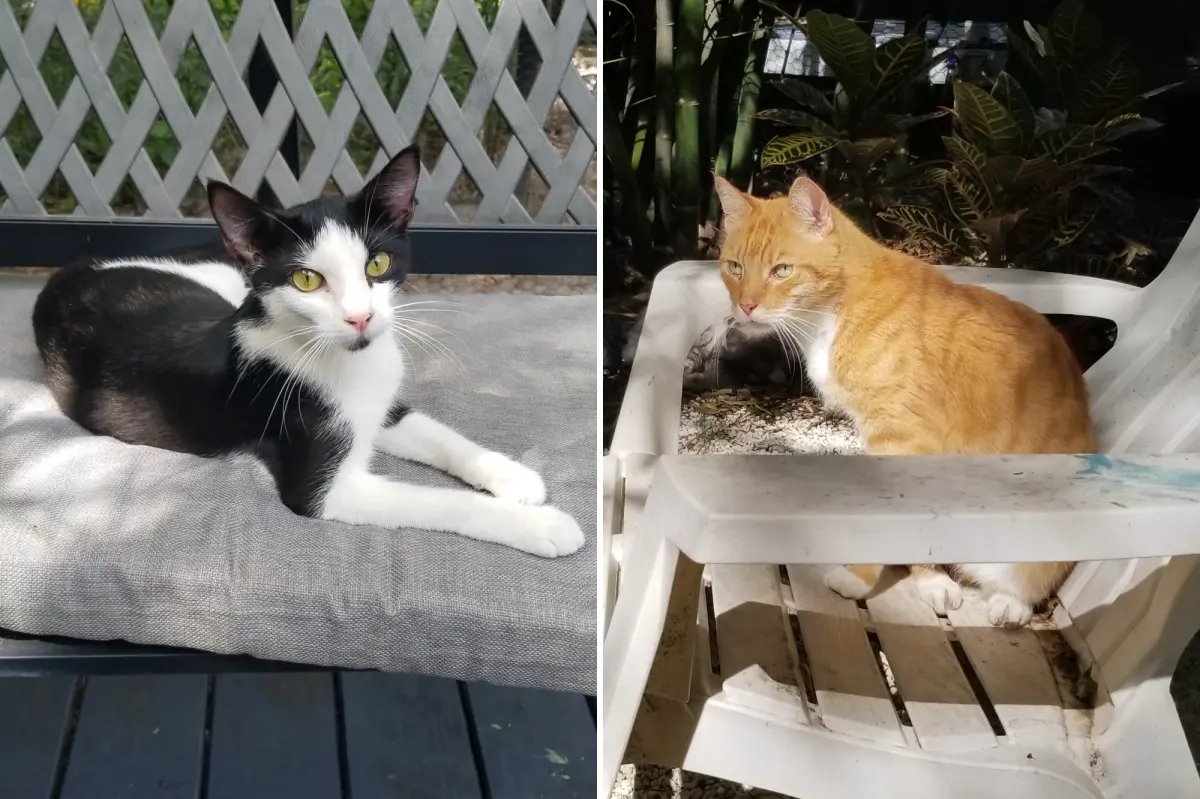

This place is the cat’s meow.
In Tampa, Fla., Bruce and Terry Jenkins, both 80, have turned their home into a purr-fect retirement haven for some very fur-tunate senior cats, giving them a chance live out their golden years in comfort.
Their nonprofit, Cats Cradle Foundation, isn’t just a shelter — it’s a forever home where felines can curl up, feel free and soak in the love.
“We want them to come here to live, not just wait for the end,” Terry told The Post. “They know they’re safe. They know they’re loved.”
The whole thing started in 2014 with a chance encounter at a vet’s office. Terry had gone to pick up medication for her dog when she met a woman about to euthanize her late mother’s cat.
“She asked me to take the cat,” Terry recalled. “I couldn’t say no.”
And just like that, the couple’s calling clawed its way into their lives.
With their two children grown and out of the nest, the couple transformed their one-acre backyard — once a playground — into a feline paradise complete with rope bridges, cute little houses, lots of toys, climbing platforms, plenty of room and cozy corners for a cat nap.
Some of the whiskered ones come from shelters, slated to be euthanized, others are referred by local vets who have been asked to put down an otherwise healthy senior kitty.
They know the couple will give the cats a second chance to pounce on life.
But it’s more than just a meal and a place to hang their catnip.
“They want and need love,” says Terry, who’s retired from her office assistant job with the New York Yankees. “These old cats have, in most cases, come from circumstances where they enjoyed a lot of love and then something happened.
“They lost their owner and suddenly their world turned upside down.”
Terry and Bruce, a retired IBM exec, say that running the sanctuary costs about $27,000 a year, with food and litter alone eating up hundreds a month.
Visiting vets give the cats routine vaccines, along with exams and necessary medications.
The couple initially footed the bill themselves — Bruce jokes he never wanted that 401K anyway — but now rely on donations from kind-hearted “guardian angels” who chip in to keep the mission alive.
They cap their cat count at around 30 to keep things manageable. New arrivals, who must be over 10 years old, may be a little hiss-terical at first, but within days, they settle in like they’ve always belonged.
Older cats, it turns out, don’t have the energy for drama — they’d rather nap than scrap.
“They’re past all that,” Terry laughed. “They just want peace.”
The compound is securely fenced in, but more in the interest of keeping small animals out — the seniors are not interested in escaping.
The retirement home residents dine together twice a day, share space and co-exist surprisingly well.
And when it’s time for their final catnap, they’re cared for in a quiet hospice room, surrounded by calm and compassion.
After they pass on, they’re cremated and memorialized in the “Butterfly Garden,” each with a plaque honoring their life — a paw-sitive reminder they were once cherished.
“They’re old, and we’re old,” said Terry. “We understand each other. We’re in this together.”