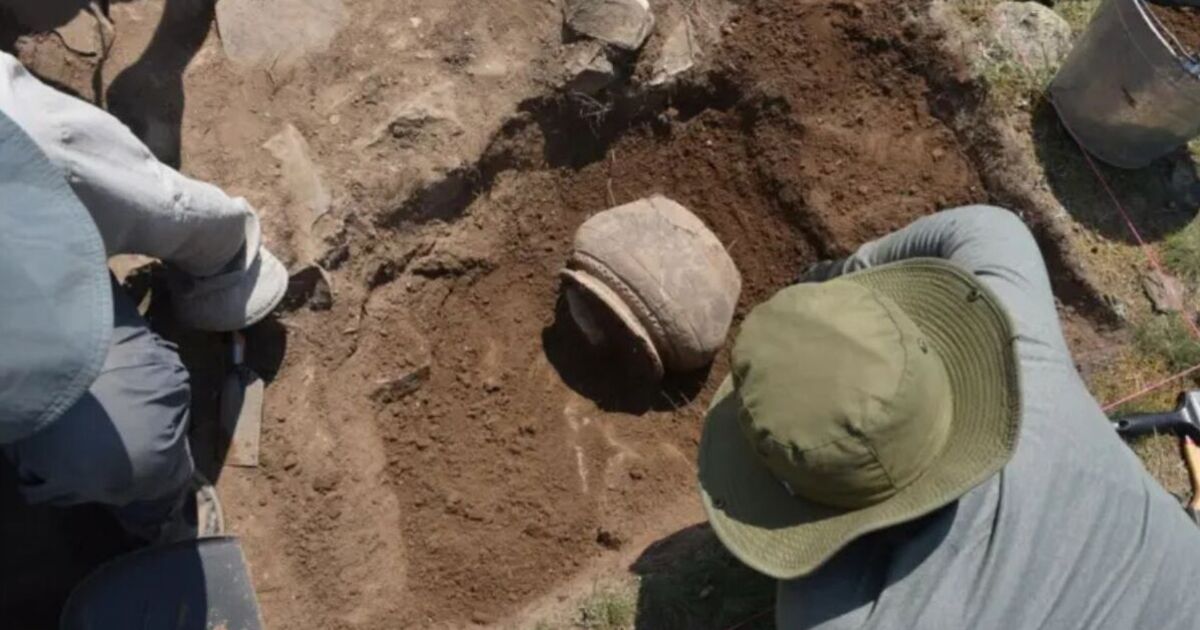

Archaeologists have discovered two incredible 1,324-year-old forgotten cities abandoned on the ancient Silk Road.
Founded in early mediaeval times in southeastern Uzbekistan, Archaeologists say their recent discovery will change the understanding of the ancient trading network that stretched from Europe to China.
Known for exchanging goods and ideas between the East and West, the trade routes were long believed to have linked lowland cities.
The two long-forgotten fortified settlements, described as “extraordinarily rare”, were found using remote sensing technology known as lidar, which uses reflected light to create 3D mappings of the environment.
The mediaeval centres, known as Tugunbulak and Tashbulak, were discovered in the Pamir mountains. These mountain cities are located 2,000 to 2,200 metres above sea level–similar in height to Machu Picchu.
Only 3% of the world’s population lives above this altitude today. Lhasa in Tibet and Cusco in Peru are among the few rare examples.
The team believes Tugunbulak and the smaller city of Tashbulak were bustling settlements between the 8th and 11th centuries, during the Middle Ages when a powerful Turkic dynasty controlled the area.
Tugunbulak may have been home to tens of thousands of people, making it one of the largest cities in Central Asia and a rival to Samarkand, the popular trade hub located about 70 miles away.
Tashbulak was ten times smaller and may have had a few thousand inhabitants. It has the remains of an early Islamic cemetery with about 400 graves.
“The history of Central Asia is now changing with this finding,” said archaeologist Farhod Maksudov, who led the discovery alongside Michael Frachetti, an archaeologist at Washington University.
He added: “We were kind of blown away.
“Tugunbulak, in particular, complicates much of the historical understanding of the early mediaeval political economy of the Silk Routes, placing both political power and industrial production far outside the regional ‘breadbaskets’ such as Samarkand.”
Their research was published in the scientific journal Nature this week, and experts have hailed its significance in highlighting the lifestyles of nomadic communities.
Peter Frankopan, a professor of global history at Oxford University and the author of The Silk Roads: A New History of the World, told The Telegraph: “Discoveries like these show the significance and intensity of Silk Roads trading networks.
“This is a wonderful study, not least since it shows that humans have always had an eye on how to exploit resources and to build communities – even at high altitude.”
