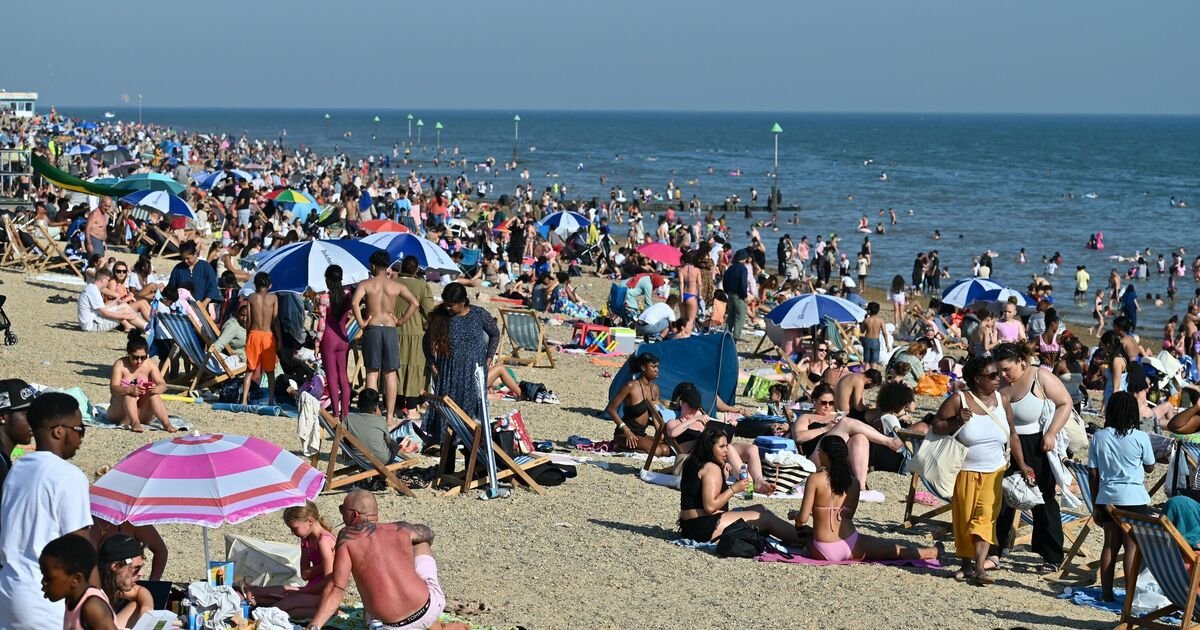

Parts of Britain are set to be blasted by a 32C Iberian plume as the weather maps have turned dark red, indicating the possibility of roasting conditions. WXCharts weather maps, which are compiled using MetDesk data, show that scorching conditions will impact many areas of the country on June 14.
According to the latest weather maps, hot weather conditions will begin to hit the country from June 14 and will continue till June 18. The maps suggest that many areas will experience temperatures around 30C for three consecutive days- a phenomenon which is generally termed as a “heatwave”.
The warmer conditions come as Spain is likely to experience extreme temperatures of 42C this weekend.
The Met Office defines “heatwave” as an extended period of hot weather relative to the expected conditions of the area at that time of year, which may be accompanied by high humidity. But the weather forecaster has not yet made any such predictions this year.
A UK heatwave threshold is met when a location records a period of at least three consecutive days with daily maximum temperatures meeting or exceeding the heatwave temperature threshold.
And the latest maps suggest that areas around London and Southampton are likely to witness temperatures above 30C from June 14 and June 18, before the weather begin to settle down a little.
The Met Office’s long-range forecast between June 9 and 18 reads: “Changeable weather across the UK at the start of this period with showers or some longer spells of rain spreading in from the Atlantic.
“The heaviest and most prolonged rain will probably be across parts of the north and northwest, with the southeast likely driest. Temperatures are expected to be near normal or slightly below.
“Into the second half of next week, there is potential for some warm or hot weather to develop, particularly in the south and east, although this may be accompanied by heavy showers and thunderstorms.
“Into the middle of June, high pressure may become more dominant. This could bring periods of fine and dry weather, especially in south and temperatures rising above normal.”
