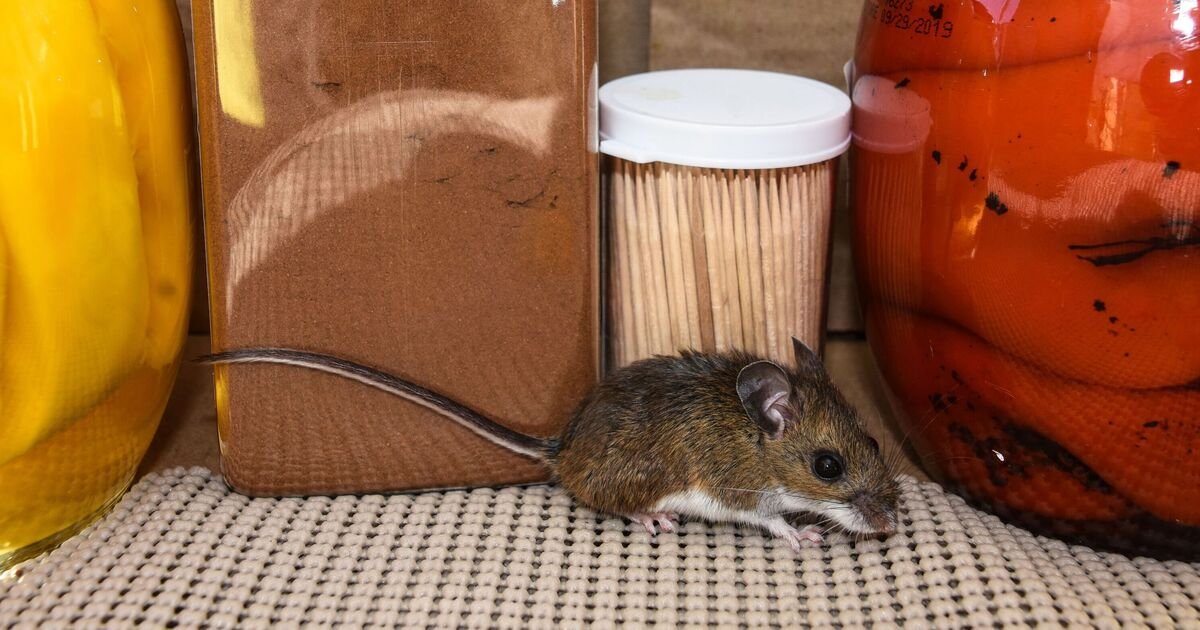

Heated homes become prime real estate for mice seeking warmth and shelter when temperatures drop and food sources outside become scarce. You may turn to mouse traps or DIY poison to rid your home of a suspected mouse infestation, but pest experts warn that one common mistake can actually trap them inside.
If you have heard faint scratching behind the skirting boards after dark or spotted tiny, dark pellets at the back of a kitchen cupboard, you are likely not dealing with a lone visitor. Mice mature in six weeks and have up to 10 litters yearly, giving homeowners little time to prevent an infestation. According to the British Pest Control Association (BPCA), the single most effective way to stop an infestation is physical proofing, but most homeowners underestimate just how flexible a mouse skeleton actually is.
“Mice only need a gap of 6mm to gain entry (roughly the diameter of the eraser end of a pencil)”, the BPCA warns in its official pest control guidance.
How to get rid of mice
The BPCA said: “You will need to search for any potential entry points and seal these up with wire wool embedded in quick-setting cement.”
Many homeowners and renters rely on standard expanding foam or silicone sealant to plug holes around pipework, only to find mice chew straight through them overnight.
Using coarse wire wool (steel wool) bound in quick-setting cement or heavy-duty metal mesh creates a physical barrier rodents cannot gnaw through.
Pest experts at the BPCA suggest focusing on low-level gaps first before checking higher routes.
1. Check doors
Check exterior doors for gaps larger than 4mm. Fit metal brush strips or door sweeps if the gap underneath is sizeable.
2. Look for small gaps
Inspect small cavities where gas, water, and boiler pipes enter walls or floors.
3. Check airbricks
It’s worth checking that ground-level airbricks are intact. Do not block them completely—they ventilate underfloor timbers to prevent damp and rot. Instead, cover damaged vents with fine-mesh wire.
If you already suspect mice are inside, timing is everything. Pest specialists caution against sealing up internal skirting gaps or wall holes before you have cleared the active population.
Doing so risks locking mice inside wall cavities, where they will either gnaw destructive new exit holes into your living space or die inside the walls, creating a severe, unreachable odour problem. Instead, control the active mice first, wait until there have been no fresh signs for at least a week, and then permanently proof the gaps.
Because mice are nocturnal and naturally cautious, seeing one during the day usually points to a well-established nest. The National Pest Technicians Association (NPTA) highlights six key warning signs that mice have moved in, including:
- Small rod-shaped droppings
- Food damage in cupboards
- Gnaw marks on packaging or cables
- Shredded nesting materials
- Scratching sounds in walls and ceilings
- Musky ammonia-like odours in small spaces
Once you’ve confirmed mice are active, Shelter England and UK pest bodies advise removing their food supply before setting traps. A mouse with easy access to crumbs has little reason to investigate bait.
Store cereals, pet food, birdseed, and grains in airtight containers made of hard plastic, glass, or metal. Move kitchen bins away from walls, and sweep behind appliances, where food debris tends to collect.
If you choose non-lethal plastic or metal box traps, bait them with a small smear of peanut butter, porridge oats, or chocolate—which pest controllers say works far better than cheese. Set traps flush against skirting boards, since mice tend to run along walls rather than across open floors.
Check the traps every few hours. If you catch a mouse, release it at least two to three miles away, near dense cover such as a hedgerow or woodpile. Releasing it at the bottom of the garden simply invites it straight back indoors.
Under UK law, glue boards are banned from public use in England, Wales, and Scotland due to severe animal welfare concerns.
Ensure our latest lifestyle headlines always appear at the top of your Google Search by making us a Preferred Source. Click here to activate or add us as a Preferred Source in your Google search settings
