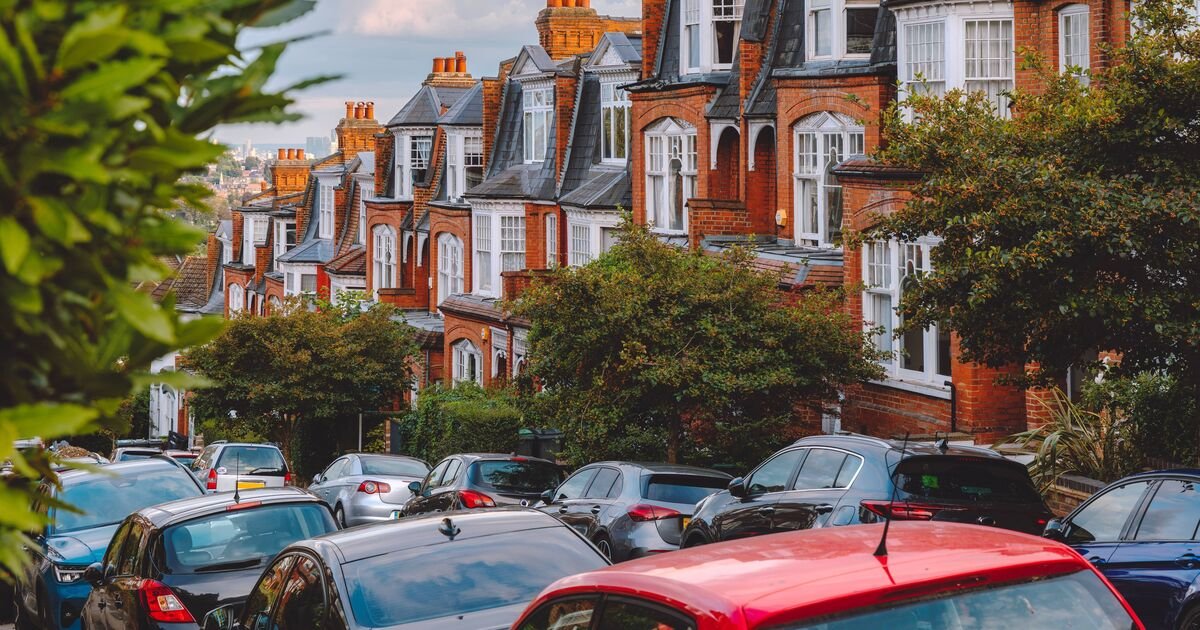


Parking on narrow streets can be a nightmare (Image: serts via Getty Images)
Few things test your patience quite like trying to park on a narrow residential street. Between circling the block for a space, squeezing into impossibly tight gaps, and navigating unwritten neighbourhood etiquette, just leaving your car outside your own front door can feel like an extreme sport.
Now, one fed-up homeowner has sparked a fierce debate after declaring they are officially done moving their vehicle to clear the road – even when it leaves buses completely stranded. Writing on Mumsnet, the motorist revealed that while they never obstruct the street when parking up, pandemonium frequently breaks out when other drivers park directly across from them.
Growing tired of being blamed for the congestion, they questioned fellow users whether it’d be unreasonable to simply ignore any knocks at their door.
They posted: “Neither side of the road has markings. My side has houses, the other is buildings. When I park outside my house, people feel the need to park parallel, narrowing the road so vans, buses, etc. can’t get through. In my opinion, I’m parked legally. People keep asking me to move and getting angry. Am I being unreasonable to leave my car where it is and stop answering the door? I work from home so they’re becoming a nuisance.”
Who is actually at fault?
The post split opinion, with numerous commenters maintaining that the responsibility lies entirely with whoever turned up last. One stated: “If there’s only room for parking on one side of the road, I think it’s down to who parks first.”
A second concurred: “You are being unreasonable if you block the road. But if you park first and make sure a lorry can get round you, then you are not blocking the road – the person who parks opposite you preventing a lorry getting round is.”
Others, nevertheless, maintained that unofficial street conventions should take precedence. One stated: “Park on the other side if that is what most people do, otherwise it is you blocking the road.”
And another questioned: “Is one side the traditional parking side and you’re parking on the other?”

Parking rows can break out when guidelines aren’t followed (Image: Joe Morris via Getty Images)
What UK law says about blocking roads
Rule 242 stipulates that motorists must not leave their vehicle in a hazardous position or in a manner that causes any “unnecessary obstruction of the road”.
Because this rule employs the phrase “must not”, it carries legal weight (specifically the Road Traffic Act 1988), meaning officers can impose a fine or even have an obstructing vehicle removed.
More precisely, Rule 243 cautions drivers against parking “opposite a traffic island or (if this would cause an obstruction) another parked vehicle”.
In this situation, if the homeowner parked lawfully and left sufficient room for buses and emergency vehicles to pass, it is the second motorist – the one who parked opposite and created the bottleneck – who is technically causing the obstruction.
However, the homeowner might wish to rethink where they park their vehicle if they’ve grown weary of people knocking on the door, asking them to move.
Actions to take
For those residing on a narrow residential street, a few straightforward habits can help maintain harmony and keep traffic flowing.
These include positioning your car as near to the kerb as you can. Creating a substantial gap between your tyres and the kerb reduces precious road space, though you must avoid mounting the pavement, as this can obstruct pushchairs or wheelchair users.
Additionally, remember to fold in your wing mirrors. It requires just a moment, but tucking them in provides passing buses and delivery vans several extra inches of clearance – and protects you from an expensive repair bill.
Wherever possible, refrain from parking directly opposite another vehicle. Creating a staggered gap establishes natural passing points rather than a complete bottleneck.
A sensible guideline is to verify whether a fire engine can easily pass through – it generally requires at least three metres (approximately 10 feet) of unobstructed road width.
If commuters or workers are causing daily traffic chaos on an unmarked road, residents can petition their local council to introduce double yellow lines along one side of the street or to establish a residents-only parking permit system. So that’s likely what this Mumsnetter ought to think about in this situation!
