
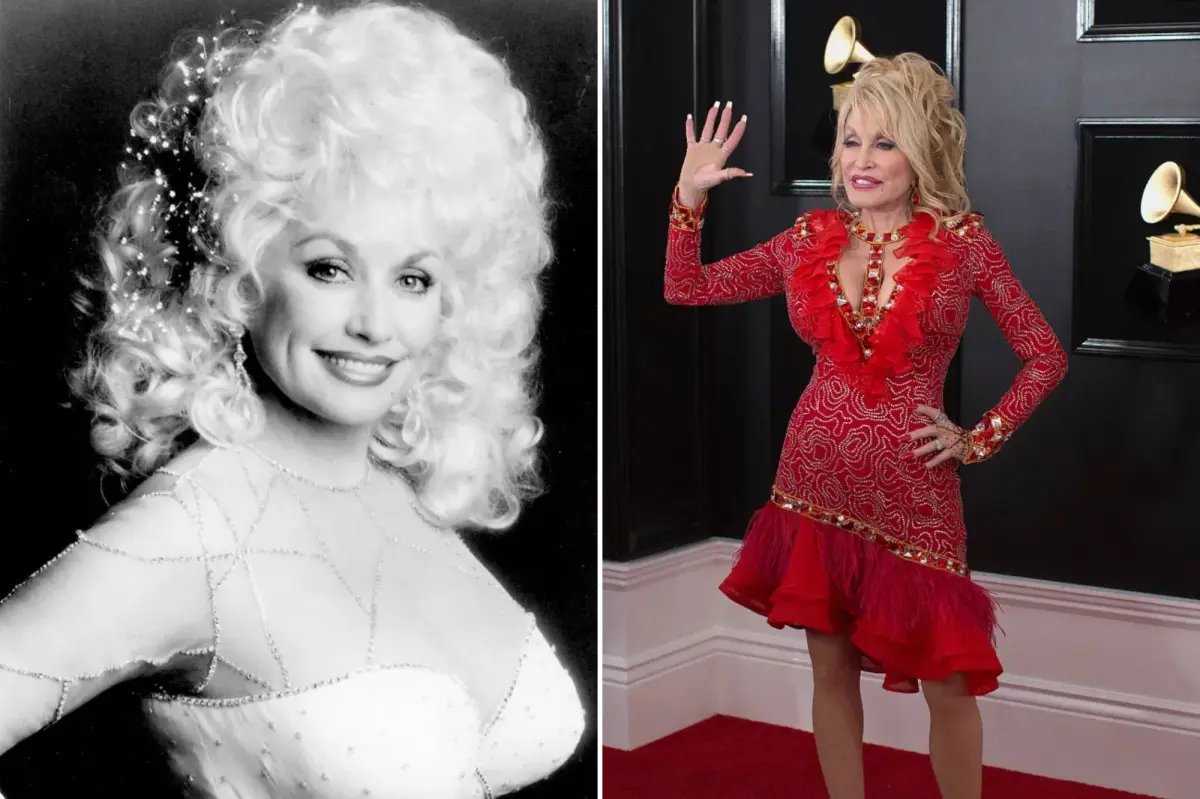


Few artists unite like Dolly Parton, whose death on Tuesday, at 80, prompted both Rosie O’Donnell and President Trump to pay tribute. So did everyone from George Strait to Julia Roberts to Colman Domingo and Parton’s goddaughter Miley Cyrus.
And few modern-day legacies loom larger. But it’s always been about so much more than just the singer’s music.
There are the movies, of course. She actually made just a handful of them, but “9 to 5” and “Steel Magnolias” were such classics that it’s easy to forget she wasn’t a busy Hollywood star.
After all, who can’t immediately conjure up her spoken twang and sweet laugh and the way her pneumatic silhouette moved on film?
That last bit is no insult, not by a country mile. Parton was always proud of her highly marketable “Backwoods Barbie” aesthetic. The platinum-blonde wigs, the rhinestones and the teetering heels were her own creation; as for her 40-inch breasts, she once told CBS: “They’re real big, they’re real expensive and they’re really mine now.”
Nobody was more in on the joke than Dolly, who once said, “I don’t know how long it takes to do my hair—I’m never there!”
The quote “it costs a lot of money to look this cheap” is also attributed to her. But as she sang in the song “Dumb Blonde” from 1967, “This dumb blonde ain’t nobody’s fool.”
A brilliant businesswoman who wrote her own songs, Parton shrewdly guarded her equity.
When “9 to 5” co-star Jane Fonda initially called Parton, who had never acted on the big screen, about the role of harassed secretary Doralee Rhodes, the singer said: “’Well, this is a good opportunity, but I’ll only do it if I can write the theme song.’”
That title theme became a crossover hit in 1980, going to No. 1 on the Billboard Hot 100. (So did Parton’s 1983 duet with Kenny Rogers, “Islands in the Stream.”)
The singer went to the top of the trade’s country charts 25 times, including with “Jolene,” “Here You Come Again” and “I Will Always Love You.”
After the latter hit No. 1 in 1974, Parton was approached about Elvis Presley recording his own version of the song. But when she learned that Presley’s wily manager, Colonel Tom Parker, demanded she sign over half the publishing rights, she nixed the cover.
When Whitney Houston took the song into the stratosphere, Parton used some of her royalties to invest in an office complex in a black neighborhood in Nashville and modestly called it “the house that Whitney built.”
(As for the house that Dolly built, her Dollywood amusement park in Pigeon Forge, Tenn., hosted a reported 4 million guests last year.)
Gifted with a heart of gold, Parton was one of our most generous celebrities, spending her reported $450 million fortune to help fund Moderna’s Covid-19 vaccine in 2020 as well as children’s healthcare, including the Dolly Parton Children’s Hospital in Knoxville, Tenn.
She was passionate about literacy and started her Imagination Library in her home state, gifting books to kids from birth to age five. Since 1995, it’s spread across the US and into Canada, the UK and Australia, giving away more than 332 million books so far.
“She really represents the best of America in terms of how giving she was,” Annie Zaleski, author of “Dolly Parton: The Stories Behind the Songs,” told The Post.
Perhaps it was because Parton knew hardship. She detailed her impoverished upbringing in songs like “Coat of Many Colors” and helped support her family by singing on the radio at age nine. She often joked that she was on television before her family even owned a television.
Parton also leaves behind a remarkable cultural impact. It’s nearly impossible to find a country star of any age who wasn’t influenced by Dolly — and she transcends genres; that’s why artists from Beyoncé to the White Stripes have covered “Jolene.”
“She was a trailblazer who created an immersive storytelling world out of her own life with her autobiographical songwriting,” said Leigh Edwards, author of “Dolly Parton, Gender” and Country Music.” (And Dolly was certainly human — “Jolene” was about her being jealous of a bank teller who hit on the singer’s husband.)
“She was writing feisty, feminist, stridently independent songs early on,” said Zalesky. “We would not have Taylor Swift without her. So many different artists are carrying on her songwriting vulnerability and exploring what it means to be an American in the world.”
In Sevier County, where Parton grew up and where a bronze statue of her stands, the mayor announced an official day of mourning to honor her.
But the amusement park she founded, however, won’t be closed.
“Dollywood will be open Wednesday as Dolly wanted,” a spokesperson said in a statement, “always reminding everyone with her signature sparkle — ‘the show must go on.’ ”
