
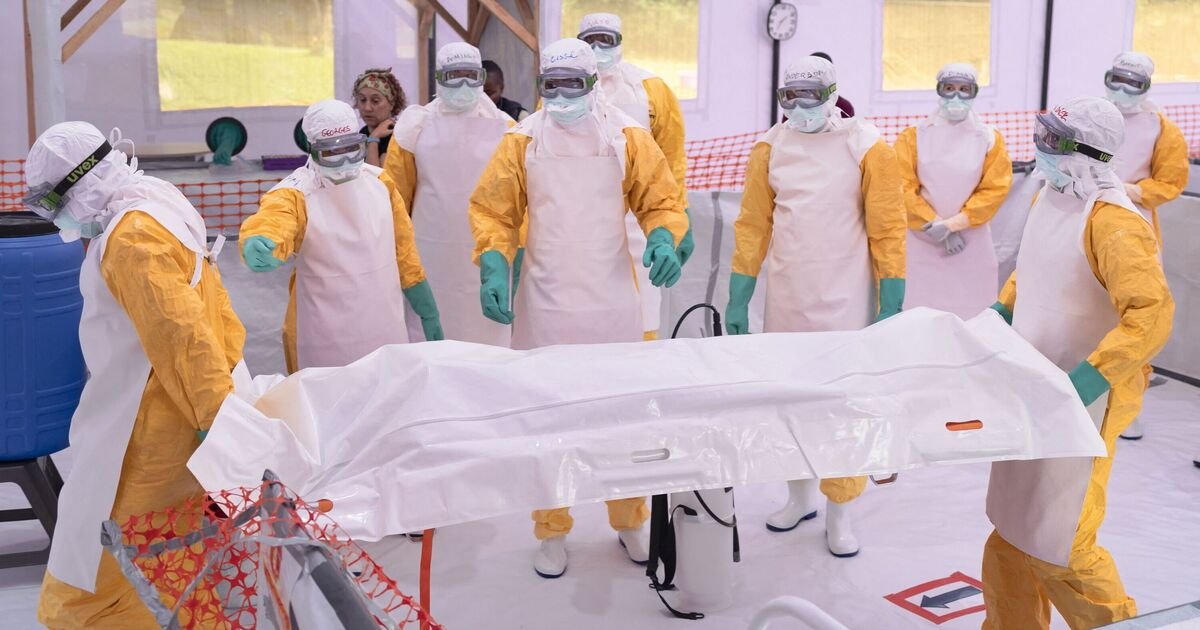

A British aid worker is being kept under observation at a London hospital after a they were medically evacuated from the Democratic Republic of the Congo following their potential exposure to the deadly Ebola viruas.
The UK Health Security Agency (UKHSA) stressed that the evacuation back to British soil was a highly precautionary measure following the potential healthcare-related exposure to the deadly disease, for which there is no cure. They are now being monitored at a specialist facility in London.
It is understood that the humanitarian worker had been treating patients with the killer virus in DR Congo when they were potentially exposed. The possibility of a British infection comes more than two months after the outbreak began in Africa. Health authorities declared a Public Health Emergency of International Concern on May 17 for DR Congo and neighbouring Uganda following the spread of the vicious Bundibugyo strain of the virus.
A spokesperson from UKHSA added: “The individual is not currently displaying any symptoms and remains well, but as a precautionary measure they have been evacuated on a flight chartered solely for the evacuation.
“They are now being assessed and monitored in isolation by infectious disease specialists at a London hospital. The incubation period of Ebola ranges from two to 21 days and the individual will be closely monitored and required to isolate throughout this period.”
Richard Pebody, Director of Epidemic and Emerging Infections at the UKHSA, said: “The risk to the general public remains low. This individual has been transferred out of an abundance of caution, and we’re pleased they remain well.”
And, while the latest incident does involve an aid national who has now been repatriated to British soil, UKHSA has said the outbreak poses a low risk to the broader UK population. Health officials have said that Ebola is only spread through close contact with the bodily fluids of an infected person who is showing symptoms. The disease is not contagious during its incubation period.
While it is a rare but severe disease, it does have an average fatality rate of around 50 per cent, although previous outbreaks have recorded fatality rates ranging anywhere from 25 per cent to 90 per cent of patients.
UKHSA said it continues to monitor the outbreak overseas and works with the NHS, Border Force, and other agencies to ensure anyone returning from regions with confirmed cases of the virus are assessed and treated safely if they become unwell.
The NHS also has specialist isolation units and established procedures in place to deal with any suspected cases.
The outbreak in the Democratic Republic of Congo continues to worsen, with the number of confirmed Ebola cases rising to 2,423, including 967 deaths, according to government data released on Monday.
The epidemic is being driven by the Bundibugyo strain of the virus, a less common form of Ebola for which there is currently no approved vaccine or specific treatment.
Humanitarian organisation Médecins Sans Frontières (MSF) has warned the virus is spreading more rapidly than containment efforts, highlighting the growing challenges facing health authorities trying to bring the outbreak under control.
