


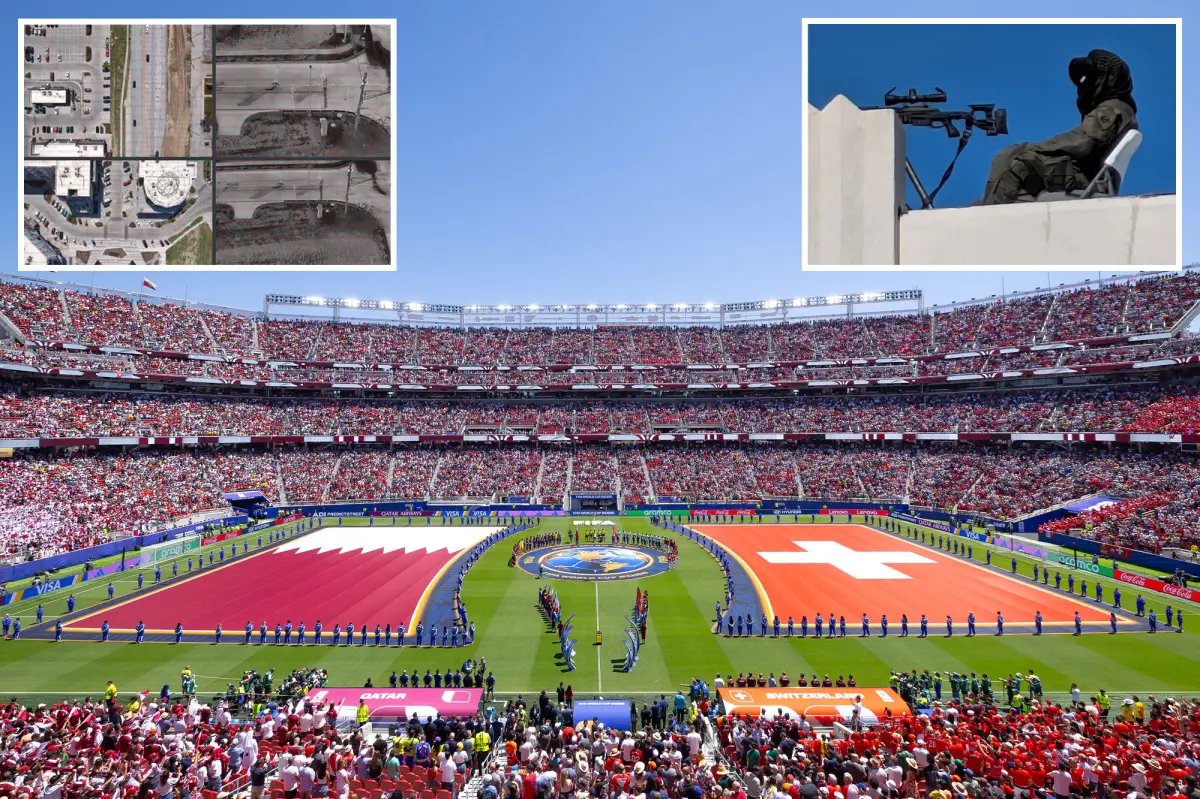

A pro-Iran hacking group has claimed it has breached the FBI’s drone program that is being used to defend the FIFA World Cup.
Handala claimed it has gained access to the system and was watching the footage the Bureau is taking as it monitors games from above.
The hackers also issued a chilling threat, saying “we don’t like these teams at all” as the blockbuster tournament kicked off on American soil on Friday.
It comes after the group claimed it had infiltrated several California cities’ water systems in another attack on the United States.
A statement circulated by the SITE Intelligence Group, which monitors state-linked online activity, said on Friday: “Better tighten your World Cup security, we don’t like some of those teams at all.
“Don’t forget: FPVs [first-person view] are everywhere; you never know when one might end up right in your team’s bus.”
Handala claimed it had access “for months” to FBI drone systems, giving it visibility into “every image and every suspect” captured by the agency’s drones.
The group said FBI Director Kash Patel was added to its list of “successfully hacked victims” and claimed it brought FBI systems “to their knees,” despite descriptions of those systems as “impenetrable.”
Handala further asserted that Washington cannot “silence the voice of resistance” through “bribes and threats.”
The hackers’ claims have not been independently verified, and some cybersecurity experts have questioned the authenticity of evidence previously released by the group.
Late last week the group claimed it infiltrated water systems serving several California cities, though officials cast doubt on whether any critical infrastructure was actually compromised.
It alleged it breached systems tied to Bakersfield, Visalia and Chico, posting screenshots that appeared to show residents’ water bills.
The hackers said the cyberattack was retaliation after US forces struck reservoirs in Iran. California Water Service said it found no evidence that its systems had been compromised.
The California Post has reached out to the FBI for comment on the new hacking claims.
The recent threats by Handala are viewed by analysts as less about sports rivalry and more about exploiting one of the world’s largest media stages.
In March 2026, the U.S. government seized domains allegedly used by Handala and announced a $10 million reward for information leading to the identification of the group’s members.
Handala quickly retaliated by leaking what it claimed were historical emails belonging to FBI Director Patel.
Intelligence analysts view the latest World Cup threat as the newest chapter in an escalating confrontation between the hacking group and US authorities rather than a random act of cybervandalism.
While Handala’s warning that it does not “like some of those teams at all” did not identify specific countries, analysts say the group’s political alignment offers clues about its likely targets.
Handala is widely described by cybersecurity firms and intelligence analysts as a pro-Iranian, anti-Israel hacking group. Its recent statements have framed its operations as retaliation against the United States over FBI actions and broader tensions between Washington and Tehran.
Based on that positioning, potential targets could include the United States and other Western nations aligned with Washington.
Israel has historically been one of Handala’s primary adversaries, although the country did not qualify for the 2026 World Cup. Analysts note that teams from major U.S.-allied nations, including England, Germany and France, have frequently been targeted by Iranian-linked cyber influence campaigns.
Handala’s warning arrives amid heightened concerns about Iranian cyber activity, with the Justice Department previously warning that tensions stemming from U.S.-Israeli strikes on Iran could prompt cyberattacks against American targets.