
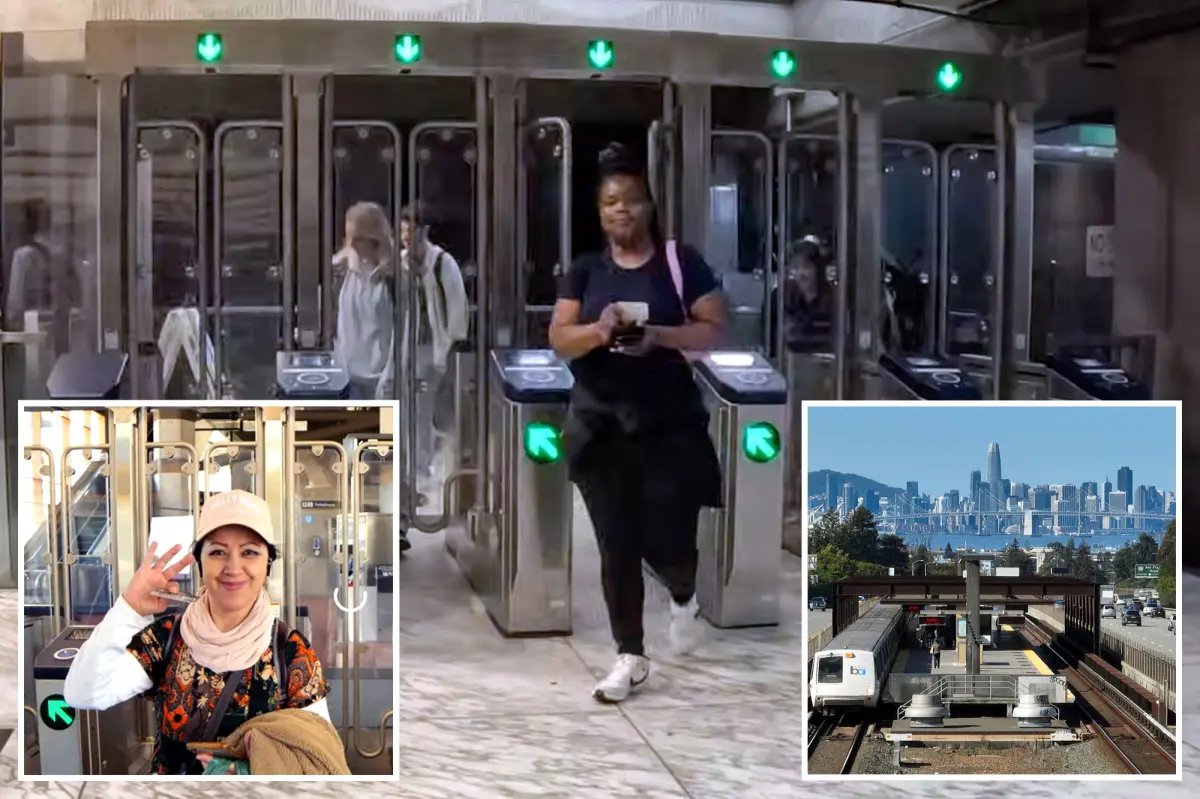


BART is stepping up its crackdown on fare evasion, rolling out faster-closing gates aimed at riders who continue to cheat the system.
Transit officials are now testing upgraded barriers at Antioch and Concord stations that shut in 500 milliseconds, down from the current 800 milliseconds. Officials hope that 0.3 seconds makes the difference.
The goal is to stop “piggybacking,” when someone sneaks in right behind a paying rider.
The push comes even as BART claims its new gates, first installed in late 2023, are already reducing fare evasion.
A rider poll found 17% of respondents said they saw someone skip paying, compared to 25% the year before, SFist reported.
The agency says that amounts to a drop of nearly one third, though the data comes from informal surveys rather than direct enforcement counts.
Before the upgrades, BART was losing about $25 million a year to fare evasion.
The old 1970s-era turnstiles were easy to jump or squeeze through, making them a frequent target for freeloaders.
Engineers tested several designs before landing on the current model, including double-decker gates, sharkfin-style barriers and a revolving door with interlocking teeth.
The chosen system uses Plexiglass panels along with cameras and sensors.
Officials say the new gates are also cutting down on vandalism.
Analysts estimate the system is saving nearly 1,000 hours of maintenance work, equal to about $10 million a year, the San Francisco Chronicle reported.
Some riders say enforcement still falls short.
One commuter described seeing a man cited for fare evasion who then boarded a train anyway and tore up the ticket after officers left.
The crackdown comes as BART faces a major financial crisis.
Ridership remains well below pre-pandemic levels as remote work continues to thin out commuter traffic.
Trains that were once packed now run with empty seats, slashing fare revenue.
The agency is now dealing with annual deficits nearing $400 million.
Before 2020, fares covered most operating costs.
That revenue has since dropped sharply, even as expenses continue to rise.
Labor costs make up roughly three quarters of BART’s budget, and payroll has increased by more than $150 million in recent years despite fewer riders.
BART says the gates are improving safety and deterring crime, which fell 17% systemwide in 2024.
Officials acknowledge it is impossible to stop all fare evasion, even as they continue tightening controls.
About 20 stations currently have the new gates, with all 50 stations expected to be equipped by the end of 2025.
