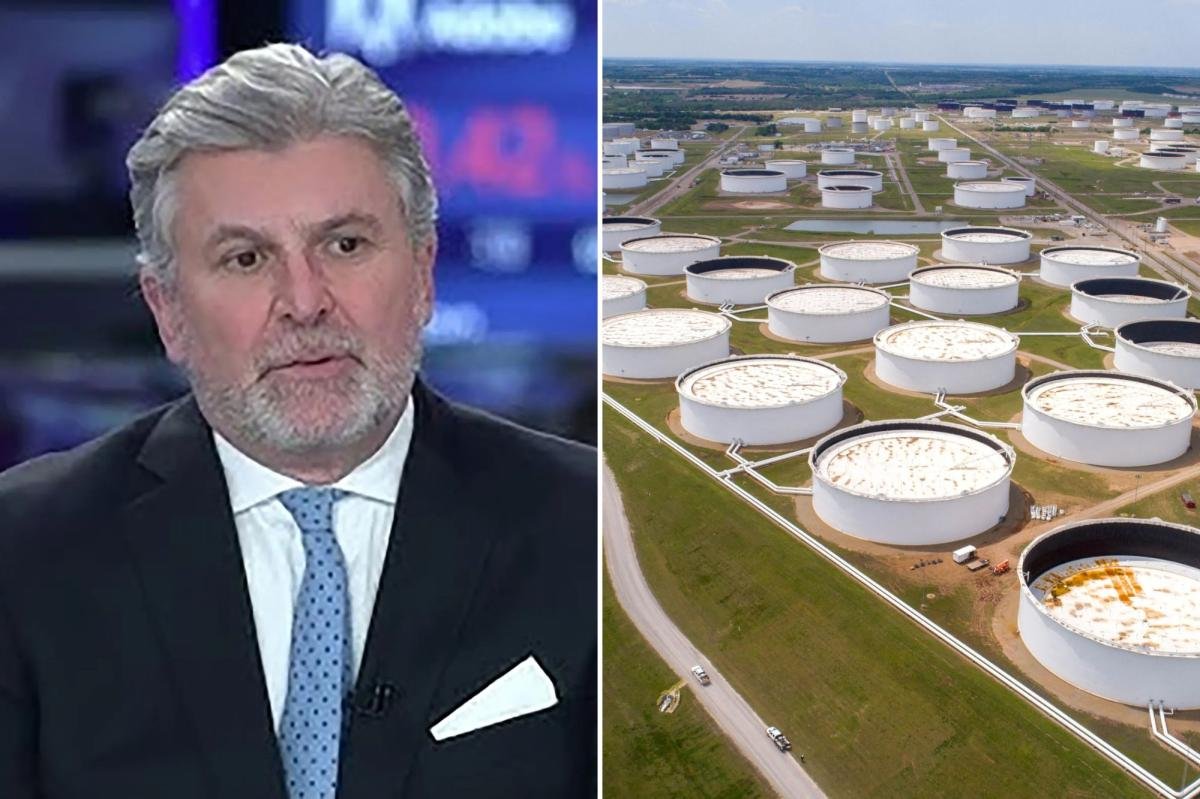


Four suspiciously-timed trades on the oil futures market have analysts and traders outraged — calling out corruption in the industry or, even worse, data leaks at the highest level.
The oil wagers — ranging from $400 million to nearly $1 billion — dwarf other recent insider trading scandals over suspiciously timed bets placed on platforms Polymarket and Kalshi regarding outcomes of US military action.
“We’re all, like, f—k this s—t! It’s outrageous what’s going on. This corruption is how you end up like Venezuela,” oil market analyst Paul Sankey told The Post.
“It’s simple corruption. It’s not a free market. If the Democrats were clean, they’d call it out. But all the politicians have their snouts in the trough of insider trading,” the seasoned oilman said.
Sankey, a former Wall Streeter now president of Sankey Research, recalls trips to Washington 20 years ago, when all the lawmakers “dressed like geography teachers.” Now they’re flashing Rolexes and $4,000 suits.
“It’s so unsubtle. There’s a sense of corruption around all of Washington, including the Democrats, led by the Nancy Pelosi [stock] tracker,” he added, referring to a novel online tool that follows the historically strong stock market trades of the former House Speaker.
“Either there’s far too much information being leaked by the administration to a wide number of people or somebody very close to the administration is insider trading. Neither of them is good,” said Sankey.
In March and April traders placed massive short positions in oil futures (a trade that predicts the price will fall), just before major announcements from President Trump signaling de-escalation in the US-Israel war against Iran – making tens of millions from the trades.
At 6:50 a.m. on March 23, traders again executed a massive volume in oil futures trades, about $580 million, 15 minutes before Trump posted on Truth Social about productive talks with Iran to de-escalate, sending oil prices tumbling and delivering quick profits to the traders.
A huge, $950 million bet on falling oil futures on April 7 was placed in the hours leading up to Trump’s announcement of a two-week ceasefire with Iran, after which oil prices plunged roughly 15%, leaving the traders to cash in.
About a week later, traders dumped roughly $760 million in oil just 20 minutes before Iran announced the Strait of Hormuz would stay open to commercial shipping, triggering an immediate oil price crash. Then last week another $430 million bet was placed minutes before Trump announced an extension of the Iran ceasefire.
“This is one thing I’ve never seen in my 25-year career,” Ilia Bouchouev, former president of Koch Global Partners and one of the world’s leading experts on energy trading, told The Post.
The madcap trades, “violate everything that the normal trader would do—and I know most of them personally in the industry,” he said.
“When people execute large trades, they pay a lot of attention to being careful. They use various algorithms that allow them to achieve efficient execution. Here it was the polar opposite of the industry standard, where everything was done in essentially one go during extremely illiquid hours that no professional trader would do,” Bouchouev said.
This brazenness has led him to doubt speculation someone in Washington is slipping intel to a buddy. Instead, Bouchouev worries foreign actors may have hacked communication networks close to the President — and are now making huge amounts of money.
“It would indicate a security breach. Americans are not that stupid. It’s a regulated market. You’re transacting on oil futures regulated by the Commodity Futures Trading Commission (CFTC). You would get caught doing this,” Bouchouev said.
“A few folks sitting in a basement in Malaysia and taking orders from somebody else don’t care about being compliant with US regulations. They still need access to a [US] broker. But there are probably Chinese clearing houses as well.
One thing’s certain: if the CFTC, the federal regulatory agency, is doing its job then investigators likely already know who made the trades.
All transactions have to go through a registered broker, and those brokers know the identities of their traders and are routinely approached by CFTC investigators to fork over information if something looks fishy.
On April 15, news leaked the CFTC had initiated a probe into the shady shorts.
While the agency hasn’t publicly commented, CFTC Chairman Michael Selig, a Trump appointee, declared the following day in an unrelated congressional testimony, “I want to be crystal clear. To anyone who engages in fraud, manipulation, or insider trading in any of our markets: we will find you, and you will face the full force of the law.”
Shorting is simply a strategy to profit and is not prohibited, while insider trading is the illegal practice of buying or selling in the market while possessing confidential information not available to the public.
While some lawmakers like Sen. Elizabeth Warren (D-Mass.), who called the oil-futures trades an “appalling example of insiders rigging the market,” are alarmed over the shady shorts, an embarrassed silence mostly prevails over Washington.
“The oil market is a big casino. Somebody violated the rules? Nobody outside the casino really cares,” said Bouchouev.
But, while consumers aren’t really affected by shady futures trading, he said the larger implications are could threaten the US’s reputation as one of the most secure and reliable markets to trade in.
“If it questions the robustness of financial markets, that’s a potentially big philosophical question. Are US markets fair and can we still rely on them?” he posited.
Sankey concurred. “That’s not what we do here. The whole point of the US free market — why our markets are so great and wonderful — is because we do not allow insider trading and unfair markets and manipulation.”
