
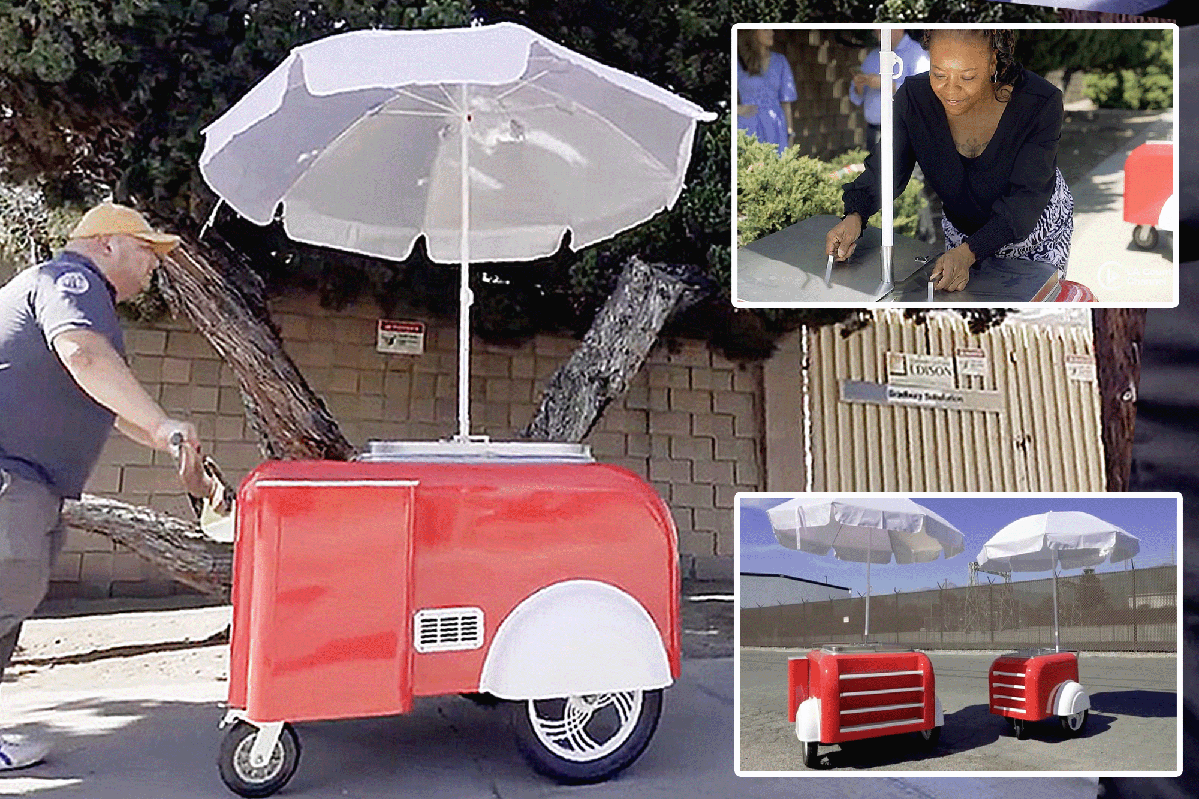


Los Angeles officials are rolling out a $2.8 million program to give away nearly 300 free street food carts — but a well-known SoCal chef says the effort once again shows how the city makes it nearly impossible for traditional restaurants to do business.
“There’s two different sets of rules,” restaurateur Andrew Gruel told The Post. “If I were, as a brick-and-mortar business, to do anything outside the regulatory framework of the city — zoning, health standards, wage laws — I’m going to get smashed left and right.”
Gruel, who made waves in 2020 after calling Gov. Gavin Newsom an “a—hole” following the governor’s notorious pandemic dinner at the French Laundry, said he empathizes with street vendors. He built his restaurant business, Slapfish, into a global brand after going from “one food truck” in Los Angeles to creating more than 55 restaurant locations across three countries.
But Gruel believes policies in Los Angeles County and the state of California have done next to nothing to make it easier for brick-and-mortar restaurants.
“If you’re allowing [food carts] to operate and you’re actually encouraging them financially by subsidizing them to operate under the radar, without the regulations, then subsidize brick-and-mortars and decrease their regulations as well,” said Gruel, who now serves on the Huntington Beach City Council.
The city and county of Los Angeles announced in January that they were launching the food cart initiative to distribute at least 281 health-code-compliant carts to sidewalk vendors. The plan is part of a broader equity initiative to bring thousands of street vendors into the “legal economy.”
Officials say the carts are meant to help vendors meet new permitting and health requirements that many small operators cannot afford on their own.
Under the plan, 180 carts will go to vendors in unincorporated county areas and 101 within the city. Applicants must live in Los Angeles County, be at least 18 years old and earn less than $75,000 annually from vending. The carts, which are built to meet California’s Compact Mobile Food Operation standards, will be provided free once vendors complete the required permits.
Supervisor Hilda Solis championed the program’s launch in January, saying “food vendors play an essential role in the economic and cultural vitality of Los Angeles County.”
“This is more than a program — this is a chance to support small business growth, economic stability, and even generational wealth,” Solis said.
However, the process for vendors to receive a cart is expected to take at least three months in most cases, which may cause the effort to stumble like a similar effort in Long Beach.
Earlier this month, officials there announced they were abandoning their food cart initiative after failing to even get halfway to a goal of giving out 40 free carts.
City officials said many of the 123 applicants never completed the complex permitting process required to receive the carts, according to the Long Beach Post.
Los Angeles’ program is waiving the county’s $604 sidewalk vending registration fee for the first two years, and that fee will only be $100 in the third year. Vendors can also receive a 75% subsidy for health permits and grants of up to $5,000 to cover additional startup costs.
Gruel argues those subsidies create an uneven system for restaurants already facing heavy regulation.
“You’ve got food vendors operating cash-only businesses, not paying sales tax,” he said. “And they aren’t paying many of the local fees required for things like grease disposal or environmental health standards.”
The chef said he eventually pulled his operations from Los Angeles after the city began tightening regulations on food trucks during the early boom.
“We were early adopters back in 2010 and 2011,” Gruel said. “Once the government realized food trucks were popular, they started taxing them like crazy.”
Still, Gruel said he isn’t calling for a crackdown on street vendors — just equal treatment.
“I’m a deregulate guy,” he said. “If you’re going to give $3 million to food vendors, then give $3 million to brick-and-mortars that are hurt by it.”
