


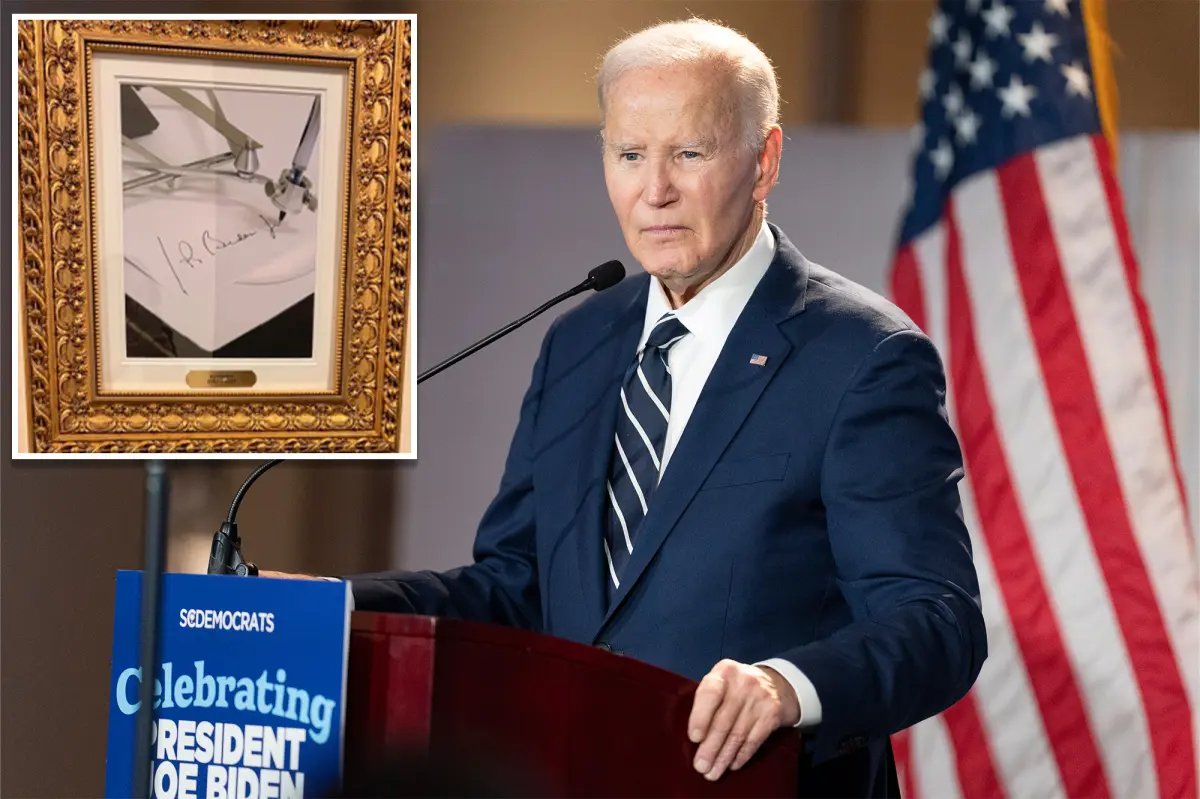

WASHINGTON — The Department of Justice hasn’t shelved the investigation into former President Joe Biden’s alleged misuse of the autopen, The Post has learned.
A senior DOJ official told reporters Thursday that the investigation was not “closed” but the case was “tough” to make given the executive privilege issues involved and the fact that it’s focused on one of the president’s broadest constitutional authorities: the pardon power.
The assurances that the investigation continues come after a New York Times report indicated that the case went cold.
DC US Attorney Jeanine Pirro also hit back at The Times article by posting on X, “We cannot comment on ongoing investigations,” suggesting that certain lines of inquiry were still open.
Federal investigators have been scrutinizing Biden’s use of the mechanical device, particularly in the final months of his administration for sweeping pardons and commutations.
“There are statutes that apply in this case,” the official noted, but nailing down illegal acts remains difficult when the president engages in “pardoning whole categories of crime.”
Those included dozens granted clemency for nonviolent crimes and offenders confined in homes during the COVID-19 pandemic — as well as mass sentence commutations for nearly 2,500 inmates convicted of crack cocaine crimes.
Presidents may use the autopen to sign official executive orders and acts of clemency, but the legal issues surrounding mass pardons make prosecution more difficult — and almost certainly would not implicate Biden himself after the Supreme Court’s immunity ruling in 2024.
The pardon power itself also has yet to be curtailed through an act of Congress — or revoked by a court decision.
The DOJ official noted that investigators had looked into all materials collected by the House Oversight Committee and other congressional probes of the purported autopen abuse amid Biden’s cognitive decline in his final years in office.
The Oversight Committee pressed ex-White House chief of staff Jeff Zients during their investigation as to who controlled the autopen in the final months of the Biden administration — but he was unable to name the aide or official in charge of the device.
“There were good processes in place,” Zients insisted. “[T]here were verbal authorizations of the president’s decision that would occur on occasion.”
In one of those instances, Zients personally approved 11th-hour pardons for Biden family members on Jan. 19, 2025 — the 46th president’s final day in office.
Oversight Republicans in their final report on the probe claimed that “even if this authority [over the autopen] could be delegated — which it cannot — it would have to be expressly delegated by President Biden himself.”
In a statement last June, Biden affirmed: “Let me be clear: I made the decisions during my presidency. I made the decisions about the pardons, executive orders, legislation, and proclamations. Any suggestion that I didn’t is ridiculous and false.”
The House investigation alleged that deputy chief of staff Annie Tomasini, White House physician Dr. Kevin O’Connor, and former first lady Jill Biden’s chief of staff, Anthony Bernal, “facilitated” the cover-up — and all three ended up taking the Fifth Amendment when brought in for questioning.
The report concluded: “It is unclear whether these Biden aides were attempting to be deceptively euphemistic about President Biden’s cognitive decline, or whether they had so deceived themselves that they actually believed there to be a meaningful distinction that the American people were simply worried that President Biden was old, not that he was in cognitive decline.”